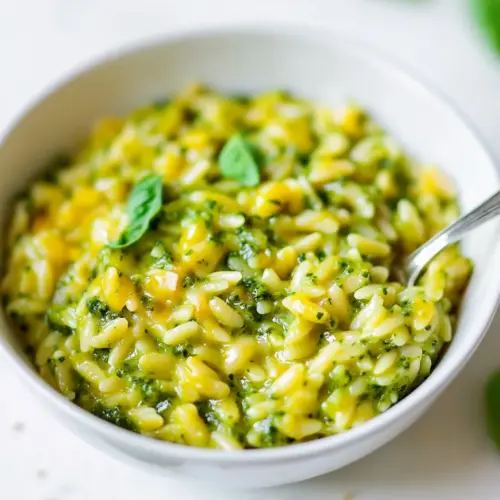
Creamy Pesto Orzo
Creamy Pesto Orzo is a silky, herb forward one pot meal with tender orzo, savory browned turkey, sweet veg, and bright basil pesto. This easy weeknight dinner delivers rich, creamy texture without fuss, making it perfect for family meals. Make it when you want comforting pasta with minimal cleanup and maximum flavor.
Equipment
- Large Pot
- Nonstick
Ingredients
- 1 -1/2 tablespoons olive oil Sauté in a skillet to provide a fruity, aromatic cooking fat that carries flavors and prevents sticking while building the base for the dish; use as the first step to cook aromatics and brown meat evenly.
- 1 cup finely diced yellow onion Provide a sweet, savory foundation that softens and caramelizes to deepen flavor; finely dice to release natural sugars and integrate smoothly into the sauce and orzo.
- 2 teaspoons finely minced garlic 2 to 3 cloves Introduce pungent, aromatic heat that brightens the sauce and complements the meat; mince finely so it disperses flavor without leaving large pieces.
- 1 pound ground turkey 93/7; or ground chicken—thigh meat preferred Brown as the primary protein to add hearty texture and savory depth; choose lean turkey or ground chicken thighs for moisture and a tender finished bite.
- Salt and pepper Season during cooking to enhance and balance overall flavor; add judiciously to taste to lift the dish and prevent it from tasting flat.
- 1 -1/2 cups frozen corn Add sweet, crisp bursts of flavor and a pop of color; keep frozen until needed so they retain texture after brief cooking.
- 1 -1/2 cups frozen sweet peas Contribute tender sweetness and bright color; stir in from frozen to maintain bite and complement the corn and peas.
- 2 tablespoons unsalted butter Melt into the roux to create a silky, richer mouthfeel and to help thicken the sauce when combined with flour; use unsalted to better control seasoning.
- 2 tablespoons all-purpose flour Combine with melted butter to form a roux that thickens the sauce and gives it body; whisk to remove lumps for a smooth consistency.
- 2 cups chicken stock or broth, I love Swanson Pour in to deglaze the pan and build savory backbone; use a flavorful chicken stock to amplify meaty, umami notes in the creamy sauce.
- 2 -1/4 cups whole milk see note 1 Enrich and mellow the sauce while creating creaminess and tenderness for the orzo; use whole milk for a rich texture and gentle sweetness.
- 1 -1/2 cups uncooked orzo pasta Cook as the starch component that soaks up sauce and adds a toothsome, pasta-like texture; add uncooked orzo directly to simmering liquid to cook through.
- 1 cup freshly grated Parmesan cheese see note 2 Stir in to provide salty, nutty umami and a sharp finish that melds with the sauce; grate freshly for best melting and flavor distribution.
- 1/2 cup basil pesto see note 3 Swirl into the finished sauce to introduce herby, garlicky brightness and a concentrated basil flavor; add to taste for freshness and color.
- 1/3 cup finely chopped flat-leaf parsley optional Fold in at the end for a fresh, leafy herb note and visual contrast; chop finely to distribute mild bitterness and parsley aroma evenly.
Instructions
- Finely chop the onion and garlic and set out the rest of the ingredients—cooking goes quickly!: The aroma of chopped onion and garlic hitting a hot pan is an immediate cue that flavor is building, a sweet and savory perfume that fills the kitchen and tells you you are off to a strong start. I always arrange my frozen corn , peas , and measured dairy nearby so I don’t scramble to find anything while the pan is on heat. One helpful trick is to keep the garlic minced very finely so it releases fragrance quickly without large raw pieces, and a common mistake is leaving ingredients unmeasured, which leads to frantic timing errors when the next steps require speed.
- Heat olive oil in a large (nonstick) pot over high heat. Add onion and stir for about 5 minutes or until turning golden; add in garlic and stir for 30 seconds. Add ground turkey and season with salt and pepper. (I add 1 teaspoon salt and 1/2 teaspoon pepper.) Cook, crumbling as you cook, until mostly cooked through, about 5 minutes. Add in frozen corn and peas (no need to thaw). Stir for 1–2 minutes or until veggies are thawed and meat is fully through. Dump this entire mixture onto a plate or bowl and cover with foil.: You will notice the sound of gentle sizzling as the onion softens and sugars begin to caramelize, which gives a faintly sweet, savory base. When the garlic is added the scent becomes more pungent and aromatic, so watch it closely because thirty seconds is often enough to avoid burning. Browning the ground turkey is where Maillard flavors develop, those little browned bits create complexity, so break it apart and let it color without stirring constantly. Once the frozen corn and peas hit the heat you will hear a softer hiss and see them release steam; this is normal and quick. Transferring the mixture off and covering it keeps those flavors separate while you build the sauce, preventing overcooking of the vegetables. Avoid the temptation to rush the browning step, because underbrowned meat will taste flat.
- Return the pot to burner. Melt the butter, whisk in the flour, and cook and stir for 1 minute. Gradually add in the stock, whisking constantly. Add in the milk and all the uncooked orzo.: When you melt the butter and whisk in the flour , you are creating a roux that should smell gently toasted, not raw; that minute softens the flour flavor and ensures the sauce will be smooth. Slowly streaming in the chicken stock while whisking prevents lumps from forming and keeps the texture silky. Adding the whole milk and orzo at the same time starts the gentle simmer that will cook the pasta and marry the liquid into a creamy base. A clumpy sauce usually comes from pouring liquids in too quickly, so go gradual and keep whisking for a homogenous mix.
- Bring the mixture to a simmer, then lower the heat until it is just barely bubbling at the edges. Cook for 7 minutes without a lid, stirring occasionally and scraping the bottom of the pot so the orzo does not stick. After 7 minutes, the pasta should be almost tender (the mixture will still be soupy). Add the plate of veggies and ground turkey to the pot and stir. Add the Parmesan and stir to melt. Mix in pesto and optional parsley. Mix well. Taste and season to taste with any additional salt and pepper as needed—the salt and pepper really pull all the flavors together.: As the pot warms you will see tiny bubbles forming around the edge, that gentle simmer is perfect for coaxing starch out of the orzo without a rolling boil that can break the pasta apart. Stirring and scraping are sensory cues you will come to trust, the scraping prevents a toasted bottom layer and ensures even cooking. When the pasta is almost tender, the texture will feel slightly yielding to the bite and the sauce will be noticeably thicker; at this point folding the browned meat and vegetables back in reintroduces those caramelized notes. Adding the Parmesan cheese at this stage melts into the sauce, enriching it and smoothing any graininess. Stirring in the basil pesto brings a fresh herbal lift and glossy green streaks that fold into the creamy base. Taste and adjust seasoning, because the right amount of salt and pepper brightens every layer. A frequent oversight is not tasting until the very end, which can leave the dish under seasoned.
- Consistency should be similar to risotto and very creamy. Add a splash of milk if needed to thin consistency a bit. Enjoy while hot.: The final bowl should hold like a thick risotto, coating the spoon and presenting a creamy sheen; serve immediately for best texture because the orzo continues to absorb liquid as it rests. If the mixture tightens too much, a splash of warm milk will loosen it and restore that velvety mouthfeel. The warm steam will carry the pesto aroma and the cheese, creating an inviting signal that the dish is ready. A common misstep is letting it sit too long in the pot off heat, which will result in an overly thick or gummy texture, so portion out while hot.
Notes
- Prep before you start. Have the onion, garlic, and measured dairy at arm’s reach so you can move quickly; this helps avoid overcooking aromatics and keeps timing smooth.
- Brown the meat well. Let the ground turkey develop color for deeper flavor, but do not overcrowd the pot which prevents proper browning.
- Whisk the roux completely. When you cook the butter and flour, whisk in the stock slowly to avoid lumps and create a glossy, uniform sauce.
- Use frozen veg straight from the freezer. Adding frozen corn and peas maintains texture and saves thawing time; they warm through in the hot pot quickly.
- Taste and season late. Because the Parmesan cheese and chicken stock contribute salt, final adjustments should be made after they are folded in for balanced seasoning.