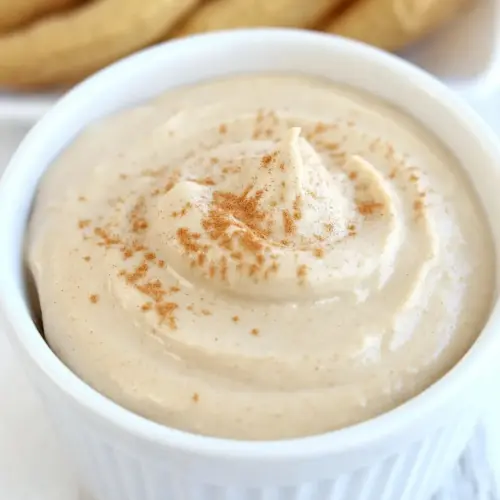
Creamy Peanut Butter Dip
Creamy Peanut Butter Dip is a quick, creamy snack that blends rich peanut flavor with tangy vanilla yogurt for a silky treat. This easy to make dip is perfect for fruit, vegetables, or crackers, delivering sweet and savory balance in every bite. Make it when you need a crowd pleasing, no fuss dip that comes together in minutes and is always a hit.
Equipment
- Whisk
- Mixing Bowl
Ingredients
- 1/2 cup natural peanut butter Creamy and slightly oily, provides the rich peanut flavor and smooth texture that forms the base of the dip; helps bind and enrich the mixture while contributing healthy fats and protein.
- 5.3 oz vanilla Greek yogurt Thick and tangy with a hint of vanilla, adds creaminess, lightness, and subtle sweetness to balance the peanut butter; contributes moisture and a smooth, spoonable consistency.
Instructions
- Whip peanut butter and yogurt together, and serve with celery, apple slices, strawberries, or your favorite fruit and veggie.: Right away you will notice the way the cool vanilla Greek yogurt smooths the dense, slightly oily surface of the peanut butter . Use a whisk or a sturdy spoon and stir vigorously so the mixture becomes glossy and homogenous, with no streaks of thick nut paste. The sound is subtle, a soft swish as textures combine, and visually the color lightens as air incorporates. This technique matters because it ensures even flavor and prevents pockets of dense nut butter. Avoid under mixing which leaves lumps, and also avoid over mixing if you are using a weaker yogurt that could break down and become runny.
- Adjust consistency if needed: As you stir, pay attention to thickness. If the dip seems very thick, a small spoonful of yogurt helps loosen the body while keeping creaminess, and if it seems thin you can chill briefly to firm it up. Texture cues to watch for are how the dip coats the back of a spoon and how it clings to a fruit slice, rather than dripping away. The reason this matters is mouthfeel, a key factor in snack satisfaction. A common mistake is adding liquid right away; instead add a bit at a time to avoid overshooting the desired consistency.
- Taste and balance flavors: After combining, sample the dip to check sweetness and tang. The vanilla Greek yogurt may make it slightly sweet, and the peanut butter provides savory depth. If you need more sweetness or tang, adjust within the permissible ingredients, keeping tasting minimal so you do not oversalt or oversweeten. Scent cues include nutty warmth and a faint vanilla lift, which tells you the balance is on point. The why here is simple, small adjustments ensure the dip complements rather than overwhelms your dippers. A common mistake is assuming one batch fits all palates, so always taste and tweak.
- Serve with fresh fruit and crunchy vegetables: The cool, creamy surface of the dip pairs beautifully with crisp textures like apple slices, celery, or strawberries. Arrange your dippers so there is contrast in color and chew, and let guests scoop generously. Visually you want vibrant fruit next to the pale tan dip, and the first bite should be a contrast between cool creaminess and crisp snap. The serving choice matters because it elevates simple ingredients into a memorable snack. Avoid soggy or overly ripe dippers that will break down quickly and make the presentation less appealing.
- Store any leftovers properly: Place the remaining dip in an airtight container and chill. The cold helps the texture firm slightly and maintains freshness for a couple of days. You will notice the aroma is more concentrated after refrigeration, and I recommend stirring briefly before serving again to restore silkiness. Proper storage matters to preserve flavor and prevent separation. A common mistake is leaving the dip out for long periods, which can alter texture and safety.
Notes
- Choose the right peanut butter Use a natural, well stirred peanut butter for the cleanest nutty flavor and a silky mouthfeel. If your jar is separated, stir thoroughly until oil and solids are reincorporated to avoid oily pockets.
- Opt for thick vanilla yogurt Select a full fat or Greek style vanilla yogurt to provide body and tang, which balances the richness of the peanut butter and prevents a watery dip.
- Mix with confidence Whisk vigorously in one direction to create a glossy emulsion, and stop once the texture is uniform to preserve lightness.
- Chill before serving Rest the dip in the refrigerator for at least ten minutes to let flavors meld and the texture firm slightly for ideal scooping.
- Keep it portable For picnics, transfer into a tightly sealed container and pack with ice packs to maintain safe, cool temperatures and preserve texture.