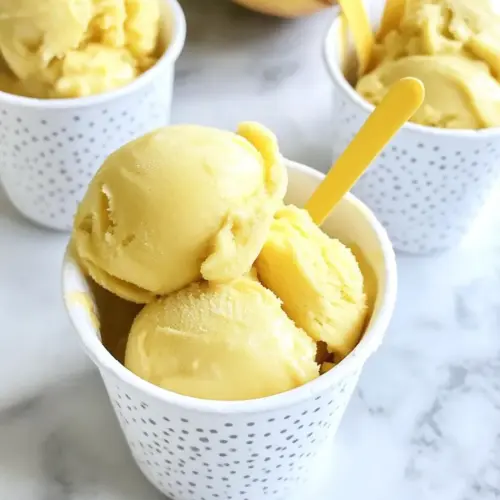
Creamy Mango Ice Cream
Creamy Mango Ice Cream is a silky, fruit forward frozen treat made from frozen mango and banana. This easy, naturally sweet dessert is creamy without dairy, bright in flavor, and ready in minutes. Perfect for hot afternoons and quick weeknight desserts, it offers a healthy indulgence and a reason to keep frozen fruit on hand.
Equipment
- High Speed Blender
- Tamper
Ingredients
- 2 cup mango cubes, frozen Blended to provide natural sweetness, creamy texture, and vibrant mango flavor for the ice cream base; frozen cubes also help chill the mixture quickly, reducing the need for additional ice and improving consistency; purees smoothly when processed, contributing body and a luxurious mouthfeel; can be adjusted in quantity to intensify mango presence without adding extra sugar.
- 2 medium banana Mashed to add natural creaminess, sweetness, and thickening properties that enhance the ice cream’s smooth texture; ripe bananas contribute binding and stabilizing effects, reducing iciness and improving scoopability; offers a mellow fruity undertone that complements mango without overpowering it; can be frozen beforehand to increase firmness and speed churning.
Instructions
- Freeze 2 bananas.: The scent of ripe banana before freezing is sweet and floral, and once frozen they take on a firm, chalky texture that your blender needs to crush. Freeze them whole or in slices so they chill thoroughly. Why this matters, I have found, is that fully frozen bananas create the creamy body that prevents iciness; if they are only partly frozen you will end up with a loose, grainy texture. A common error is slicing them very thin or leaving them only partially frozen, which can release water and thin the final mixture. If your bananas stick together in one block, tap the container on the counter to separate pieces before blending. When you start to pulse, listen for a steady whir rather than long motor strain which indicates the blender is coping well.
- In a high speed blender combine the mango and banana.: As you add frozen mango and frozen banana into the jar, note the initial weight and density, the fruit should sit packed but not overflowing. The blender jar will feel heavy and cold to the touch. Combining the two frozen fruits allows the sweeter banana to cushion and cream the brighter mango , which balances flavor and texture. If you skip combining and blend only one fruit first, you risk uneven smoothing. A tip I use is to layer fruit in alternate colors so the blades catch both textures at once. Avoid cramming in too much frozen fruit, because that can stall the blades. If the blender struggles, remove a small portion and process in two batches for best results.
- Using a tamper put the blender on the highest speed setting. Mash the mixture until fully mixed and forms into “nice cream”.: When you engage high speed, the sound will change from an initial clatter to a smoother roar as the fruit starts to circulate and shear under the blades. The tamper helps push dense pieces toward the blades without stopping the motor, which encourages rapid, even breakdown into a creamy mass. This technique matters because slow blending tends to create gritty ice crystals rather than a cohesive cream. Watch for the mixture pulling away from the sides and forming a silky ribbon, that is your visual cue. A common mistake is jamming the tamper too forcefully, which can strain the motor or cause the lid to shift; use steady pressure only. If your blender does not have a tamper, pause several times and scrape the sides to keep the mix moving.
- Scoop up and enjoy with your favorite toppings.: As the blades work, you will see the texture transition from chunky to pillowy and dense. Smell the shift too, the aroma becomes sweeter and more rounded as the fruit cells break and release their sugars. This stage is essential for achieving that scoopable, soft serve feel, because it indicates the ice crystals have been disrupted and integrated into a smooth matrix. If you stop too early you will end up with a frosty, fragmented result; if you overwork it and heat the motor for too long, the mixture may become too soft or slightly melty. To troubleshoot, chill the bowl briefly if it looks watery, then reblend in short bursts. Tap the blender jar to dislodge any pockets of fruit that are stuck to the sides so everything becomes homogeneous.
- Scoop up and enjoy with your favorite toppings: When the texture is right, the surface will be dense and satiny, and a spoon will cut cleanly through like soft serve. The temperature should be cold but not rock hard, and the aroma will be intensely fruity. Presenting it immediately preserves the airy structure; if you plan to store it, spoon into a shallow container and press a piece of plastic wrap onto the surface to minimize ice crystals. A very common mistake is refreezing without protection, which creates an icy top layer. If that happens, let it soften at room temperature for a few minutes before scooping and stirring briskly to restore creaminess. Enjoy right away for the best mouthfeel and brightest flavor.
Notes
- Freeze ripe fruit whenever possible, because it yields the best natural sweetness and aroma when blended into ice cream.
- Layer fruit in the blender by alternating colors, because it helps the blades catch both textures evenly and prevents clumping.
- Pulse before going to high speed to break up the largest chunks, because this reduces strain on the motor and improves final texture.
- Use a tamper or stop to scrape during blending, because it ensures all pieces are processed and avoids cold pockets or unblended lumps.
- Serve immediately or shallow freeze for later, because shallow containers freeze faster and form fewer large ice crystals than deep tubs.