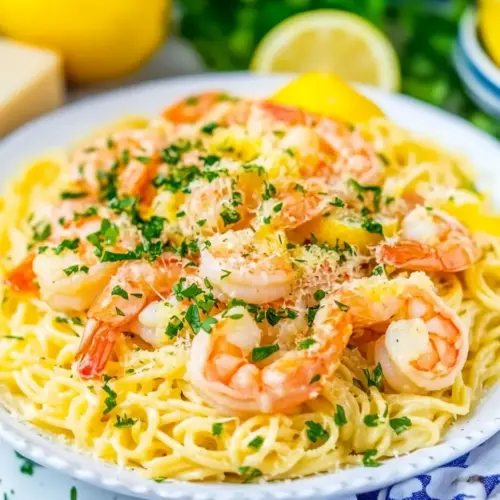
Creamy Lemon Shrimp Pasta
Creamy Lemon Shrimp Pasta is a bright, velvety weeknight favorite with tender shrimp, crisp asparagus, and silky lemon Parmesan sauce. This easy weeknight dinner balances rich heavy cream and Parmesan cheese with fresh lemon for a luscious yet lively bite, perfect when you want something impressive but quick to make.
Equipment
- Pasta Pot
- Large Nonstick Skillet
- Medium Saucepan
Ingredients
- 12 ounces Angel Hair pasta Boil until al dente to provide a delicate, light base that soaks up sauce while maintaining texture; toss with a little oil after draining to prevent sticking and serve immediately for best mouthfeel.
- 4 tablespoons butter, cut into pieces Melt slowly to create a rich, silky foundation for the sauce; incorporate in stages to brown slightly for nuttiness or keep pale to enrich the cream without overpowering delicate flavors.
- 2 tablespoons olive oil Drizzle to lend a fruity, peppery backbone and help sauté aromatics; use for initial pan seasoning and to balance butter for a smoother sauce consistency.
- 4 garlic cloves, minced Minced finely to release aromatic oils that infuse the oil and butter; cook briefly to mellow raw sharpness and develop a savory, garlicky base without becoming bitter.
- 1 1/4 pounds large shrimp, peeled and deveined Pat dry and sear quickly to develop a tender, juicy protein center that absorbs citrus and cream flavors; add toward the end of cooking to avoid toughness and maintain plump texture.
- 1 bunch asparagus, tough ends snapped off and discarded and cut into 2-inch pieces Trimmed and cut to add a crisp, green vegetable element that contrasts the creaminess; blanch or sauté until tender-crisp so it retains bright color and slight snap.
- salt and pepper Season sparingly to enhance overall flavor balance and bring out natural sweetness; adjust throughout cooking and finish to taste so saltiness complements rather than overwhelms.
- 1/2 teaspoon crushed red pepper flakes Sprinkled to introduce a mild heat that brightens the dish; use sparingly to add a subtle kick that elevates rich, creamy components without dominating them.
- 2/3 cup heavy cream Simmered gently to thicken and create a velvety sauce body that cloaks the pasta and shrimp; avoid boiling to prevent separation and stir continuously for uniform creaminess.
- 2 large egg yolks Whisked in to enrich the sauce with silkiness and depth; temper into warm cream to prevent curdling while contributing a glossy, custard-like texture.
- juice and zest from 1 lemon Zested and juiced to inject bright citrus acidity and fragrant oils that cut through richness; incorporate gradually to balance cream and enhance overall freshness.
- 2/3 cup freshly grated Parmesan cheese Grated finely to melt into the sauce, offering savory umami and a salty, nutty finish; stir in off heat to preserve cream smoothness and prevent graininess.
- 1 tablespoon chopped fresh parsley Chopped finely to add a fresh, herbaceous finish that lifts flavors and adds color contrast; sprinkle at the end for a subtle grassy note and visual appeal.
Instructions
- Cook pasta in a large pot of salted water according to package directions. Drain and place in a large pot with the butter. Use tongs to coat the pasta with the butter as it melts. Set aside.: As the pot of water comes to a lively boil you will smell a faint mineral sweetness, and the salted water seasons the pasta from the inside. Once the Angel Hair pasta is al dente, drain quickly so it does not continue to soften; the strands should still have a slight tooth when you bite them. Transferring the hot pasta into a warm pot and adding cold pieces of butter creates a sheen that prevents clumping and helps the sauce adhere. Use tongs to gently toss, feeling the glossy, slick surface as the butter melts and coats every strand. If the pasta feels sticky, you likely left it sitting too long after draining, so toss immediately. A common mistake is rinsing the pasta which washes away seasoning and starches needed to bind the sauce.
- Heat olive oil in a large nonstick skillet. Add shrimp and asparagus and cook for 2 minutes. Add garlic and continue to cook until shrimp are opaque. Add red pepper flakes and season with salt and pepper. Set aside.: When the skillet is hot and the olive oil shimmers, add the shrimp and asparagus and listen for a soft sizzle that signals immediate contact. After about two minutes the edges of the asparagus will bright en and the shrimp will begin to curl; their flesh will transition from translucent to an opaque pink. Adding minced garlic briefly releases a fragrant hit of allium without browning, which keeps it sweet rather than bitter. Sprinkle the crushed red pepper flakes now so their heat infuses the oil and blossoms across the pan. Season to taste with salt and pepper , then remove the mixture to avoid overcooking the shrimp . Watch for a rubbery texture, a sign of overcook, especially with large shrimp types.
- Whisk together heavy cream and egg yolks in a medium saucepan. Heat over medium heat just until really warm, do NOT let it boil. Then stir in lemon juice and zest and Parmesan cheese. Remove from heat. Season to taste with salt and pepper.: As you whisk the heavy cream and egg yolks , notice the gloss forming, a promise of silkiness. Warm the mixture gently so it becomes cozy to the touch but does not bubble, because boiling will curdle the eggs and break the sauce. Once warm, the bright perfume of freshly zested lemon and the sharp, nutty aroma of melting Parmesan cheese will bloom, transforming the cream into a lemon kissed emulsion. Remove from heat promptly when the cheese has melted into a smooth consistency, then taste and adjust with salt and pepper . If the sauce begins to look grainy, it may have overheated; cool slightly and whisk vigorously to bring it back together.
- Pour lemon sauce over pasta and mix in. Add shrimp/asparagus mixture. Sprinkle parsley on top and serve.: When you pour the warm lemon cream over the glossy pasta , it should cling immediately, coating each strand in a luminous veil. Toss gently with tongs so the sauce threads through the noodles and creates a cohesive dish. Fold in the cooked shrimp and asparagus , noticing the contrast of colors and textures: pale pasta, pink shrimp , and vibrant green. Finish with a scattering of chopped parsley , which adds a fresh, herbal lift and visual brightness. Serve right away while steam rises and aromas of citrus and cheese mingle. If left too long, the pasta will soak up the sauce and dry out, so plate promptly.
Notes
- Butter finish Use cold pieces of butter tossed into the drained pasta to create a glossy coating that helps the sauce cling and adds richness.
- Asparagus texture Cut the asparagus into consistent pieces and cook just until bright green to preserve a slight crunch and fresh flavor.
- Garlic timing Add minced garlic after the shrimp and asparagus have started to cook so it becomes fragrant but does not brown and develop bitterness.
- Heat control Warm the cream and egg yolks gently to avoid curdling, remove from heat before adding acid, and stir the Parmesan cheese in to melt it smoothly.
- Serving speed Serve immediately after assembling because the pasta will continue to absorb sauce as it rests, which can dry the dish.
- Parsley finish Add chopped parsley at the very end for a fresh herbal lift and bright visual contrast on the plate.