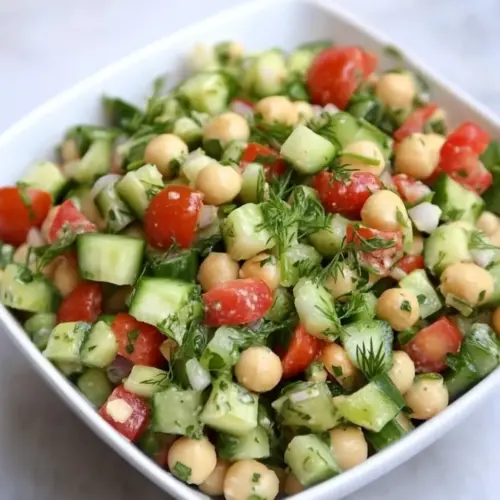
Creamy Israeli Salad with Dill
Creamy Israeli Salad with Dill is a refreshing, creamy and tangy salad that blends crisp Persian cucumbers, ripe red tomatoes, and hearty chickpeas with a silky yogurt and sour cream dressing. Brightened by lemon and fresh dill, it makes an easy weeknight lunch or picnic side that feels both light and satisfying. Make it for gatherings to impress without fuss.
Equipment
- Salad Bowl
- Smaller bowl
- Whisk
- Colander
Ingredients
- 1 pound Persian cucumbers, diced Provide a crisp, hydrating crunch and mild flavor; diced into small pieces to distribute texture evenly throughout the salad and balance juiciness with other creamy components. Assist in adding volume and freshness while holding up well without becoming soggy when mixed shortly before serving.
- 1 pound ripe red tomatoes, seeded and diced Contribute bright acidity and juicy body when seeded and diced; offer a sweet-tart contrast that complements the cooling cucumbers and creamy dressing. Add natural moisture and color, helping to meld flavors and provide a tender bite without overpowering the dish.
- 14 ounces chickpeas (aka garbanzo beans), drained and rinsed (1 can) Add a nutty, earthy protein boost and a slightly firm, tender texture after draining and rinsing; supply fiber and make the salad more filling and nutritious. Blend well with the creamy base and vegetables, absorbing seasonings and lending a substantial mouthfeel to each forkful.
- 1/2 cup lowfat or nonfat plain Greek yogurt Bring tangy creaminess and a thicker texture with lower fat; help create a smooth, slightly tangy dressing that binds the vegetables and legumes together. Provide protein and a velvety mouthfeel while keeping calories and saturated fat reduced compared with full-fat alternatives.
- 1/4 cup lowfat sour cream Supply a richer, slightly tangy creaminess that enhances body and smoothness in the dressing; help balance the tang of yogurt and lemon by adding silkiness. Contribute a subtle tang and fat that carry and mellow seasonings, improving overall mouthfeel and cohesion.
- 2 tablespoons chopped fresh dill Deliver a bright, herbaceous note and fragrant aroma when chopped; infuse the salad with a fresh, slightly anise-like flavor that lifts the creamy dressing. Add visual contrast and a delicate savory accent that pairs especially well with cucumber and lemon.
- 1 tablespoon fresh lemon juice, or more to taste Provide bright, zesty acidity to brighten flavors and cut through the richness of yogurt and sour cream; squeeze to taste for desired brightness. Help balance the salad’s creamy elements while enhancing the overall freshness and layering of flavors.
- 1/2 teaspoons salt, or more to taste Season the dish to taste, enhancing and rounding out flavors without overwhelming them; add gradually to achieve desired saltiness. Ensure that other components’ natural flavors are elevated and balanced, making each ingredient more pronounced.
Instructions
- Combine cucumbers, tomatoes, and chickpeas in a salad bowl and gently toss till well combined.: The first thing you will notice is the contrasting textures as the diced cucumbers release a faint, clean scent while the tomatoes yield a pleasant sweet juice. As you toss, focus on gentle folding motions so the pieces remain intact, keeping the salad visually appealing. You'll hear soft clinks as the cucumber pieces nudge the bowl, and the chickpeas give a muted, satisfying thud that indicates their firmness. This step matters because a rough toss can bruise the tomatoes and create excess liquid, which dilutes the dressing. If you find the mixture getting watery, pause and spoon out some juices or use a slotted spoon to avoid sogginess. A common mistake is overmixing with force, which causes the tomatoes to break down and the salad to become mushy—be tender and steady.
- In a smaller bowl, whisk together Greek yogurt, sour cream, dill, lemon juice and salt.: As you whisk, the dressing will transform from separate components into a glossy emulsion, with the tang of the lemon juice cutting through the creamy texture. The aroma of fresh dill will intensify, offering an herbaceous note that anchors the dressing. Whisking introduces tiny air bubbles that contribute to a light mouthfeel, and the mixture should coat the back of a spoon evenly. This technique matters because a well emulsified dressing clings to vegetables instead of pooling. If the dressing seems too thick, a small splash of water or additional lemon can loosen it, but add sparingly. Avoid vigorous whisking that splatters; use a medium speed and a secure bowl to maintain control.
- Pour the creamy dressing over salad.: When the dressing hits the bowl, you will notice a soft pattering as the creamy mixture settles among the vegetables, visually brightening the salad with pale swaths of yogurt. The scent of lemon and dill should bloom at this point, teasing the palate. Pour slowly and evenly to ensure full coverage, aiming for a thin veil rather than a heavy pour which can overwhelm the crisp textures. This step is important because distributing dressing evenly prevents clumps of saturated vegetable and promotes balanced bites. If you accidentally add too much dressing, scoop out a portion or add an extra cucumber to absorb the excess. A typical error here is dumping the dressing in one spot which leads to uneven flavor—pour and then gently coax the dressing outward with a spoon.
- Toss the salad gently till all ingredients are well combined. Add additional lemon juice and salt to taste, if desired.: As you toss, watch the vegetables glisten and feel the varied textures come together under a thin coating of dressing. The motion should be soft and sweeping, lifting from the bottom and folding over the top to ensure uniform seasoning. Taste as you go, and if the salad needs brightness, a squeeze of fresh lemon juice will lift flavors, while a pinch more salt will sharpen them. This technique matters because even distribution ensures consistent flavor in each bite, and adjusting seasoning at this stage allows you to tailor the salad to your preferences. One pitfall is overworking the salad which causes the tomatoes to break down, so limit yourself to just enough movement to coat and combine.
- Chill salad before serving. Juices will gather at the bottom of the bowl as time passes. To get rid of excess yogurt juices, you can strain the salad in a colander before serving. I like sopping up the juices with whole grain bread or challah.: Chilling helps the flavors meld and the dressing to set slightly, giving the salad a cohesive texture and a pleasantly cool temperature on the tongue. As the salad rests, you will see small pools of liquid collecting at the base, which is normal as the tomatoes and cucumbers release moisture. Straining through a colander will remove excess liquid and tighten the texture, while briefly stirring before serving will redistribute any settled dressing. When chilled, the dill aroma becomes subtler yet more integrated, and the salad tastes more rounded. A frequent mistake is skipping the chill entirely, which can result in a looser mouthfeel and less unified flavors. If you plan to serve immediately, tip the bowl gently on the table to let any excess collect and then spoon off the liquid, or serve with a slotted spoon to avoid watery portions.
Notes
- Use fresh mint instead of dill if you prefer a sweeter, cooler herb character; chop it finely and add the same volume the recipe calls for, tasting afterward to ensure it does not overwhelm the lemon. Mint transforms the flavor profile into something more Mediterranean and bright, and it pairs exceptionally well with the creamy dressing. A mistake to avoid is over chopping mint which can make it pasty and bitter.
- Adjust lemon incrementally by adding half the recommended amount first, then tasting; the acidity should lift the flavors without making the dressing too tart. If you find the mixture lacks brightness after chilling, add a touch more and mix gently. Over lemonizing can make the dressing separate, so add carefully and in small bursts.
- Control dressing thickness by thinning with a teaspoon of cold water if the yogurt is very thick; this preserves the creamy mouthfeel while improving coating ability. If you need more body, a touch more sour cream provides richness, but add gradually to avoid heaviness. Avoid adding oils which will change the intended texture.
- Deal with excess liquid by draining in a colander and then pressing gently with the back of a spoon; for a less wasteful option, reserve the juices to drizzle on grilled vegetables or to blend into a light soup. Straining keeps the salad lively and prevents dilution of the dressing. Don't toss the juices without tasting them first; they can be useful elsewhere.
- Make it ahead wisely by combining vegetables and dressing separately, then tossing no more than one hour before serving for best texture; if fully dressed, expect slight softening over time and plan to chill for at least thirty minutes to allow flavors to marry.