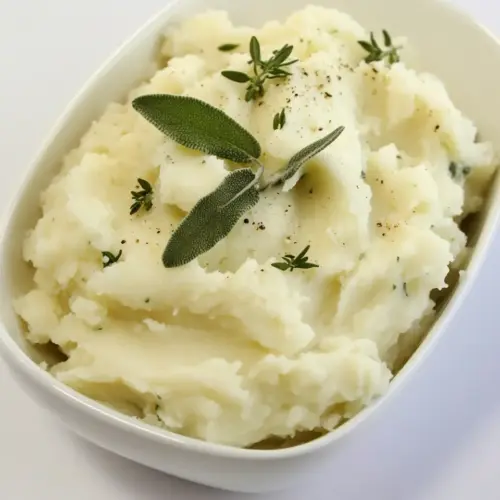
Creamy Goat Cheese and Sage Mashed Potatoes
Creamy Goat Cheese and Sage Mashed Potatoes deliver a silky, tangy mash with herbal warmth, perfect for an easy weeknight dinner or a festive side. The combination of fluffy potatoes and melting goat cheese creates rich texture and bright flavor, while fresh sage adds a savory finish. Make it ahead or serve straight from the stove for a comforting, crowd pleasing dish.
Equipment
- Large saucepan
- Potato Masher
- Colander
- Mixing Bowl
Ingredients
- 2 pounds potatoes, peeled and cut into 1-inch pieces Boiled and softened for mashing, provides the starchy base and body for the dish while absorbing flavors from other ingredients. Cut into uniform pieces to ensure even cooking and creamy texture when mashed. Serves as the primary carbohydrate and structure that makes the mashed potatoes hearty and filling.
- 5 ounces crumbled goat cheese Crumpled to add tangy, creamy richness and a subtle acidity that brightens the flavor profile of the potatoes. Mixed in while warm to melt slightly and create a silky, spreadable texture throughout the mash. Contributes a distinctive farmhouse flavor and depth that complements the herb and butter notes.
- 1/4 cup milk Gently warmed and added to loosen the mash to the desired creaminess without cooling the potatoes too much. Adjusted as needed to balance between fluffy and smooth textures, helping incorporate the goat cheese and butter uniformly. Can be substituted for higher- or lower-fat milk depending on preferred richness.
- 2 tablespoons butter Melted into the hot potatoes to enrich flavor and provide a luxurious mouthfeel, helping bind the mash and intensify savory notes. Added early so its fat coats starches and produces a smoother, more velvety texture. Contributes both flavor depth and a glossy finish to the finished dish.
- 1 tablespoon chopped fresh sage Finely chopped and stirred in to provide an aromatic, earthy, and slightly peppery herbal lift that pairs well with goat cheese. Added sparingly to avoid overpowering the dish, its leaves infuse the mash with a warm, savory complexity. Can be toasted briefly in butter first to release oils and deepen the herbaceous flavor.
- 1/2 teaspoons salt Measured and added to season the potatoes, enhancing natural flavors while balancing the tang of goat cheese and richness of butter. Distributed evenly to ensure every bite is properly seasoned, with the amount adjustable to taste or dietary needs. Helps bring out subtle savory notes without masking the other ingredients.
- freshly ground black pepper, to taste Freshly ground to taste to provide bright, sharp heat and aromatic complexity that complements the creamy elements. Sprinkled at the end or mixed in to control pungency and allow the pepper to elevate flavors without overwhelming them. Adds a finishing layer of spice and depth to each serving.
Instructions
- In a large saucepan of boiling water, cook the potatoes until tender, about 12 minutes; drain well.: You'll hear a gentle bubbling as the water moves, and when the potatoes are tender a paring knife will slide through with little resistance. Boiling evenly cut 1 inch pieces ensures uniform doneness and prevents some pieces from overcooking while others are underdone. If the water is too vigorous the potatoes can break apart and become waterlogged, so aim for a steady boil. A common mistake is starting with very cold, rapid boil and not timing properly which leads to undercooked centers.
- Return the potatoes to the pan and add the goat cheese, milk, and butter; mash until smooth. Add more milk if it's not quite creamy enough for you. Mix in chopped sage and salt; season to taste with additional salt and pepper, if desired.: As you mash, you should smell the tang of melting goat cheese and see the mixture turn creamy. Warm milk and hot potatoes help everything blend into a silky texture, while the butter melts and adds gloss. Mashing immediately back in the hot pan allows residual heat to help melt the cheese; if you stop too soon you might end up with lumps. Overworking can make potatoes gluey, so aim for smoothness without excessive pounding.
- Mound the potatoes in a bowl. Garnish with fresh sage sprigs.: When you spoon a bit of mash onto a plate it should hold shape but still feel pillowy and moist. Adding warm milk a tablespoon at a time gives you control over texture, and the aroma becomes richer as fat integrates. A common pitfall is adding too much liquid at once which makes the mash thin and loses the satisfying body of a proper mashed potato.
- Mix in chopped sage and salt; season to taste with additional salt and pepper, if desired.: The chopped sage should release its herbal notes as it warms against the mash, giving an aromatic lift. Stirring gently preserves little pockets of herb without smearing them into invisibility. Taste for seasoning because the goat cheese may already contribute salt, and you want a balanced finish. Over seasoning at this stage is easy, so add small amounts and re taste between additions.
- Mound the potatoes in a bowl.: When you transfer the mash, it should glisten slightly from the butter and hold a soft mound shape, inviting spoonfuls. The visual cue of a smooth dome with small peaks means you achieved a creamy texture. If the surface looks dry, a small pat of butter or a splash of milk will revive it. A mistake I see is leaving the mash in the pot too long which causes cooling and a firmer, less inviting texture.
- Garnish with fresh sage sprigs.: Placing whole or partial sage sprigs on top adds visual charm and a burst of aroma as guests dig in. The contrast of green against creamy white makes the dish feel seasonal and thoughtful. Avoid heavy garnishes that fall into the mash and wilt; light sprigs look and taste best.
Notes
- Try different potatoes Adjust the variety between Russets for fluffier results and Yukon Gold for a creamier, naturally buttery texture, which affects how much butter and milk you need.
- Adjust milk type Use lower fat milk for a lighter finish, and keep in mind you may need a touch more to reach the same silkiness compared to whole milk.
- Control the tang If you want a milder profile, use a bit less goat cheese, or choose a milder fresh cheese while maintaining the same technique.
- Make ahead strategy Prepare the mash, cool slightly, then refrigerate. Reheat gently on the stovetop and stir in warm milk to revive the texture before serving.
- Herb variations Swap or add to sage with small amounts of chopped thyme for a different herbal note, but add sparingly to keep the goat cheese prominent.
- Presentation tip Pipe the warm mash into a bowl or platter and top with a little melted butter and extra freshly ground black pepper for an elegant finish.