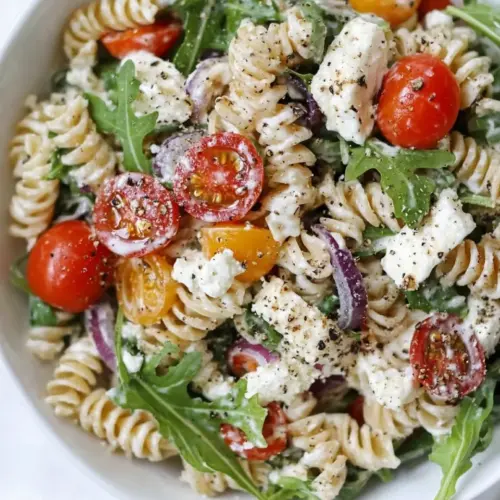
Creamy Goat Cheese and Arugula Pasta Salad
Creamy Goat Cheese and Arugula Pasta Salad blends warm whole wheat fusilli with tangy goat cheese, peppery arugula, juicy cherry tomatoes, and briny kalamata olives. This easy weeknight pasta salad is creamy, bright, and quick to make, perfect for casual dinners or spring gatherings. Make it for a fuss free, flavorful meal that always disappears fast.
Equipment
- Large Pot
- Large serving bowl
- Measuring Cup
- Tongs
Ingredients
- 8 ounces whole wheat fusilli pasta Boil until al dente and provide a firm, chewy base that holds the dressing and mix-ins well; whole wheat adds nutty flavor and extra fiber for a heartier pasta salad experience.
- 4 ounces goat cheese crumbled Crumble and stir to create a creamy, tangy richness that melts slightly into the warm pasta; goat cheese adds bright acidity and a smooth texture that contrasts with peppery greens.
- 2 tablespoons extra virgin olive oil Drizzle to emulsify the lemon and cheese into a glossy dressing; extra virgin olive oil contributes fruity depth and helps coat the pasta and vegetables evenly.
- 2 tablespoons lemon juice Squeeze to brighten and balance the richness with fresh acidity; lemon juice cuts through the cheese and oil while enhancing overall freshness.
- 1/2 teaspoons ea salt Season sparingly to enhance natural flavors and bring balance; salt accentuates the sweetness of tomatoes and the savoriness of cheese and olives.
- 1/2 teaspoon black pepper Grind or sprinkle to add warm, pungent heat that complements the tangy cheese; black pepper provides subtle bite and aromatic complexity.
- 1/4 teaspoon red pepper flakes Pinch to introduce a concentrated, smoky heat that livens the salad; red pepper flakes add a layered spiciness without overpowering the other elements.
- 6 ounces baby arugula Toss in gently to contribute a peppery, bitter green that contrasts with creamy cheese and sweet tomatoes; baby arugula adds freshness and delicate texture.
- 1 pint cherry tomatoes thinly sliced Slice thinly to release juices and add bursts of sweet-tart flavor and color; cherry tomatoes contribute juiciness and slight acidity that brighten each bite.
- 1/2 cup pitted kalamata olives sliced Slice to incorporate briny, savory notes and a firm, meaty texture; pitted kalamata olives add Mediterranean depth and balance the salad's creaminess.
Instructions
- Bring a salted pot of water to a boil and cook the pasta until it’s al dente, according to the directions. Before draining, reserve about 1 cup of the pasta water. Drain the pasta water and place it in a large serving bowl.: The first sensory cue you will notice is the rapid rolling boil of the water and the fragrant saltiness as it dissolves, which helps season the fusilli from the inside. Cooking to al dente means the pasta should feel tender with a slight resistance at the center when bitten, which preserves texture when tossed with the creamy dressing. A common mistake is overcooking, which leads to a mushy base that cannot hold the cheese emulsion. Listen for a gentle bubbling rather than a violent froth, and begin tasting the pasta about two minutes before the package time to avoid passing the ideal texture. When the pasta is nearly there, scoop out a little and bite it to check for that faint firmness. Also, salting the water well makes a significant flavor difference, because this is the only moment the pasta itself can absorb seasoning.
- Sprinkle the goat cheese over the pasta, then drizzle in the olive oil and lemon juice. Sprinkle in the salt, red pepper and black pepper over top. Pour about 1/3 cup of the pasta water over top and toss until the pasta is super creamy.: The reserved pasta water is an unsung hero, full of starch that helps create a glossy, cohesive dressing. You will notice that the water goes from clear to slightly cloudy as the starch releases, and that is exactly what you want. If you skip this, the goat cheese may clump rather than form a smooth emulsion with the olive oil . A frequent oversight is draining immediately and forgetting the water, so keep a heatproof measuring cup nearby to quickly ladle out the amount you need. If you accidentally reserve too little, you can always add plain warm water, but it may not emulsify as well. Aim for slightly more than you think you need because you can always add more later.
- Add the arugula, tomatoes and olives and toss to combine. If the pasta is too dry, drizzle in more of the pasta water and stir. You can also add in more olive oil if desired. Taste and season more if needed. Serve immediately.: After pouring off the cooking water, the visual cue is the steaming pasta resting in a roomy bowl, warmth rising and soft aromas of wheat and salt filling the air. Placing it in the serving bowl while still hot helps the goat cheese melt and form a creamy coating rather than a loose crumbly texture. Avoid rinsing the pasta , which would wash away the starchy surface that helps the dressing adhere. A common mistake is using a bowl that is too small, which makes tossing messy and uneven; pick a bowl with room to mix thoroughly so everything integrates smoothly.
- Sprinkle the goat cheese over the pasta, then drizzle in the olive oil and lemon juice: As you crumble the goat cheese over the warm pasta , you will see small white flecks starting to soften and smear. Drizzling the olive oil and lemon juice next releases bright aromatics and helps the cheese break down into a creamy sauce. The sound is gentle, just the soft clink of utensils, while the aroma shifts toward tangy and fruity. If the cheese does not seem to be melting, use a fork to coax it, and pour a little of the reserved pasta water to encourage the emulsion. A pitfall is adding too much lemon at once, which can make the dressing overly tart; add it gradually and taste as you go.
- Sprinkle in the salt, red pepper and black pepper over top: The act of seasoning releases scent and lifts the flavors instantly, with the red pepper flakes contributing a faint, warm perfume and the black pepper giving an earthy bite. These spices help balance the tangy goat cheese and the bright lemon juice . Over seasoning is a common misstep, especially with salt, since the kalamata olives will add brininess later. Season conservatively now, then adjust after the final toss so you don’t overshoot the balance.
- Pour about 1/3 cup of the pasta water over top and toss until the pasta is super creamy: When you add the starchy water, watch the transformation as the dressing turns glossy and thickens, coating each spiral of fusilli . The visual sign of success is a silky sheen that clings to the pasta rather than pooling at the bottom. Use tongs or two large spoons to lift and turn so the emulsion develops evenly. If the mixture seems grainy, continue tossing and add a tablespoon of warm water at a time until smooth. A typical mistake is adding cold water, which can shock the emulsion and cause separation, so keep the reserved water warm.
- Add the arugula, tomatoes and olives and toss to combine: As you fold in the arugula , you will hear a soft rustle and see the greens wilt slightly as they meet the warm pasta . The sliced cherry tomatoes will release small ribbons of juice that mingle with the dressing, while the sliced kalamata olives lend dark flecks of savory depth. Toss gently so you don’t bruise the greens or burst all the tomatoes. One thing to avoid is over mixing, which can make the arugula collapse entirely and turn the salad mushy; aim for a light, even distribution instead.
- If the pasta is too dry, drizzle in more of the pasta water and stir: This is the moment you refine the texture by adding small amounts of the reserved water until the dressing loosens to a glossy, clingy consistency. Notice how each addition changes the mouthfeel, shifting from slightly stiff to silky, coating every piece of fusilli . Common errors include adding too much water at once, which thins the dressing and dilutes flavor; instead, add in tablespoons and taste. If you prefer more oil richness, a little extra olive oil can also deepen the mouthfeel without watering down the flavor.
- You can also add in more olive oil if desired: Adding extra olive oil will enrich the salad and increase gloss, creating a luxurious mouthfeel that complements the tang of the goat cheese . As you pour, watch the sheen build and adjust until the balance feels right between creamy and lightly dressed. Too much oil can feel heavy, so add gradually and taste after each addition. If the salad starts to feel oily rather than creamy, counter with a splash more lemon juice or a pinch of salt.
- Taste and season more if needed: The final tasting is where you refine salt, pepper, and acid to personal preference. Lift a forkful and note the interplay of peppery arugula , tangy goat cheese , and briny olives . If it needs brightness, a squeeze of lemon wakes everything; if it needs depth, a touch more salt or a few flakes of red pepper can help. A pitfall is skipping this step and assuming the seasoning is correct; small adjustments here make a big difference in the finished dish.
- Serve immediately: Serving while the salad is still warm ensures the goat cheese remains silky and the textures are at their best. As it cools, the dressing will firm up and the salad will taste different, which is fine if you prefer it at room temperature, but for that creamy moment, plate and present right away. A common oversight is leaving it too long before serving, which can make the coating tighten; if that happens, stir in a tablespoon of warm reserved pasta water to revive the creaminess.
Notes
- Adjust acidity Start by adding lemon juice in small increments, tasting as you go, to brighten the salad without overpowering the delicate tang of the goat cheese.
- Control heat Use the red pepper flakes sparingly if you prefer minimal spice, adding a pinch at a time so the warmth complements rather than dominates the other flavors.
- Manage salt Because kalamata olives are briny, season conservatively before tossing, then recheck and adjust after the final mix to avoid oversalting.
- Revive creaminess If the salad tightens after chilling, stir in a tablespoon of warm reserved pasta water or a drizzle of olive oil to regain a glossy emulsion.
- Keep texture Add the arugula last and toss gently so it wilts slightly but retains a peppery bite, preventing a soggy finished salad.