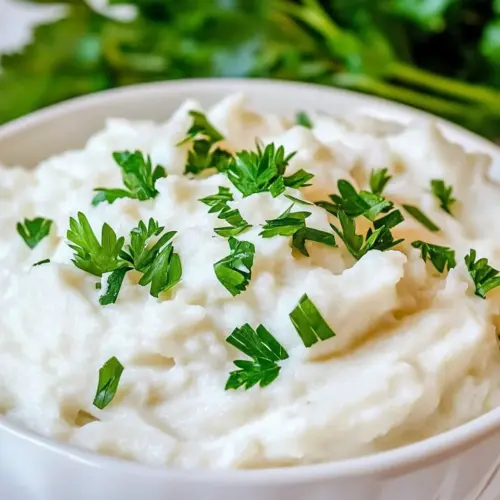
Creamy Garlic Mashed Cauliflower
Creamy Garlic Mashed Cauliflower is a silky, savory side that blends tender cauliflower with fragrant garlic and a touch of milk for an easy weeknight dinner favorite. This light and creamy mash offers comforting texture without heaviness, making it a perfect companion for roasted mains or a simple vegetable plate. Try it whenever you want a quick, cozy side with big flavor.
Equipment
- Large Pot
- Colander
- Sauté Pan
- Potato Masher
- Immersion blender or food processor
Ingredients
- 1 medium head cauliflower, cut into florets Provide a tender, mild-flavored base when cooked, offering a low-carb alternative to potatoes and blending smoothly for a creamy texture; steam or boil until fork-tender to ensure easy mashing and uniform consistency. Retain some cooking liquid to adjust thickness if needed, and remove large stems for the best mouthfeel.
- 1/4 cup skim or reduced-fat milk; substitute with unsweetened non-dairy milk or 1/4 cup of the cooking liquid Add thin creaminess and slight sweetness while thinning the mash; use skim or reduced-fat milk for lighter texture, or substitute unsweetened non-dairy milk for a lactose-free option. Alternatively, incorporate reserved cooking liquid to preserve flavor and reduce waste without adding fat.
- 1 tablespoon extra virgin olive oil Contribute a subtle fruity richness and help carry flavors, creating a silkier mouthfeel in the final mash; warm the oil briefly to release aromatics from garlic before combining. Use measured amount to keep dish light while improving overall texture and preventing stickiness.
- 2 garlic cloves, minced Impart bright, pungent aromatics and savory depth that elevate the mild cauliflower; mince finely to distribute flavor evenly and lightly sauté to mellow harshness if desired. Adjust amount to taste, remembering garlic intensifies as it cooks and blends with the mash.
- 1/2 teaspoon salt Enhance and balance flavors by boosting the natural sweetness of cauliflower and taming bitterness; measure carefully to avoid over-salting and taste as you go. Dissolve into the warm mash for even seasoning and to help bring out other ingredients.
- black pepper, freshly ground, to taste Season with freshly ground black pepper to add warmth and a gentle heat that contrasts the creamy base; grind just before serving for optimal aroma. Sprinkle to taste and mix thoroughly to ensure bright peppery notes throughout the dish.
Instructions
- Boil a large pot of salted water. Add cauliflower and cook until very tender, about 10 minutes. Drain.: The pot should be large enough that the cauliflower florets can move freely while boiling, which ensures even cooking; you will notice the water gently rolling with a few livelier bubbles when it is ready. Salting the water seasons the cauliflower internally as it cooks, enhancing its sweetness. A common mistake is under salting the pot, which produces a bland mash, so be confident with the salt amount. Drain thoroughly when the florets are very tender and emit a soft, yielding sound when pierced with a fork.
- Meanwhile, in a separate saute pan, warm olive oil over medium-low heat, add garlic and saute for about 30 seconds, or until the garlic is golden and fragrant. Remove from the heat.: When the cauliflower reaches the right doneness, it should feel soft and almost falling apart when pierced, with steam carrying a mild vegetal sweetness. The timer is a guideline; thicker florets may need a touch longer. Overcooking can make the mash waterlogged, so drain promptly and let a little steam escape in the colander to prevent a watery final texture.
- Mash with a potato masher in a large bowl. For a smoother mashed cauliflower, use an immersion or hand blender to puree, or puree it in the food processor. While mixing, slowly add milk until the desired consistency is achieved. Mix in the salt and pepper and the minced garlic with the olive oil. Serve.: After boiling, let the cauliflower sit in the colander for a minute so excess water can evaporate, and if you want an even drier result, spread the florets on a clean towel to wick away remaining moisture. Too much water is the main reason purees turn thin, so be attentive here. You should aim for a warm, not steaming, texture before mashing or blending.
- Mashed cauliflower can be topped with chopped scallions if desired.: As the garlic hits the warm extra virgin olive oil , it will sizzle softly and release a fragrant, nutty aroma, signaling it is ready. Keep the heat modest so the garlic gently softens rather than browns too quickly, which can lead to a bitter taste. Remove from heat as soon as it turns lightly golden, then let it rest so the oil captures that toasty flavor without burning.
- Remove from the heat: Let the pan cool slightly after sautéing the garlic , so you don’t add overly hot oil to the mash which could thin it too much. The gentle cooling also lets the aromatic compounds settle into the oil, creating a mellower flavor. A common misstep is leaving the pan on residual heat, which can continue to cook and darken the garlic , changing the intended flavor profile.
- Mash with a potato masher in a large bowl: Use a sturdy masher and press firmly to break the florets down; you will feel the resistance lessen as the texture turns creamy and the sound will shift to a softer, quieter rhythm as the pieces collapse. Mashing by hand preserves a slightly rustic texture which can be very pleasing. If you prefer a smoother finish, move to an immersion blender or food processor, but stop as soon as it becomes silky to avoid gummy textures.
- For a smoother mashed cauliflower, use an immersion or hand blender to puree or puree it in the food processor: When pureeing, pulse in short bursts to control the consistency, listening for a more continuous, even hum from the motor that signals uniform blending. The visual cue is a glossy surface and no visible lumps. Over processing can make the mash gluey, so aim for smooth but still light and airy. If you see the mixture thickening and becoming sticky, pause and fold gently by hand to restore some loft.
- While mixing, slowly add milk until the desired consistency is achieved: Add the milk in small increments so you can watch the texture transform from grainy to velvety; you will see a slight sheen develop as the liquid incorporates. This gradual approach prevents over thinning and ensures you control richness. If your mash becomes too loose, a short simmer in the pan can concentrate it back down, but it is best to add liquid cautiously.
- Mix in the salt and pepper and the minced garlic with the olive oil: Fold the seasoned garlic and its infused oil into the mash so the aroma distributes evenly; you should immediately notice a rounded, savory lift and a warm, peppery finish from the freshly ground black pepper . Tasting after mixing is crucial because the flavors can intensify as the mash cools. A typical error is adding all seasoning before tasting, which can lead to over salted results, so adjust gradually and taste between additions.
- Serve: Spoon the Creamy Garlic Mashed Cauliflower into bowls or onto plates while it is warm, watching for a slight steam and a glossy surface that indicates ideal serving temperature. A final crack of black pepper and a light drizzle of extra virgin olive oil add an attractive finish and aroma. If you plan to hold it, keep it covered and warm, and gently reheat with a splash more milk or cooking liquid to restore creaminess, avoiding high heat that can dry it out.
- Mashed cauliflower can be topped with chopped scallions if desired: If you choose to add toppings such as chopped scallions, they introduce a fresh, crisp contrast and a bright, oniony note that complements the mellow mash; sprinkle them just before serving so they remain texturally distinct. Topping is optional but it can add color and a lively bite. Do not add them too early or they will wilt and lose that pleasant crunch and visual pop.
Notes
- Choose a firm cauliflower: Pick a head that feels heavy and dense for its size, with tight, creamy white florets and minimal browning, which ensures a sweeter, less watery mash.
- Salt the cooking water well: Seasoning the water is the easiest way to ensure the cauliflower is flavorful from the inside out, and it reduces the need to over salt at the end.
- Sauté garlic gently: Warm the extra virgin olive oil over medium low heat and watch the garlic carefully, removing it once it becomes golden and fragrant to avoid bitterness from over browning.
- Control moisture carefully: Drain thoroughly and let the florets sit briefly to steam off excess water so your final mash is creamy not watery, which is the most common issue home cooks face.
- Add milk gradually: Incorporate the milk a little at a time while you blend so you can stop at the exact consistency you prefer, preventing an overly thin result.
- Finish with fresh pepper: Freshly ground black pepper at the end brightens the flavor and provides a gentle heat that complements the mellow cauliflower and garlicky oil.