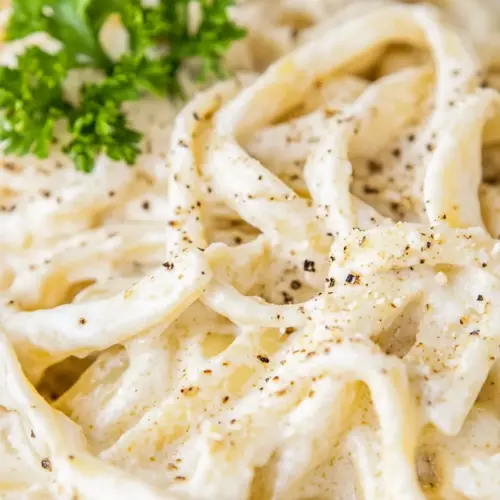
Creamy Garlic Alfredo
Creamy Garlic Alfredo is a silky, comforting pasta made with butter, cream cheese, and parmesan cheese for a rich, smooth mouthfeel. This easy weeknight dinner blends savory chicken bouillon and garlic to create layered flavor, perfect for feeding a crowd or enjoying leftovers. Make it when you want a quick, indulgent meal that still feels homey and satisfying.
Equipment
- Large Pot
- Large saucepan
- Small Bowl
- Whisk
- Wooden Spoon
Ingredients
- 4 oz salted butter Melted to create a rich, silky base that lends buttery flavor and helps emulsify the sauce when combined with cream and cheese.
- 1 block of cream cheese (softened and cut into chunks) Softened and cut into chunks to add tangy creaminess and body, creating a smooth, velvety texture when melted into the sauce.
- 1 tsp garlic powder Sprinkled for concentrated garlic flavor that enhances overall savory notes without adding moisture, helping season the sauce evenly.
- 1 heaping tsp minced garlic Minced and sautéed briefly to provide fresh, pungent garlic aroma and a bright savory bite that deepens the sauce’s flavor profile.
- 2 tsp dried parsley flakes Scattered to contribute a mild herbal, slightly bitter note and visual flecks that complement the creamy, cheesy components.
- 1 tsp Italian seasoning Blended to introduce a balanced Mediterranean herb blend that brings oregano, basil, and thyme notes for depth and complexity.
- 1/2 tsp salt Measured to season the sauce, amplifying flavors and balancing the richness from dairy and butter without overpowering other seasonings.
- 1/4 tsp pepper Added to adjust taste balance by providing subtle heat and brightness, rounding out the seasoning of the creamy sauce.
- 1 tbsp flour Whisked in to thicken the sauce slightly, helping create a cohesive, clingy texture that allows the cream and cheese to adhere to pasta.
- 1 cup heavy whipping cream Poured in to form the luxurious liquid base, supplying fat and creaminess that yields a decadent mouthfeel and helps dissolve cheeses.
- 1 cup water Used to adjust sauce consistency and dilute intensity, contributing volume while carrying dissolved seasonings throughout the dish.
- 1 chicken bouillon cube Dissolved to concentrate savory, umami flavors and add a savory backbone, enhancing the overall depth of the Alfredo sauce.
- 8 oz shredded parmesan cheese Folded in to provide sharp, salty, nutty flavor that melts into the sauce, giving the characteristic cheesy profile and richness.
- 16 oz penne pasta (1 box) Cooked according to package instructions to serve as the hearty carbohydrate that soaks up and showcases the creamy Alfredo sauce.
- 1/2 tsp salt (for pasta) Sprinkled into the pasta cooking water to season the pasta from within, ensuring balanced taste before combining with the sauce.
Instructions
- Cook penne pasta in a large pot per package directions, making sure to add 1/2 tsp salt to the water (cook time is about 14 minutes). Once done, drain pasta and put back in the large pot.: As the pot comes to a rolling boil you will hear the water sing and see bubbles rise steadily, that energy cooks the penne pasta through. The small pinch of salt in the boiling water seasons the pasta internally, which is why I always add it early. Aim for a texture that is tender but still has a faint bite, because pasta that is overcooked will turn mushy once mixed with the sauce. Drain promptly and return the pasta to the pot so it stays warm, which helps the sauce adhere. A common mistake is letting pasta sit in the colander too long where residual heat can steam it into softness; drain and return it quickly.
- In a small bowl add 1 cup of water. Drop in the bouillon cube. Put in the microwave for 2 minutes on high heat. Be careful, the edges of the bowl will be hot. Set aside.: You will notice the bouillon dissolve and the water will become aromatic and slightly golden, signaling a quick, flavorful broth. This step deepens the sauce without needing pre made stock, giving the finished Alfredo a meaty, savory backbone. Handle the bowl with caution right out of the microwave because steam pockets can burn; I let it rest for a few seconds while stirring to ensure the cube fully dissolves. A common slip is not dissolving the cube completely, which can leave gritty bits; stir thoroughly so the broth is uniform.
- In a large saucepan, melt stick of butter over low medium-low heat. Once butter is melted add chunks of cream cheese, minced garlic, garlic powder, dried parsley flakes, Italian seasoning, salt, pepper. Whisk together.: At this stage the butter should melt into a glossy pool and release a toasty, nutty aroma. Adding the softened cream cheese in chunks helps it integrate more evenly as the heat is gentle, preventing curdling. The fresh minced garlic will release fragrant oils, and the dried herbs will bloom in the warm fat. Use a whisk to coax the dairy into a smooth emulsion; you should see the mixture lighten and become cohesive. A pitfall is overheating, which can cause separation, so keep the temperature controlled and patient whisking will reward you.
- Add chicken broth, heavy whipping cream, and parmesan cheese. Whisk together and turn heat to medium, to a low boil.: When you pour in the savory broth and the heavy whipping cream , the pan will steam and the scent will deepen to something evocative of cozy restaurants. The parmesan cheese will begin to soften and melt, releasing a salty, nutty perfume. Bring the mixture toward a gentle boil, but not a fierce bubble, because a calm simmer is what encourages the dairy to meld without splitting. Visually you want the sauce to move like slow, thick ribbons around the whisk. Overly aggressive boiling is the main mistake here, which can make the sauce grainy.
- In a small bowl, add 5 tablespoons of sauce and 1 tablespoon of flour. Mix well with a spoon. Add flour sauce mixture and whisk well.: This is the roux shortcut, and mixing flour with warm sauce first prevents lumps. The small bowl will smell warmly savory as you stir and the flour will absorb liquid, creating a paste that disperses more evenly when introduced to the saucepan. Once whisked in, the sauce should thicken gradually and coat the back of a spoon. If you add dry flour directly to the pan you risk clumping, so this pre mix is key to a smooth finish. A frequent error is adding the flour mixture too quickly, which can momentarily thicken excessively; whisk briskly and add slowly if needed.
- Let the sauce simmer for about 5 minutes, continue to whisk frequently while simmering.: As the sauce simmers you will hear a soft bubbling and see the surface move with a slow shimmer; this is when starches activate and the texture refines. Frequent whisking ensures even heat distribution and stops the bottom from catching, while also polishing the sauce into a satiny consistency. Taste periodically to check seasoning balance because simmering concentrates flavors. The most common problem here is leaving the pan unattended, which can lead to scorching or an overly thickened sauce; keep stirring and adjust the heat to maintain a gentle simmer.
- Once the sauce is done pour over noodles, stir well, and serve.: When you pour the warm sauce over the reserved penne pasta , you will see it cling to the ridges and fill the pasta cores, making each piece look glossy and appetizing. Tossing immediately helps the sauce coat evenly and prevents pooling. Serve while still warm so the texture stays silky; as it cools the sauce firms up. If the sauce tightens too much, a splash of warm water or reserved pasta cooking water will loosen it without diluting flavor. The slip up I see most is waiting too long to toss, which results in uneven coating and a less cohesive dish.
Notes
- Warm ingredients: Bringing the cream cheese to room temperature helps it melt smoothly, preventing lumps and shortening cook time.
- Gentle heat: Maintain a medium to low heat once the dairy goes in, because gentle warmth preserves a glossy texture and prevents separation.
- Whisking rhythm: Whisk frequently, especially when adding the flour mixture, to integrate the starch evenly and avoid pockets of raw flour.
- Broth clarity: Make sure the bouillon cube is fully dissolved in the hot water so you do not get gritty or overly salty spots in the sauce.
- Finish hot: Toss and serve immediately for optimum silkiness, and if leftovers firm up, reheat gently with a splash of water to restore the right consistency.