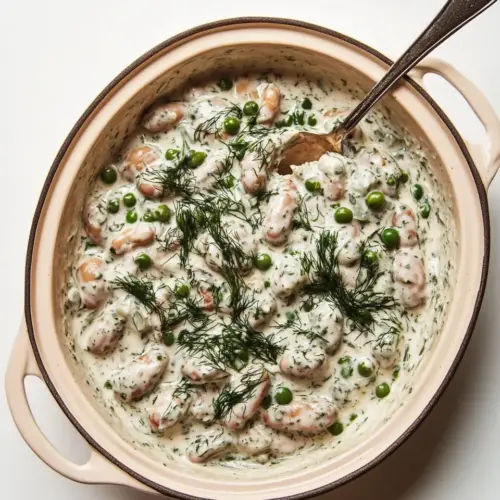
Creamy Dilly Beans Peas
Creamy Dilly Beans Peas is a velvety, herb forward vegan dish that pairs rich cashew cream with tender butter beans and bright dill. It tastes creamy, fresh, and satisfying, perfect as an easy weeknight dinner or a spring lunch. The combination of lemon and grainy mustard keeps the flavors lively, making it a compelling reason to make it tonight.
Equipment
- Blender
Ingredients
- 1/3 cup (79 ml) raw cashews, soaked for at least 2 hours and drained Soak and soften to create a creamy base; when blended, cashews provide rich body and silky texture to replace dairy in the sauce, lending subtle nuttiness that enhances overall mouthfeel.
- 2/3 cup (158 ml) water Thin and emulsify the cashew cream while adding moisture for a smooth consistency; water helps the blender process the soaked nuts into a pourable, velvety sauce without altering flavor.
- 1 teaspoon light miso Add umami depth and mild saltiness; light miso rounds out the creamy base with fermented complexity that balances the dish and enhances savory notes.
- 1 tablespoon olive oil Sauté and enrich flavors with a fruity, aromatic fat; olive oil helps soften aromatics, carries flavor, and contributes a Mediterranean richness to the sauté stage.
- 1 medium shallot, small dice Provide a sweet, onion-like foundation and texture when softened; small-diced shallot mellows during cooking, releasing delicate flavor that complements garlic and greens.
- 2 cloves garlic, minced Introduce pungent warmth and aromatic sharpness; minced garlic amplifies savory layers and meshes with herbs and spices to brighten the sauce.
- 3/4 teaspoon ground coriander Offer warm, citrusy spice and subtle earthiness; ground coriander adds complexity and pairs well with mustard and dill to enliven the bean and pea mixture.
- 2 teaspoons grainy mustard Bind and emulsify while adding tangy, grainy texture; grainy mustard brings acidity and savory bite that helps cut richness and lift the overall flavor profile.
- 1/3 lb (151 grams) green beans, trimmed and chopped into 2-inch pieces Add fresh, crisp vegetal structure and tender-crisp bite when lightly cooked; trimmed and chopped green beans contribute color, texture, and a garden-fresh taste.
- sea salt and ground black pepper, to taste Season and balance flavors to taste; sea salt and ground black pepper enhance natural tastes, control seasoning, and bring out aromatic elements in the dish.
- 2398 ml cans butter beans, drained and rinsed(about 3 cups beans total) Provide creamy, starchy body and protein-rich substance; drained and rinsed butter beans create a hearty base that blends with the cashew cream for a luscious texture.
- 2 cups (500 ml) vegetable stock Simmer and infuse savory liquid for tenderizing vegetables; vegetable stock supplies depth, cohesion, and additional seasoning while cooking the beans and peas.
- 3/4 cup (177 ml) frozen peas Add bright sweetness and pop of color; frozen peas contribute tender bursts of fresh flavor and contrast to the creamy sauce when stirred in near the end.
- 1 tablespoon lemon juice Brighten and balance richness with acidity; lemon juice adds lively citrus notes that cut through creaminess and elevate the overall flavor profile.
- 1/4 cup (59 ml) fresh dill leaves, chopped Introduce fresh, herbaceous brightness and anise-like notes; chopped fresh dill leaves finish the dish with aromatic lift and complement the beans and peas.
- Crusty bread, for serving Serve and provide texture contrast; crusty bread offers a crunchy, absorbent companion for scooping the creamy beans and soaking up the sauce.
Instructions
- Make the cashew cream. In an upright high-speed blender, combine the cashews, water and miso. Blend on high until you have a smooth cream consistency. Set aside.: The moment you start blending you will notice a creamy whisper forming as the cashews break down, a pale, velvety slurry that smells faintly nutty and comforting. This step matters because the texture of the finished dish hinges on a truly smooth cream, so take your time and scrape the sides as needed to eliminate any grainy bits. If your blender hesitates, let the cashews soak a touch longer or add a splash more water and pulse, rather than running it until strained. Common mistake to avoid is under soaking, which results in a gritty mouthfeel rather than a silky emulsion.
- Place a braiser-style pot or deep skillet on the stove and set it to medium heat. Once hot, pour in the olive oil and swirl it around. Add the shallots and sauté until soft and translucent, about 5-6 minutes.: As the olive oil warms you will hear a gentle sizzle when the shallots hit the pan, releasing a sweet onion aroma that fills the kitchen. Softening the shallots slowly allows their sugars to bloom and create a mellow, savory base without browning, which keeps the final flavor delicate. Use medium heat and give them room to sweat, stirring occasionally to prevent sticking. A typical trap is turning up the heat to rush this step, which causes the shallots to brown and shifts the dish toward a caramelized note you do not want here.
- Add the garlic, coriander, and mustard to the pot and stir for 30 seconds. Add the green beans, season with salt and pepper, and stir. Then, add the butter beans and vegetable stock. Stir and place a lid on top. Bring the beans to a boil and then simmer uncovered until green beans are tender, about 8 minutes.: When you introduce the garlic , ground coriander , and grainy mustard the pan will perfume the air with warm, citrusy, and tangy notes, and stirring briefly releases their essential oils. Adding the cut green beans at this stage lets them cook into tenderness while keeping snap, and the cans of butter beans soak up the nearby flavors. Pouring in the vegetable stock creates a shallow bath that will reduce into a flavorful sauce, and bringing the pot to a boil before simmering develops a gentle bubbling rhythm that helps ingredients meld. Watch for the green beans to turn a vivid green and become tender to the bite, and avoid overcooking them until they collapse, as that loses the pleasant contrast against the creamy beans.
- Once green beans are tender, add the frozen peas and cashew cream. Season again with salt and pepper. Keep stirring until green peas are tender and bright green, about 2 minutes. The liquid will reduce and thicken.: As you fold in the frozen peas and the pale cashew emulsion, the pot will cloud into a plush, creamy sauce that begins to cling to the beans with a soft sheen. The sound will quiet to a gentle simmer, and the aroma will become a balanced mix of herb, nut, and simmered bean. Stirring steadily helps the sauce thicken evenly and prevents sticking, while the peas quickly heat through and pop with sweetness, signaling doneness by their bright green color. A common misstep is adding the cream too early while the heat is too high, which can separate the emulsion; keep the temperature moderate and stir gently.
- Add the lemon juice and dill to the beans and stir. Serve the dilly beans and peas piping hot with some crusty bread for scooping.: The final addition of lemon juice and chopped dill releases a fresh, grassy perfume that lifts the whole pot; you will notice an immediate brightening on the palate that cuts through the savory creaminess. Stir briefly to distribute the herb and acid, then taste and adjust seasoning with a sprinkle of sea salt or black pepper if needed. Serve while the dish is steaming, the sauce still clinging to each bean, and present with crusty bread so diners can scoop and savor the textural contrast. Avoid adding the herbs too early because their delicate oils will fade with prolonged heat.
Notes
- Swap the beans: Try any white bean you prefer, such as cannellini or navy beans, to vary the texture while keeping the creamy mouthfeel.
- Boost herb intensity: Increase the amount of chopped dill for a more pronounced herbal note, adding half at the end and half as a fresh garnish.
- Change the mustard: Use a milder mustard if you want less tang, or a more assertive grainy mustard for extra texture and bite.
- Make it chunkier: Chop half the butter beans slightly to add creamy pockets and textural contrast within the dish.
- Prep ahead: Blend the cashew cream and store it in the refrigerator for up to two days to streamline weeknight assembly.