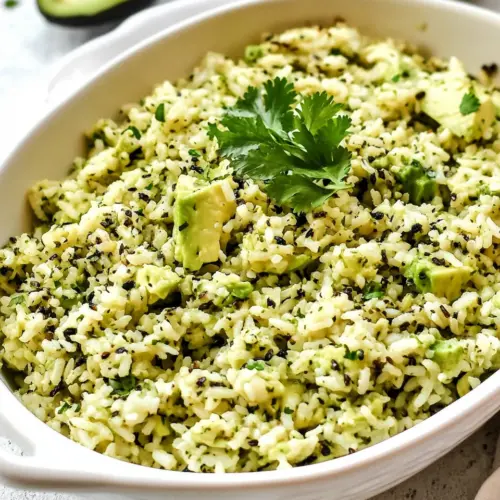
Creamy Cilantro Lime Avocado Rice
Creamy Cilantro Lime Avocado Rice delivers a silky, herby bowl that is both fresh and comforting. Bright lime and fragrant cilantro lift the rich avocado sauce, making this a perfect easy weeknight dinner side or picnic staple. It is creamy, flavorful, and quick to pull together, a smart choice when you want big flavor with minimal fuss.
Equipment
- Large Nonstick Skillet
- Blender
- Measuring Cups
- Spatula
Ingredients
- 1 1/2 cups long grained rice, rinsed and drained Rinse and drain thoroughly to remove surface starch, ensuring separate fluffy grains when cooked; measure accurately for proper liquid ratio and texture in the rice base.
- 3 cups chicken broth (may sub vegetable broth) Simmer gently as the primary cooking liquid to infuse savory depth; substitute vegetable broth for a vegetarian version while maintaining the rice's flavor and moisture balance.
- 114.5 oz can black beans, rinsed and drained (optional) Rinse and drain well to remove canning liquid, then fold in as an optional protein-rich, fiber-packed addition that adds earthy flavor and hearty texture to the rice.
- 2 -3 mangoes, peeled and chopped (optional) Peel and chop into bite-sized pieces if using; add bright, sweet, tropical notes and juicy contrast that complement the creamy and citrus elements in the dish.
- 1/2 cup sour cream (I use light) Stir until smooth to create a creamy tangy component that enriches the rice and helps bind the avocado and seasonings into a cohesive, silky texture.
- 1/4 cup milk Whisk in to thin the sour cream slightly and achieve the desired creaminess; adds a neutral dairy backdrop that helps blend flavors without overpowering them.
- 1 large avocado, peeled and pitted Mash or blend to create a rich, buttery base for the creamy cilantro-lime mixture; contributes healthy fats, silky texture, and a subtle, mild flavor.
- 1/2 -1 jalapeno seeded, deveined and roughly chopped (optional) Deseed and chop to control heat level; adds bright peppery spice and a gentle kick that enhances the overall flavor profile when balanced with lime and creamy elements.
- 1/4 cup packed cilantro Pack and chop finely to release fresh herb oils; delivers bright, citrusy, slightly peppery notes that anchor the cilantro-lime flavor throughout the rice.
- 1/4 red onion, roughly chopped Roughly chop to add sharp, pungent sweetness and crunchy texture; helps balance rich and creamy components with a bit of savory bite.
- 2 -3 garlic cloves, peeled Peel and crush or mince to release aromatic, pungent flavor; builds savory depth and pairs with cumin and smoked paprika to create a layered savory base.
- 1 teaspoon salt Measure precisely to enhance and season the entire dish; provides essential salinity that brings out brightness in lime and depth in the savory components.
- 1/2 teaspoon ground cumin Sprinkle to add warm, earthy, slightly nutty undertones; pairs especially well with cumin and smoked paprika to reinforce the southwestern-inspired flavor profile.
- 1/4 teaspoon pepper Grind into the blend to add subtle heat and aromatic sharpness; balances salt and citrus while contributing to the overall seasoning complexity.
- 1/4 teaspoon smoked paprika Dust lightly to impart a smoky, slightly sweet accent that deepens flavor layers; works with cumin to give a mild barbecue-like nuance without overwhelming freshness.
- 2 tablespoons lime juice plus more to taste Squeeze fresh to deliver bright citrus acidity that lifts flavors and balances richness; add extra to taste to adjust brightness and tang in the finished rice.
Instructions
- Add rice, beans (optional) and chicken broth to a large nonstick skillet and bring to a boil. Reduce heat to low (dial should be a little above lowest setting), cover, and simmer for approximately 15-20 minutes or until rice is tender, stirring at 15 minutes. Remove from heat and let sit, uncovered, for 5 minutes.: The smell at this stage will be warm and savory, with the broth giving the kitchen an instant cozy aroma; you should hear a gentle bubbling as it approaches a boil. Using a nonstick skillet helps keep the bottom even and prevents sticking, which is important since the rice will simmer for a while; avoid vigorous boiling because rapid movement can release starch and make the grains gluey. A common mistake here is using too high heat, which can cause the liquid to evaporate too quickly and the rice to cook unevenly. If that happens, lower the heat, cover, and add a splash of extra broth or water, one tablespoon at a time, until the rice looks like it will finish gently.
- Meanwhile, add all of the Creamy Blender Avocado Sauce ingredients to your blender and blend until smooth. Stir into cooked rice until well combined, adding milk if needed to reach desired consistency. Season with additional salt, pepper and lime juice to taste. Garnish with mangoes (optional).: As the pot simmers the aroma will shift to toasty rice and savory broth notes, and you may hear a soft, regular bubbling. The gentle simmer encourages even absorption of the liquid and prevents the grains from breaking. Stirring briefly at the fifteen minute mark helps prevent the bottom from scorching and gives you a chance to check tenderness; do not over stir because disturbing the rice too much can make it clump. A frequent error is lifting the lid too often, which releases steam and lengthens cooking time; only peek when you need to check doneness.
- Remove from heat and let sit, uncovered, for 5 minutes: After cooking, the residual heat will continue to finish the rice, and letting it rest uncovered allows excess steam to escape so the grains remain fluffy rather than soggy. You will notice the surface becoming matte and the separate grains settling into a loose texture. If you leave it covered, condensation can drip back and make the rice wet, so resist that temptation. If your rice still seems underdone after resting, cover and let sit for another two to three minutes off heat.
- Meanwhile, add all of the Creamy Blender Avocado Sauce ingredients to your blender and blend until smooth: The sound of the blender will shift from choppy to a steady hum as the ingredients emulsify into a velvety sauce. The combined aroma of cilantro , garlic , and lime should be bright and punchy, and visually the sauce will turn a uniform pale green. Blending at high speed ensures tiny avocado pieces are fully incorporated; if your blender stalls, scrape down the sides and pulse again. One mistake is adding too much liquid immediately, which can make the sauce thin; add the milk gradually to reach the desired thickness.
- Stir into cooked rice until well combined, adding milk if needed to reach desired consistency: When you fold the sauce into the warm rice you will notice an immediate silkiness as the sauce adheres to each grain, producing a glossy coating and a fragrant lift from the lime and cilantro . Use a wide spatula to fold gently, ensuring the rice stays fluffy while getting fully coated. If the mixture seems too thick, add small amounts of milk and stir until you get the texture you like. A common pitfall is stirring too aggressively which can break apart the grains, so adopt gentle folding motions to maintain structure.
- Season with additional salt, pepper and lime juice to taste: This tasting step is the moment where the flavors come into balance; you should taste for salt, brightness, and gentle heat, and adjust accordingly. Lime juice lifts the whole dish and salt deepens the savory elements, while pepper adds a background warmth. I always add small increments, taste, and let the flavors meld for a minute; oversalting can be difficult to correct, so go slowly. If the dish tastes flat, a little more acid typically fixes it faster than adding more seasoning.
- Garnish with mangoes (optional): Folding in fresh mangoes at the end will introduce a sweet, juicy contrast and a vibrant burst of color. The fruit should feel ripe and fragrant, and you will notice a pleasing contrast between the creamy sauce and the mango flesh. Add it just before serving so it retains its texture; if mixed too early the mango can release juices that soften the rice. One error people make is using underripe mangoes, which do not add the intended sweetness and can make the dish taste starchy, so always use ripe fruit.
Notes
- Swap Broth for Vegetarian Option Use vegetable broth instead of chicken broth to make the dish vegetarian friendly while maintaining savory depth. Taste and adjust salt accordingly.
- Control the Heat Start with half a jalapeno seeded and add more after tasting the blended sauce, so you can dial the spice to your comfort level without risking an overly spicy batch.
- Make it Ahead Prepare the rice and sauce separately, then combine just before serving to preserve texture. This is great for entertaining and reduces last minute stress.
- Adjust Creaminess If the sauce is too thick, add a tablespoon of milk at a time until it reaches a spoonable texture that coats the rice rather than pooling.
- Add Fresh Fruit Last Fold in diced mango only right before serving to keep it vibrant and prevent it from softening the rice with extra moisture.
- Use Ripe Avocados Choose avocados that yield slightly to gentle pressure for the creamiest sauce; underripe ones will result in a grainy texture.