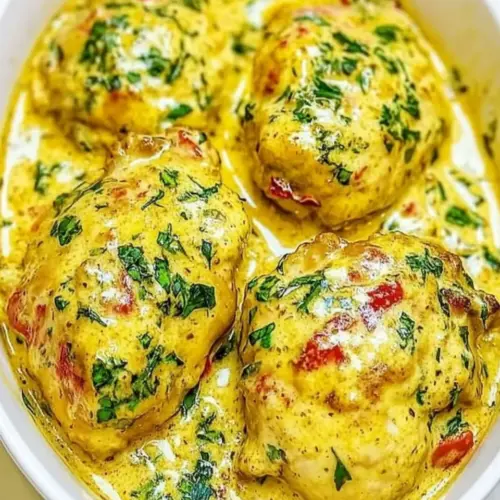
Creamy Chicken Thighs
Creamy Chicken Thighs delivers juicy seared chicken in a silky, cheesy sauce loaded with roasted peppers and baby spinach. This creamy, savory, easy weeknight dinner brings restaurant style flavors to a simple pan, perfect for family meals or casual entertaining. Make it when you want comfort food that feels a little special and finishes quickly.
Equipment
- Large Skillet
- Spatula
Ingredients
- 2 lb s. skin-on chicken thighs (drumsticks or breasts work, too) Provide rich, savory flavor and tender texture when seared and roasted; use skin-on chicken thighs for juiciness and crisped skin that complements the creamy sauce. Trim excess fat and pat dry to ensure even browning, and adjust cooking time if substituting drumsticks or breasts to prevent overcooking. Season well before searing to build a flavorful fond for deglazing the pan.
- 2 tbsp . olive oil Coat the pan to promote even browning and prevent sticking while adding a subtle fruity base flavor. Heat until shimmering before adding chicken to get a crisp exterior without burning, and finish with any pan drippings to enrich the sauce.
- 1 medium onion Sweat until translucent to build a sweet aromatic base for the sauce and release natural sugars that balance the dish. Slice or finely chop for quick softening, and cook gently after the initial sear to avoid browning and preserve moisture in the cream.
- 1/2 tsp . red pepper flakes Add gentle heat and complexity to the sauce without overpowering the dish; scatter sparingly for background warmth. Toast briefly in the oil with the onion to bloom its flavor, then adjust quantity to taste to keep the cream sauce smooth and balanced.
- 1/2 cup roasted peppers, cut into thin strips (see note) Contribute smoky sweetness and vibrant color while providing tender, roasted texture that complements the cream; use thin strips to distribute flavor evenly. Stir in after onions have softened so the peppers warm through and meld with the sauce, or use jarred roasted peppers drained well for convenience.
- 1 cup Half & Half Enrich the sauce with creaminess and body while mellowing spices and carrying Parmesan for a silky texture; Half & Half offers a lighter alternative to heavy cream. Add gradually while simmering to prevent curdling, and reduce gently to thicken without boiling vigorously.
- 4 cups baby spinach Wilt quickly into the hot sauce to add fresh, green color, nutrients, and a mild earthy flavor that brightens the dish. Add towards the end of cooking and toss until just wilted to retain tender texture and vibrant appearance.
- 3/4 cup Parmesan cheese Provide nutty, salty richness and help thicken the sauce while deepening overall savory notes; grate finely for smooth incorporation. Stir in off heat or over low heat to melt evenly and prevent graininess, tasting for seasoning as Parmesan contributes significant salt.
- salt and pepper to taste Season to taste to balance flavors and enhance natural savory and sweet components of the dish; use judiciously to avoid oversalting because Parmesan adds salt. Add pepper freshly ground for aromatic heat and adjust at the end after tasting the finished sauce.
- fresh parsley, to garnish Finish the dish with bright herbal freshness and visual contrast; chop finely for even distribution and sprinkle just before serving to preserve color. Pair with other finishing touches like a light squeeze of lemon if desired for extra brightness.
Instructions
- Sprinkle the chicken with salt and pepper on both sides.: The moment you season the chicken you'll notice the salt drawing out a faint moisture, which helps the exterior brown more evenly during searing. You should smell a clean savory note from the seasoning, and the skin will start to dry slightly at the surface, which is what you want for crisping. A common mistake is underseasoning, which leaves the finished dish bland, or over salting early on if your pan is small, which can concentrate flavors too much. Be generous but measured, and pat the seasoning into the meat for even coverage.
- Heat the oil in a large skillet over medium-high heat. Add the chicken and sear for about 2 minutes. Reduce the heat to medium, and keep frying the chicken until cooked through. The cooking time will vary, depending on the thickness of the chicken.: As the olive oil shimmers and the chicken hits the pan, you'll hear a satisfying sizzle that signals the Maillard reaction is starting. That sound changes to a steadier sizzling as the crust forms and the aroma becomes savory and slightly nutty. Visual cues are golden brown edges and clear juices; if the pan smokes heavily your heat is too high. A frequent error is crowding the pan, which causes steaming rather than searing, so give each piece space. Use a probe or cut into the thickest part to check doneness rather than guessing by time alone.
- Remove the chicken from the skillet and set aside. To the same skillet, add the onions and cook for about 5 minutes, until soft and golden in color. Add the red pepper flakes and roasted peppers, and cook for another 2 minutes.: The pan will hold those browned bits from the chicken , which dissolve into flavor as you cook the onion . As the onion softens you will smell sweet, caramelized notes that mingle with the faint heat of the red pepper flakes. When you add the roasted peppers their smoky perfume lifts the mixture. A common pitfall is rushing the onion so it remains raw and sharp; patience here builds the backbone of the sauce. Stir regularly and use the spatula to scrape up fond, that's where concentrated flavor lives.
- Reduce the heat to medium-low, add the cream, and bring to a simmer. Add the spinach, and when it wilts down, add the Parmesan. Stir the sauce.: When the Half & Half hits the warm pan you will see gentle steam and small bubbles as it approaches a simmer. Keep the heat moderate to prevent scalding, and watch the liquid thicken slightly as it reduces. Adding the spinach introduces a quick burst of green aroma and a soft hissing as it wilts; it will collapse dramatically, releasing a touch of moisture that blends into the sauce. Folding in the grated Parmesan cheese off heat or on very low heat helps it melt smoothly without clumping. Avoid boiling vigorously, which can separate the dairy and make the texture grainy.
- Return the chicken to the skillet, and cook for 5 minutes, spooning the sauce over it. Remove the skillet from the heat. Garnish with freshly chopped parsley.: As you nestle the seared pieces back into the sauce, you'll notice the tempting aroma of browned meat mingling with creamy, cheesy notes. Spoon the sauce over each piece so the flavors penetrate and the surface rewarms gently. After about the suggested time the chicken should be fully cooked and glossy with sauce. Take it off the heat to avoid overcooking, which dries the meat and dulls the sauce. Finish with bright, chopped parsley to add a fresh herbal lift and a burst of color that contrasts beautifully with the creamy sauce.
Notes
- Swap the peppers thoughtfully Use jarred roasted peppers for convenience, or roast fresh red peppers under the broiler for a more intense smoky sweetness. If roasted fresh, peel and slice them thinly so they integrate into the sauce quickly.
- Lighten the sauce Substitute part of the Half & Half with low fat milk for a lighter creaminess, but keep some higher fat content to preserve mouthfeel and sauce stability.
- Make it spicier Increase the red pepper flakes gradually to raise the heat, tasting as you go so the spice complements rather than overwhelms the Parmesan cheese and cream.
- Use different greens Swap baby spinach for baby kale or Swiss chard, but add them a little earlier and give extra time to soften tougher leaves.
- Boost umami Stir a small spoon of finely grated aged cheese into the sauce for extra depth, being careful with salt levels since some cheeses are saltier.
- Finish with acid A squeeze of lemon juice at the end brightens the sauce and balances richness, added sparingly so it does not curdle the dairy.