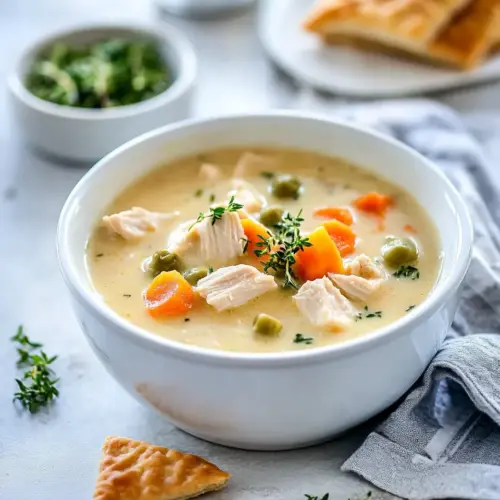
Creamy Chicken Pot Pie Soup
Creamy Chicken Pot Pie Soup is a rich, savory bowl that blends tender chicken, velvety broth, and hearty potatoes for an easy weeknight dinner. The silky finish from milk and heavy cream makes each spoonful comforting and satisfying, while simple pantry ingredients keep it approachable. Make it for cozy family meals when you want big flavor with minimal fuss.
Equipment
- Large soup pot or heavy dutch oven
- Measuring Cup
- Ladle
- Wooden spoon or spatula
Ingredients
- 2 tablespoons olive oil Heat and sauté other aromatics; helps provide the cooking fat base and prevents sticking while adding a light fruity flavor.
- 2 tablespoons unsalted butter Enrich and brown for depth; contributes creamy richness and helps create a velvety roux when combined with flour.
- 1 medium onion, finely chopped (about 1 cup chopped) Add sweetness and savory backbone; softens when cooked and builds the soup’s aromatic foundation for deep flavor.
- 3 skinny carrots, peeled and sliced into 1/4-inch thick coins (about 3/4 cup sliced) Provide gentle sweetness and texture; add tender bites and natural sweetness that complement savory elements.
- 1 stalk celery, finely chopped (about 1/4 cup chopped) Contribute subtle freshness and crunch; sweated with onions and carrots to form the classic mirepoix base.
- 3 garlic cloves, minced (about 1 tablespoon minced) Give pungent aroma and depth; minced and cooked briefly to release flavor without burning.
- 1/4 cup all purpose flour Thicken and bind; whisked into fat to form a roux that creates the soup’s creamy, velvety body.
- 1/2 teaspoon paprika Season and add warmth; sprinkle into the roux or broth to provide a mild smoky-sweet depth.
- 1 quart chicken stock Create the savory liquid base; supplies concentrated chicken flavor and liquidity for simmering and cooking ingredients.
- 1 bay leaf Infuse aromatic background; simmered in the broth to add subtle herbal complexity during cooking.
- 2 boneless skinless chicken breasts, cut into bite sized cubes Supply protein and heartiness; cubed and simmered until cooked through to create tender, savory bites in the soup.
- 2 medium yukon gold potatoes, cut into 1/2-inch cubes (about 1 cup cubed) Add body and satisfying starch; simmered until tender to give the soup substance and a comforting texture.
- 1/2 cup fresh or frozen English peas Contribute pops of color and sweetness; added near the end to retain freshness and bright flavor.
- 1 cup whole milk, at room temperature Lighten and thin the base while adding creaminess; poured in at room temperature to avoid curdling.
- 1/4 cup heavy cream, at room temperature Add indulgent richness; stirred in to increase silkiness and mouthfeel for a luscious finish.
- 1 tablespoon chopped fresh parsley Introduce fresh herbal brightness; sprinkled in at the end to lift and balance the rich flavors.
- 1 teaspoon chopped fresh thyme or 1/2 teaspoon dried thyme Add earthy, aromatic notes; used fresh or dried to complement the herbs and deepen savory layers.
- salt and freshly ground black pepper, to taste Enhance overall seasoning; adjusted to taste to bring out the flavors and balance saltiness and seasoning.
- pie crust crackers or oyster crackers, optional for topping Provide a crunchy, savory topping option; crumbled over bowls to mimic pot pie crust texture and add contrast.
Instructions
- If you haven’t already, measure out your milk and cream in a 2-cup glass measuring cup or bowl and set aside to come to room temperature.: The smell of the hot broth will be slightly savory at first, then you will notice a gentle sweetness as the aromatics bloom in the pot, which is why I set the dairy aside to warm. Warming the milk and heavy cream prevents a sudden temperature shock that could make them separate when added, and it helps everything integrate smoothly. A frequent mistake is adding cold dairy directly to hot liquid, which can lead to curdling or uneven texture. If you skip this step you might see little flecks in the broth, so take the two minutes to measure and rest your dairy.
- In a large soup pot or heavy dutch oven, heat butter and olive oil over medium heat until melted and sizzling. Add onion, carrot, celery and garlic and a hearty pinch of salt and pepper and sauté, stirring occasionally, until veggies are softened and onions are starting to brown, about 15 minutes.: Listen for a faint sizzle as butter and olive oil meet the pan, and breathe in the sweet, nutty aroma as the fats warm. The combination of oils raises the smoke point and gives a glossy base for the vegetables, helping the onion , carrot , and celery to soften without burning. This technique matters because the fats carry flavor compounds, allowing the aromatics to release their sweetness while developing savory complexity. A common error is overheating the fats so they burn, which will impart bitterness. Keep the heat moderate and swirl the pan to coat evenly.
- Add flour and paprika and stir until flour thickens and evenly coats veggies in a paste-like consistency.: As the vegetables cook, you will notice the kitchen filling with a layered, savory perfume; the onion will go from crisp to translucent, then to edges showing light caramel color, which adds a gentle sweetness. Stir occasionally to avoid sticking and to promote even browning, which creates deeper flavor. If you rush this step by turning the heat too high, the outsides will char while the centers stay undercooked. Patience here rewards you with a sweeter, more nuanced base.
- Add broth and bay leaf and bring to a simmer.: At this point you will hear a faint softening of the sizzle as the flour absorbs fat and moisture, transforming into a roux like paste that will become the soup's thickening backbone. The paprika melds in and adds color without heat. This technique matters because cooking the flour briefly removes its raw taste and ensures a smooth, velvety finish. A common mistake is adding liquid too soon, which leads to lumps; instead, cook the flour for a minute or two and stir constantly until it smells slightly toasty.
- Add chicken, cubed potatoes and peas and gently simmer for about 20 minutes or until chicken is cooked through and potatoes are fork tender. Remove from heat.: When you pour in the chicken stock , it will hiss softly as it meets the roux, and then the mixture will gradually quiet as it heats to a gentle simmer. The bay leaf will begin releasing an aromatic background note, and the simmer will coax flavors together. Simmering rather than boiling preserves a delicate texture in the eventual chicken and prevents the potatoes from falling apart. Avoid a rolling boil which can break down starches and make the broth cloudy; keep the heat steady and low.
- Temper the milk and cream mixture by ladling about 1/4 cup of hot soup liquid into measuring cup with milk, whisking constantly. Continue to ladle hot liquid, 1/4 cup at a time, until you’ve added about 1 to 1 1/2 cups and milk mixture is warmed to the touch. Pour into pot with remaining soup and stir to combine.: As the pot simmers, you will see the surface show intermittent bubbles and hear a soft popping, while the aroma becomes full and savory. The chicken will turn opaque and should reach a tender, juicy texture, while the potatoes soften without disintegrating. This gentle simmering preserves texture and ensures each element cooks evenly. One mistake is over stirring, which can break up the potatoes or shred the chicken; stir gently and only as needed.
- Stir in parsley and thyme. Taste and adjust salt and pepper as necessary before ladling into soup bowls to serve. Top with pie crust crackers or oyster crackers, if desired. Soup will also keep in the refrigerator for 2 to 3 days or frozen for up to 1 month. Reheat in a saucepan until heated through without letting it simmer.: You will feel the warmth of the soup as you whisk, and the liquid will become silkier with each addition. This gradual introduction prevents the dairy from shocking and curdling, protecting the smooth mouthfeel we are building. Continue to ladle hot liquid, 1/4 cup at a time, until you have added about 1 to 1 1/2 cups and milk mixture is warmed to the touch. Pour into pot with remaining soup and stir to combine. A common error is adding all the hot liquid at once, which can cause separation; patience here keeps the broth uniformly creamy.
- Stir in parsley and thyme. Taste and adjust salt and pepper as necessary before ladling into soup bowls to serve: Fresh herbs will release a bright scent and add visual contrast, lifting the richness with a green note. Tasting at the end lets you balance seasoning, because flavors concentrate as the soup cools slightly. If you over salt early, you cannot easily fix it later, so adjust gradually and taste frequently. One pitfall to avoid is under seasoning the finished dish; don’t be shy to add pepper for warmth and depth.
- Top with pie crust crackers or oyster crackers, if desired. Soup will also keep in the refrigerator for 2 to 3 days or frozen for up to 1 month: The contrast between crunchy crackers and the creamy soup is satisfying, adding a playful texture. When storing, cool the soup quickly to preserve quality, and when reheating, do so slowly in a saucepan until heated through without letting it simmer, which can separate the cream. A common mistake is microwaving frozen soup at high power which may yield uneven heating and break the emulsion; thaw gently and reheat on the stovetop.
Notes
- Swap or add herbs, try increasing the amount of thyme or finishing with extra parsley for a brighter herbal lift that cuts through the cream.
- Change your potatoes, use more waxy types like red potatoes for a firmer texture that holds up even longer if you plan to reheat portions later.
- Make it chunkier, increase the size of the chicken cubes and potato pieces for a heartier, stew like experience that is more filling with each spoonful.
- Try different crackers, topping with flaky pie crust pieces gives a nostalgic pot pie feel while oyster crackers add small, salty crunches in every bite.
- Adjust creaminess, if you prefer a lighter bowl, reduce the heavy cream slightly and increase milk to maintain volume but lower richness.