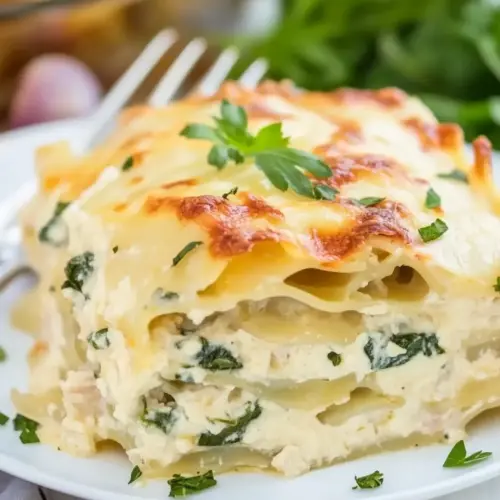
Creamy Chicken Lasagna
Creamy Chicken Lasagna is a rich, cheesy casserole with tender shredded chicken, silky white sauce, and layers of tender noodles. This comforting, crowd pleasing dish delivers creamy texture, melty mozzarella, and savory Parmesan, making it an ideal easy weeknight dinner or potluck centerpiece. Try it when you want a hearty baked pasta that reheats beautifully and satisfies a crowd.
Equipment
- 9x13-inch Baking Dish
Ingredients
- 2 cups cottage cheese or ricotta cheese Provide a creamy, slightly tangy base for the filling and helps bind the layers; blend smooth to prevent lumps and distribute moisture evenly through the lasagna. Add richness and a tender texture that complements the cheese blend and chicken, ensuring bites remain moist after baking.
- 2 large eggs Whisk into the cheese mixture to enrich and set the filling; beat until smooth so the eggs help hold the layered casserole together during baking. Add structure and a silky mouthfeel to the creamy interior while contributing subtle richness without overpowering flavors.
- 1 (10-ounce) package frozen chopped spinach, thawed and squeezed dry in paper towels Contribute mild, savory greens and moisture control when thoroughly drained; chop or squeeze out excess liquid to prevent a soggy casserole. Add color, mild flavor, and nutrients to the ricotta or cottage mixture, balancing cheese richness with an earthy note.
- 2 tablespoons chopped fresh parsley Bring fresh herbal brightness and a mild peppery flavor when finely chopped and folded into the filling; sprinkle evenly to distribute aroma throughout the dish. Enhance visual appeal and add a clean finish that lifts the rich, creamy components without dominating them.
- 1/2 teaspoon pepper Season the filling and sauce for balanced flavor and a subtle heat; measure carefully to complement cheeses and chicken without masking delicate flavors. Adjust to taste after assembly to ensure the overall dish remains well-seasoned and harmonious.
- 6 tablespoons butter, divided Provide a rich cooking fat for sautéing vegetables and melting into the sauce; divide to brown mushrooms and onions first and reserve some for a silky béchamel base. Add depth, glossy texture, and a buttery flavor that enriches both the vegetable mixture and the creamy sauce.
- 8 ounces mushrooms, sliced Offer an earthy, umami element when sliced and sautéed until golden; cook until moisture evaporates to concentrate flavor and prevent excess liquid in the lasagna. Pair with onions and garlic to build a savory foundation that complements the chicken and cheeses.
- 1 cup diced yellow or sweet onion Deliver sweet, aromatic flavor when diced and sautéed until translucent; soften to release natural sugars that deepen overall taste. Combine with mushrooms and garlic to create a savory base for the sauce and ensure tender vegetable bites throughout the casserole.
- 3 garlic cloves, minced Impart pungent, aromatic depth when minced and briefly sautéed; avoid burning to keep flavor mellow and fragrant. Integrate with onions and mushrooms to form a robust savory backbone that enhances the creamy sauce and chicken layers.
- 1/4 cup all-purpose flour Thicken sauces and create a roux when combined with butter; cook briefly to remove raw flour taste before adding liquids. Use to build a smooth, stable base for the creamy sauce that will bind well with milk and broth for a luscious texture.
- 2 cups chicken broth Add savory liquid and chicken flavor to the sauce; pour gradually into the roux while whisking to prevent lumps and achieve a silky consistency. Provide a concentrated backbone of flavor that complements the shredded chicken and creates depth in the béchamel-like sauce.
- 2 cups milk Contribute creaminess and body to the sauce and help thin the roux; warm slightly before adding to avoid curdling and whisk until smooth. Combine with chicken broth and cream cheese to produce a rich, velvety sauce that coats noodles and fillings evenly.
- 8 ounces cream cheese Introduce extra richness and tang to the sauce for a luscious, smooth texture; soften and blend into the warm liquid base until fully incorporated. Enhance creaminess and add a slightly tangy note that balances the mildness of cottage or ricotta and the shredded cheeses.
- 12 lasagna noodles, cooked in salted water and drained Provide structure and absorb sauce while holding layers together; cook until al dente in salted water to prevent sticking and over-softening. Arrange in even layers with filling and sauce so noodles become tender but maintain shape after baking.
- 4 cups finely chopped cooked chicken Supply substantial protein and savory flavor; finely chop cooked chicken to distribute evenly through layers and keep texture consistent. Use pre-cooked chicken for convenience, ensuring it is well-seasoned and moist so it complements the creamy sauce and cheeses.
- 4 cups shredded mozzarella cheese Melt into gooey, stretchy layers that create the classic lasagna pull; shred and sprinkle between layers and on top for a bubbly, golden finish. Offer mild milky flavor and a desirable melt that binds the casserole together while providing rich, cheesy bites.
- 2/3 cup shredded Parmesan cheese Add sharp, nutty flavor and a slightly granular texture when grated and sprinkled into the filling or topping; use sparingly to enhance overall cheesiness. Brown lightly during baking to contribute savory complexity and a pleasing contrast to the milder mozzarella and cream cheese.
Instructions
- Combine all the ricotta cheese mixture ingredients in a medium bowl and set aside. (Can be done 24 hours in advance and refrigerated.): The moment you mix the cottage cheese or ricotta cheese , 2 large eggs , squeezed spinach , fresh parsley , and 1/2 teaspoon pepper you will notice a uniform, slightly glossy texture that foreshadows how the filling will set. The aroma is fresh and dairy forward, with the parsley lending a green note. This mixing step matters because it distributes binder and seasoning, ensuring every slice holds together. A common mistake is under mixing, which creates uneven pockets of flavor and texture. If your mixture seems too wet, press it gently in a fine mesh sieve to remove a little liquid, but avoid over draining which will dry it out.
- Melt 2 tablespoons of butter in a large nonstick skillet. Add mushrooms and cook until browned. Season with salt and pepper and remove to a bowl.: When the butter foams and the sliced mushrooms hit the pan you will hear a soft sizzle and soon smell roasted, nutty notes. Browning concentrates their umami, so watch for edges turning deep brown rather than gray. Remove them as soon as they are richly colored to prevent them from releasing too much water and becoming limp. Overcrowding the pan is a frequent misstep, which causes steaming instead of browning, so cook in batches if needed.
- Add remaining 4 tablespoons of butter to the now empty skillet. Add onion and cook 3 minutes to soften.: As the butter melts, the diced onion will begin to sweat and release a sweet, fragrant scent. Stir gently so the pieces soften uniformly and become translucent. Softening the onion first ensures it melds into the sauce without harsh raw edges. A mistake to avoid is rushing the process with high heat, which can brown or scorch the onion and introduce bitter flavors.
- Add garlic and cook 1 more minute.: The minced garlic will perfume the pan almost immediately, giving a warm, aromatic lift. One minute is sufficient to release its flavor; cook longer and it can turn bitter. Stir constantly to prevent burning, and remove from heat briefly if the pan becomes too hot. Proper timing preserves the garlics sweet underside while guarding against harshness.
- Add flour. Cook and stir 1 minute.: Adding the all purpose flour creates a roux that will thicken the sauce. As you stir, the mixture becomes slightly grainy at first then smooths out, and the raw flour scent will mellow. Cooking for about a minute eliminates raw flour taste but avoid letting it brown, which changes the sauce color and flavor. A common error is not stirring continuously, which leads to lumps; whisk briskly for an even texture.
- Gradually whisk in chicken broth and then milk. Bring to a simmer and then simmer for 2 minutes to thicken.: Whisking in the chicken broth and milk slowly prevents lumps and yields a glossy sauce. As it heats you will see it thicken slightly and small bubbles will form around the edges, indicating a gentle simmer. Maintaining medium heat is important because too high a boil can break the sauce or make it grainy. If the sauce seems too thin after two minutes, simmer a little longer while stirring, but don’t rush the reduction which concentrates flavor.
- Cut cream cheese into pieces and add to the sauce. Stir until melted. Remove from heat. Season to taste with salt and pepper and add the mushrooms.: Adding the cream cheese in pieces helps it melt evenly, turning the sauce velvety and slightly glossy. Stir until no lumps remain and you can feel the sauce coat the back of a spoon, which promises a clingy layer for the noodles. Remove from heat to prevent overheating, which can cause separation. Fold the sautéed mushrooms into the sauce so their roasted aroma blends through. A typical mistake is adding too much salt before tasting, so season lightly and adjust at the end.
- Grease a 9×13-inch pan. Spread 1 cup of sauce in the bottom. Top with 4 lasagna noodles.: Greasing the baking dish prevents sticking and ensures clean slices. Spreading a thin base of sauce creates a protective moat so the bottom layer of lasagna noodles does not become gluey. Layering four noodles evenly gives a stable foundation. If you notice uneven noodle placement, nudge them so they align; uneven layers cause the lasagna to lean or collapse when sliced.
- Spread half the ricotta mixture on top of the noodles. Top with half the diced chicken.: The ricotta mixture should spread easily, creating a creamy blanket that hugs the noodles. When you add the finely chopped cooked chicken , distribute it evenly so every forkful includes protein. Texturally, the cool filling contrasts with the warm sauce beneath, which helps keep layers distinct. A common oversight is packing the filling too densely, which can impede even baking, so spread gently without compressing.
- Spread 1/3 of the remaining sauce on the chicken. Top with 1/3 of the mozzarella and 1/3 of the Parmesan cheese.: The sauce added here acts as a glue and flavor booster, ensuring moisture throughout the middle layers. Sprinkle the shredded mozzarella cheese and Parmesan cheese evenly, watching for clumps. The cheeses will melt and bind the layers, creating the signature bubbly top. Avoid over layering cheese in one spot which can melt into a greasy puddle rather than a cohesive sheet.
- Top with another layer of noodles. Spread the remaining ricotta mixture on the noodles. Top with remaining chicken.: A second noodle layer adds height and structure, while the remaining ricotta filling ensures creaminess spreads through the center. Scatter the rest of the chopped chicken for balanced bites. Keep layers even to promote uniform heat penetration during baking; uneven stacking can cause some areas to overcook while others stay cool.
- Top with another 1/3 of the sauce, followed by another 1/3 of the mozzarella and Parmesan.: Repeating sauce and cheese layers builds a harmonized casserole where sauce, cheese, and protein meet. This stage develops the internal moisture that yields a tender slice when baked. Ensure even distribution to avoid dry pockets. A misstep here is skimping on sauce which can make the top layers crumbly rather than cohesive.
- Lay the final layer of noodles and spread the remaining sauce on top.: The final noodle layer caps the lasagna, and the last sauce spread seals moisture in, so the top bakes into a rich, cohesive surface. Smooth the sauce gently to cover noodles completely; exposed edges can dry out. If you see gaps, nudge a spoonful of sauce to cover them to prevent crunchy noodle edges.
- Sprinkle the rest of the mozzarella and Parmesan on top.: The final cheese blanket will melt and brown, producing a golden, slightly crisp finish that contrasts with the creamy interior. Aim for even coverage so the top browns uniformly. An error to avoid is adding pre shredded cheese with anti caking agents that can inhibit smooth melting; freshly shredded produces a better melt and appearance.
- Spray the underside of a piece of aluminum foil with cooking spray and place it on the lasagna. Bake covered in a 350 degree oven for 45 minutes. Uncover and bake another 15 to 20 minutes. Let cool 10 minutes before slicing.: Tenting the lasagna with sprayed foil traps steam and prevents the cheese from burning while allowing the interior to heat evenly. Spraying the foil stops it from sticking to the cheese surface when removed. A common mistake is sealing too tightly which forces condensation to drip back onto the top and make it soggy; tent slightly so steam can circulate.
- Bake covered in a 350 degree oven for 45 minutes. Uncover and bake another 15 to 20 minutes. Let cool 10 minutes before slicing: During the covered bake you will notice the sauce bubbling gently along the edges, signaling internal temperature rise. Uncovering allows the top to brown and the cheese to blister. Letting it rest for 10 minutes helps the layers set so slices hold shape, and it cools slightly for safer, cleaner serving. A mistake to avoid is slicing immediately which yields a runny center; patience produces neat, saucy slices.
Notes
- Prepare components ahead — Mix the ricotta filling up to 24 hours in advance and refrigerate to save time and deepen flavor on baking day.
- Prevent watery filling — After thawing the frozen spinach, wrap it tightly in paper towels and squeeze until mostly dry to keep the filling thick.
- Brown mushrooms properly — Cook the sliced mushrooms in 2 batches over medium high heat so they caramelize and add concentrated umami instead of steaming.
- Use a rimmed baking sheet — Place the greased pan on a rimmed baking sheet to catch any spills and avoid oven messes, especially if your sauce is bubbling vigorously.
- Freshly shred cheeses — Shred both the mozzarella cheese and Parmesan cheese from blocks for superior melt and texture compared to pre shredded bags.
- Season gently and taste — Because the dish contains multiple salty cheeses and broth, season the sauce gradually and taste before adding more salt to prevent oversalting.
- Let it rest — Rest the lasagna for at least 10 minutes after baking so the filling firms and slices hold together when served.