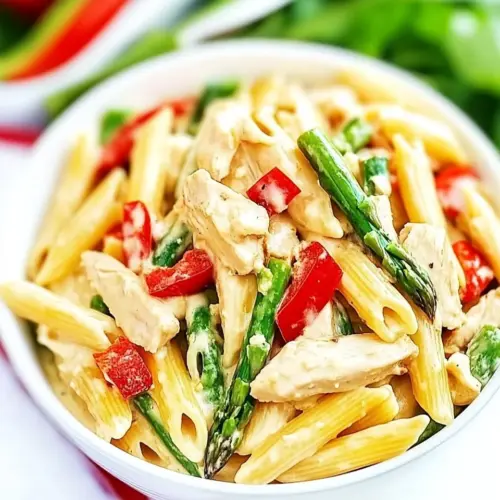
Creamy Chicken Asparagus Penne Pasta
Creamy Chicken Asparagus Penne Pasta is a rich, comforting pasta with tender chicken, bright asparagus, and a silky parmesan sauce. This easy weeknight dinner blends creamy texture with crisp vegetables for a satisfying meal that also works for casual entertaining. Make it when you want something indulgent yet accessible, and you will have a new go to for family meals.
Equipment
- Large Skillet
- Dutch Oven
- Whisk
- Spoon
- Pot for Pasta
Ingredients
- 12 oz penne pasta, uncooked Cook until al dente and provide the starchy base that absorbs sauce, binding all flavors together; boiling time and draining affect final texture and creaminess.
- 1 lb boneless skinless chicken thighs, cut into bite-size pieces Season and sear until golden to add savory richness and protein, contributing tender, juicy bites that complement the creamy sauce and vegetables.
- salt and pepper Season generously to enhance overall flavor balance, using to taste to amplify savory and sweet notes while controlling flavor intensity.
- 1 tsp sweet paprika Season with warm, smoky notes to add depth and mild sweetness; sprinkle onto chicken before cooking to create a flavorful crust.
- 1 tsp garlic powder Season to add aromatic, savory garlic flavor without fresh garlic moisture; sprinkle on chicken or into sauce for consistent savory undertones.
- 3 tbsp olive oil, divided Sauté and finish to provide a fruity, savory cooking fat; divide for browning chicken and for sautéing vegetables to layer flavor.
- 4 oz cremini mushrooms, sliced Sauté until tender to add earthy, umami-rich flavor and a meaty texture that enhances the sauce and complements the chicken and asparagus.
- 1 lb asparagus, trimmed and cut into 2 inch pieces Blanch or sauté until crisp-tender to contribute fresh, grassy flavor and a bright texture, balancing richness and adding color contrast.
- 1/2 large red bell pepper, diced Sauté until softened to provide sweet, peppery flavor and crisp texture that brightens the dish and adds pops of color.
- 1/2 onion, diced Sauté until translucent to provide a sweet, aromatic foundation for the sauce, releasing natural sugars that deepen overall flavor.
- 4 tbsp butter Melt and brown slightly to create a rich, silky base for the sauce; provides fat for sautéing aromatics and helps with mouthfeel.
- 1 tsp garlic, minced Mince and sauté briefly to deliver bright, pungent garlic aroma and flavor that lifts the sauce and complements other seasonings.
- 1/2 tsp red pepper flakes, crushed Sprinkle to add a touch of heat and complexity, enhancing the sauce with mild spiciness without overpowering other flavors.
- 2 tbsp all-purpose flour Whisk into melted butter to form a roux that thickens the sauce, giving it body and smooth consistency while preventing separation.
- 1 cup milk Heat gently into the roux to add creaminess and dilute richness; contributes to sauce viscosity and subtle dairy sweetness.
- 1 cup chicken broth Stir into the sauce to add savory depth and stock flavor, balancing creaminess and providing a seasoned liquid backbone.
- 1 1/2 cups parmesan, shredded Stir in until melted to provide sharp, salty, and nutty flavor while thickening and enriching the sauce for a cheesy finish.
- parsley, chopped (for garnish) Garnish to add a fresh, herbaceous note and visual brightness that complements the richness and ties the flavors together.
Instructions
- Cook the pasta according to package instructions.: The pasta should be cooked until it is al dente, offering a firm bite that holds up when tossed with the sauce. You will notice the water smell becoming starchier as the pasta releases surface starch, which actually helps the sauce adhere. Reserve a cup of pasta water if possible, it can rescue a sauce that is too thick, and avoid rinsing the penne pasta because rinsing strips the starch that helps the sauce cling. A common mistake is overcooking, which leads to mushy texture and a flat mouthfeel.
- Meanwhile season the diced chicken thighs with salt, pepper, paprika and garlic powder. Heat 1 tbsp olive oil in a large skillet or dutch oven over medium high heat. Cook chicken in skillet, until browned and cooked through, transfer chicken to a plate to keep warm.: As the chicken hits the hot oil you will hear a satisfying sizzle, and the surface will develop golden brown crusts that concentrate flavor. Browning creates the Maillard reaction, which adds savory depth to the final dish, so resist the urge to move the pieces too frequently; let them form color. Transfering the chicken off the heat prevents overcooking while you prepare other components, keeping the meat tender. Watch out for overcrowding, which causes steaming instead of searing and prevents proper browning.
- To the same skillet add 1 tbsp olive oil and heat over medium heat. Add the veggies and cook, stirring occasionally, until crisp tender (about 3 to 5 minutes). Remove veggies from skillet to the plate with the chicken and keep warm.: When you return vegetables to the pan they should sizzle gently, releasing a bright aroma as moisture evaporates and edges soften slightly. Stirring occasionally allows even cooking and slight caramelization without losing snap. Cooking to crisp tender preserves texture so the asparagus and red bell pepper contrast with the creamy sauce later. A typical pitfall is overcooking the vegetables until they are limp and flavorless, so aim for vibrancy.
- Add the last tbsp of olive oil to the skillet along with 4 tbsp of butter, over medium heat. Use a spoon or whisk to scrap up any browned bits on the bottom of the skillet (that's extra flavor!). Add the garlic, red pepper flakes and flour, whisk until mixture is thickened and smooth. Slowly pour in the milk and chicken broth, whisking continuously until the liquid is added. Finally add in the parmesan cheese and whisk until smooth and creamy.: The moment you add butter and scrape the pan you will lift concentrated fond into the sauce, which is why that step is so important for depth of flavor. When the garlic becomes aromatic you will smell its sweet, toasty perfume; do not let it brown too dark or it will add bitterness. Whisking the flour into the fats makes a roux, which cooks briefly to remove raw flour taste and thickens gently; if you skip this the sauce can be grainy. Adding milk and chicken broth slowly while whisking prevents lumps and creates a glossy emulsion that will coat the pasta. Stirring in shredded parmesan off heat or on low prevents the cheese from clumping. A common error is adding cold liquids too fast, which causes separation or lumps, so temper gradually.
- Add the chicken and veggies back to the pan as well as the cooked pasta. Stir to combine and coat evenly with sauce. Garnish with chopped parsley. Enjoy!: As you fold everything together you will feel the sauce thicken slightly and cling to the penne pasta , creating an even, saucy coating across strands and pieces. The aromas meld, with butter and parmesan rounding out the savory notes while the asparagus and red bell pepper add freshness. Taste for seasoning and adjust with additional salt or pepper if needed. If the sauce feels too thick, a splash of reserved pasta water loosens it while preserving creaminess. Avoid tossing vigorously, which can break delicate pieces of chicken and bruise the vegetables.
Notes
- Adjust the heat, if you prefer a milder dish reduce the red pepper flakes to a pinch, and add them gradually so you do not overpower the creamy sauce.
- Make it lighter, swap whole milk for a lower fat milk but be aware the sauce will be less rich, so finish with a tablespoon of butter for silkiness if desired.
- Manage leftover sauce, store cooled portions in an airtight container in the fridge and reheat gently over low heat with a splash of milk to restore creaminess.
- Get the best melt, grate your own parmesan from a wedge rather than using pregrated cheese to avoid grainy texture in the sauce.
- Control pasta texture, stop cooking the penne pasta about a minute shy of package time since it will finish cooking when tossed with the sauce.
- Boost umami, if your parmesan is mild, increase the amount slightly and taste as you go, because too much can make the sauce overly salty.
- Reheat gently, to avoid breaking the emulsion, rewarm leftovers over low heat and stir frequently rather than using high heat.