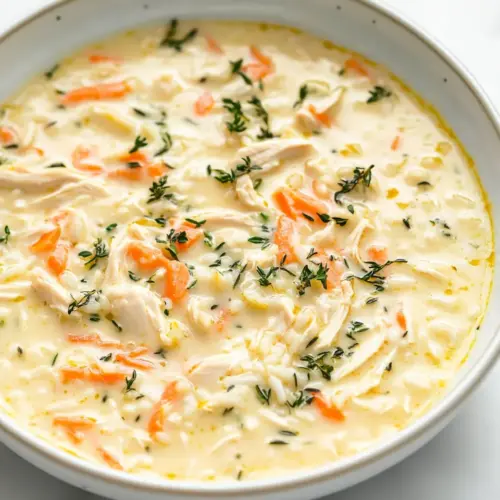
Creamy Chicken and Rice Soup
Creamy Chicken and Rice Soup is a silky, comforting bowl with tender chicken, soft jasmine rice, and a rich cream infused broth. This easy weeknight dinner uses pantry friendly ingredients and simple stovetop technique to deliver cozy, satisfying flavor. Perfect for cold evenings or light family meals, it’s a quick, nourishing choice that comes together in under an hour.
Equipment
- Soup pot
- Wooden Spoon
- Measuring Cups
Ingredients
- 1 tablespoon olive oil Sauté gently in olive oil to release aromatic flavors and provide a fragrant base for the soup, contributing healthy fats and a subtle fruity note that helps carry other seasonings.
- 1 stick celery chopped finely Chop finely for even texture and quick cooking; celery adds a mild, crisp vegetal flavor and moisture that enhances the soup’s savory profile without overpowering other ingredients.
- 2 medium carrots peeled & chopped finely Peel and chop finely so carrots soften uniformly, offering natural sweetness, color, and body that balance savory elements while providing nutrients and a pleasant mouthfeel.
- 1/2 medium onion chopped Sweat until translucent to form a savory flavor foundation and add natural sweetness, helping to build depth and complexity in the soup’s broth.
- 3 cloves garlic minced Mince and sauté briefly to release intense aromatics and pungency that brighten the broth and complement the other savory components without becoming overpowering.
- 3 tablespoons flour Whisk in to thicken the soup base, creating a silky consistency and helping the cream adhere to the broth while adding slight toasty flavor when cooked briefly.
- 4 cups chicken broth Simmer as the primary liquid component, supplying a savory backbone and concentrated chicken flavor that melds with vegetables and rice for a cohesive soup.
- 1/4 teaspoon Italian seasoning Sprinkle evenly to introduce a balanced blend of Mediterranean herbs, enhancing overall flavor complexity with subtle notes of oregano, basil, and thyme.
- 3/4 cup uncooked white jasmine rice Rinse if needed and add to cook through, absorbing flavors and thickening the soup; jasmine rice contributes tender, slightly sticky grains and comforting texture.
- 1 cup heavy whipping cream Stir in near the end to enrich the soup with creamy richness and a smooth mouthfeel, lending a luxurious texture that binds the ingredients together.
- 1 pound uncooked chicken breasts cut into bite-size pieces/strips Cut into bite-size pieces and cook until tender to provide protein, savory substance, and hearty texture that makes the soup satisfying and nutritious.
- Salt & pepper to taste Season gradually to taste to enhance and balance flavors, adjusting salt and pepper at the end to avoid over-seasoning and to let other ingredients shine.
Instructions
- Add the olive oil, celery, carrots, and onion to a soup pot over medium-high heat. Sauté for 5-7 minutes, stirring occasionally.: The pot should hiss gently when the vegetables hit the oil, and after a few minutes you will notice the aroma shift to a sweeter, roasted scent as the edges of the onion and carrots become translucent. The sound will turn from sharp sizzles to softer bubbling, a sign that the vegetables are releasing moisture. This process unlocks the base flavors that the broth will build on, so resist the urge to rush the heat. A common mistake is cranking the heat too high which can brown the vegetables unevenly and bring bitter notes, so keep the pan hot enough to cook but not so hot that it scorches. Stir every minute or so to ensure even softening and to prevent sticking on the bottom of the pot.
- Stir in the garlic and flour and cook for about a minute.: As you add the minced garlic , its fragrance will bloom almost immediately, giving the kitchen an inviting warmth. Stirring the flour in with the aromatics creates a roux that should smell faintly toasted within a minute, indicating the raw starch taste is gone. The texture will become slightly pasty, and you should notice the mixture darkening a touch, which means the flour is cooking. The reason we do this is to prevent a chalky texture in the finished soup and to start forming that velvety mouthfeel. A typical error here is undercooking the flour, which leaves a raw flour taste, or burning the garlic by leaving it unattended, so keep the mixture moving and watch closely.
- Slowly pour in the broth and stir/scrape up the browned bits from the bottom of the pot until the flour has dissolved.: Pouring the chicken broth in gradually allows the roux to incorporate smoothly without forming lumps, and scraping the bottom releases fond that carries deep, savory flavor. You will hear the liquid hiss as it hits the hot pan and then settle into a steady simmer, and the spoon will glide across the bottom as you loosen those caramelized bits. Stirring vigorously at this stage ensures a uniformly thickened base and avoids clumps of flour. If you pour too quickly or stop stirring, you may see pockets of floury lumps, which will require extra whisking to correct, so be deliberate and patient until the broth looks homogenous and glossy.
- Stir in the Italian seasoning, rice, and cream. Increase the heat to high, and once the soup comes to a gentle boil, give it a good stir, then reduce the heat so it's simmering and cover the pot with the lid slightly ajar. Simmer the soup for 10 minutes. I stir it every now and then to prevent the rice from sticking to the bottom of the pot.: When you add the Italian seasoning and uncooked rice , the aroma will brighten as the herbs release their oils. Pouring in the heavy whipping cream will immediately make the liquid look silkier and a touch lighter in color. Bringing the pot to a gentle boil ensures the rice begins to hydrate evenly, but lowering to a simmer prevents the cream from breaking and keeps the texture smooth. Keep the lid slightly ajar to let steam escape, which helps control the intensity of the simmer and prevents boil overs. Stir every few minutes to stop the rice from clinging to the bottom. A frequent misstep is leaving the lid fully closed which can cause vigorous bubbling and risk curdling the cream or scorching the rice, so monitor the boil carefully and use your spoon to check the rice’s tenderness as you go.
- Add in the chicken and cook for another 7-10 minutes or until the chicken and rice are both cooked. Season with salt & pepper as needed. This soup will soak up the broth FAST. You may need to add more chicken broth if you prefer a less thick soup, and you'll definitely have to add broth to leftovers. Cook the rice separately if you don't plan on eating it right away.: Introducing the bite-size pieces of chicken to the simmering soup will change the aroma to a savory roasted note as the meat firms. You will see the chicken shift from translucent to opaque and feel it become springy to the touch when done. Because the rice absorbs liquid quickly and the soup thickens, keep extra chicken broth on hand to loosen the texture if it seems too thick. Taste for seasoning only after the cream is incorporated because dairy mellows saltiness. A common pitfall is overcooking the chicken , which causes dryness, so check several pieces at different depths to ensure even doneness. Also remember this soup soaks up broth fast, so plan to add more liquid for leftovers or if you prefer a thinner consistency.
Notes
- Choose the right rice: Using jasmine rice gives a delicate aroma and tender texture. If you use another short grain rice it may behave differently, so adjust cooking time and liquid accordingly.
- Control the simmer: Keep the pot at a gentle simmer once the cream is added to prevent curdling and to allow even cooking of the rice and chicken.
- Toast the flour slightly: Cooking the flour with the aromatics until it smells faintly nutty removes raw starch flavor and creates a silkier broth.
- Cut chicken uniformly: Small, evenly sized pieces cook at the same rate so you don’t end up with some bites overdone and some underdone.
- Have broth ready: Because the soup thickens as it sits, keep extra chicken broth on hand to loosen the consistency for leftovers or if you prefer a looser soup.
- Taste late for salt: The heavy whipping cream softens seasoning, so check salt and pepper toward the end of cooking for the best balance.