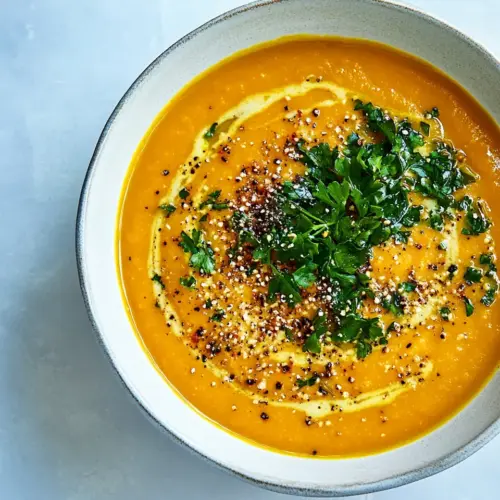
Creamy Carrot Coconut Soup
Creamy Carrot Coconut Soup is a silky, warmly spiced bowl that balances natural carrot sweetness with rich coconut milk and bright lemon. This comforting, easy weeknight dinner is fragrant with ras el hanout and finished with crunchy Almond Dukkah for texture. It’s quick to make, pantry friendly, and perfect when you want a cozy, impressive soup to serve any colder evening.
Equipment
- Medium Saucepan
- Blender or immersion blender
- Ladle
Ingredients
- 2 tablespoons extra-virgin olive oil Heat and infuse the base with fruity, peppery notes while preventing sticking; extra-virgin olive oil provides a silky mouthfeel and carries aromatics into the soup during the initial sauté.
- 2 cups diced yellow onion Sweat and soften to build savory sweetness and body; diced yellow onion releases sugars and umami that form the foundational flavor layer for the creamy carrot soup.
- 1 teaspoon minced garlic Add and mellow pungency while contributing aromatic depth; minced garlic brightens the sautéed vegetables and enhances overall savory complexity when cooked briefly.
- 1 1/2 teaspoons ras el hanout Spice and warm the broth with North African aromatic complexity; ras el hanout introduces layered notes of cinnamon, coriander, and cumin that elevate the soup’s flavor profile.
- 1 1/2 pounds carrots (chopped) Cook and supply natural sweetness, color, and bulk; chopped carrots are the primary vegetable that gives the soup its carrot-forward taste and creamy texture when pureed.
- 4 cups rich vegetable stock (see note) Simmer and concentrate savory liquid while providing extractable flavor; rich vegetable stock hydrates and cooks the carrots, adding depth and body to the finished soup.
- 1/4 cup unsweetened canned coconut milk Enrich and lend tropical creaminess without excess sweetness; unsweetened canned coconut milk adds silkiness and subtle coconut aroma that complements the carrots.
- 2 tablespoons fresh lemon juice Brighten and balance richness with acidity; fresh lemon juice cuts through the creaminess and lifts the flavors for a more lively final bowl.
- 1/4 cup Almond Dukkah (see note, for garnish) Crunch and contrast with nutty, spiced texture as a finishing touch; Almond Dukkah provides flavorful garnish that adds aromatic crunch and complementary savory-nutty notes.
- 2 tablespoons minced fresh parsley (for garnish) Garnish and add fresh herbal brightness; minced fresh parsley finishes the soup with clean, green flavor and visual contrast.
Instructions
- In a medium saucepan, warm the olive oil over medium heat until shimmering. Add the onions and sauté until just soft, about 5 minutes. Add the garlic and cook until fragrant, 2 to 3 minutes. Add the ras el hanout and stir to combine. Add the carrots and stock and bring to a simmer. Cook, partially covered, until carrots are meltingly tender, about 30 minutes.: The moment the olive oil begins to shimmer you can sense the pan's readiness, the surface catching light and gently rippling. You'll hear a soft sizzle as you add ingredients and smell the oil warm, which primes the pan for flavor extraction. This moderate heat allows the oil to coat the pan and creates a gentle environment to release aromatic compounds from the onion and spice, preventing burning. A common mistake is overheating, which can make the oil smoke and create a bitter base. Keep the flame steady and move the pan slightly if it begins to brown too quickly.
- Working in batches, transfer the soup to a blender and puree, then return it to pot (or puree it directly in the pot using an immersion blender). Stir in the coconut milk and lemon juice and simmer for a few minutes to combine. Thin the soup with water if necessary (the soup should easily pour from a spoon).: As the onion softens you'll notice its edges turning translucent and a sweet, savory scent filling the kitchen. The texture should go from crisp to tender without deep browning, preserving a clean vegetal note. Stir occasionally so pieces cook evenly and avoid hot spots in the pan. Overcooking into caramelization will shift the soup toward a sweeter, darker flavor, which may not pair as well with the spices here.
- Ladle the soup into four bowls, top evenly with the dukkah and parsley, and serve.: The garlic will release a warm, pungent aroma that signals it is awake, and tiny bubbles along the edges will appear when it begins to sizzle. Cook just until fragrant, because burnt garlic tastes acrid and can ruin the clean profile. If you see browning, reduce heat immediately. Stir the pan to mix the garlic evenly so no clumps scorch.
- Add the ras el hanout and stir to combine: When you add the ras el hanout the pan will release a perfumed, complex scent of floral, citrusy, and warm spice notes. Toasting spices briefly unlocks essential oils and deepens flavor integration into the base. Use a wooden spoon to fold the spice through the aromatics, coating each piece. The risk here is to leave the spices too long on direct heat, which can make them taste bitter, so stir for a short, focused time.
- Add the carrots and stock and bring to a simmer: Adding the carrots and vegetable stock creates visible movement as bubbles rise and the surface becomes active, signaling that the cooking phase has begun. The liquid level should cover the vegetables comfortably, and steam should lift from the pot in a steady stream. Bringing to a gentle simmer rather than a rolling boil helps the carrots soften without breaking apart, preserving a cleaner flavor. Common errors include boiling too hard, which can cloud the broth and make the textures inconsistent.
- Cook, partially covered, until carrots are meltingly tender, about 30 minutes: During this simmer you will see the carrots change from bright to a slightly dulled, tender state and the aroma will become sweeter. Partially covering traps some steam while allowing excess moisture to escape, concentrating flavors without losing clarity. Test tenderness by piercing a chunk with a fork, it should slide off easily. Avoid overcooking into a mealy texture, which can make the blended soup gummy rather than silky.
- Working in batches, transfer the soup to a blender and puree, then return it to pot: As you blend, you'll watch the color become uniformly vibrant and hear a steady whirl. The smell will intensify, and the texture will shift to a satiny, cohesive body. Blending in batches avoids overfilling and ensures smooth results. A typical pitfall is blending hot liquid too quickly which can create pressure and splatter; vent the blender lid slightly and cover with a towel, or use an immersion blender in the pot for safer, gradual pureeing.
- Stir in the coconut milk and lemon juice and simmer for a few minutes to combine: Adding the coconut milk will mellow the aroma and thicken the broth visually, while the lemon juice brightens the scent and taste. Simmering gently for a few minutes helps the flavors marry and the fats integrate, creating a satin finish. Keep the heat low because vigorous boiling can separate the fat from the liquid, causing an oily appearance. If separation happens, remove from heat and whisk briskly to bring it back together.
- Thin the soup with water if necessary (the soup should easily pour from a spoon): As you finish, evaluate viscosity by lifting a spoon; the soup should glide off it smoothly without globs. If it seems too thick, add a splash of water and stir while observing the flow. The goal is a pourable yet still substantial body. Over thinning will dilute flavor, so adjust in small increments. A frequent misstep is adding too much liquid at once, which can force you to re-season heavily to recover the taste.
- Ladle the soup into four bowls, top evenly with the dukkah and parsley, and serve: The final presentation is about contrast and aroma, the Almond Dukkah providing crunch, and the parsley offering a fresh herbaceous note. You'll hear the crunch and see flecks of green against the orange base, which invites the first spoon. Serve immediately for maximum texture contrast. Waiting too long will soften the garnish and mute the aromatic lift, so plate and serve without delay.
Notes
- Adjust spice level: If you prefer a milder profile, reduce the ras el hanout slightly and add a pinch more lemon juice at the end for brightness.
- Make it smoother: For an ultra velvety finish, strain the blended soup through a fine mesh sieve, pressing with a spatula to extract every silky drop.
- Stretch the batch: If you need more servings, add warm water or additional vegetable stock a half cup at a time, then adjust seasoning to maintain flavor balance.
- Storage tips: Cool the soup completely before refrigerating in an airtight container for up to four days, and reheat gently to avoid separating the coconut milk.
- Freezing guidance: Freeze in portioned containers for up to three months, and thaw overnight in the fridge before reheating slowly on the stove.
- Garnish timing: Always add the Almond Dukkah and parsley just before serving to preserve texture and fresh aromatic notes.