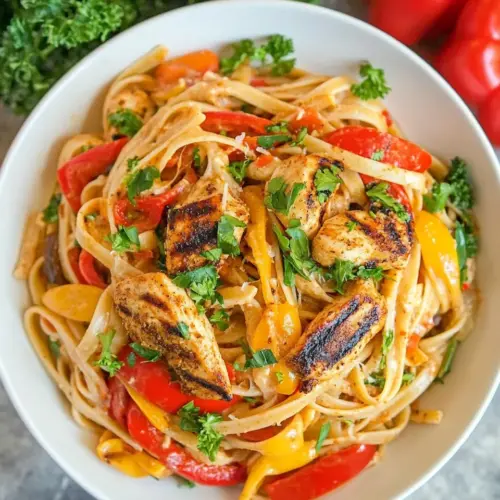
Creamy Cajun Grilled Chicken Pasta
Creamy Cajun Grilled Chicken Pasta delivers creamy, smoky, spicy flavors in one skillet friendly meal. Tender grilled chicken, a velvety parmesan cheese sauce, and colorful peppers create an easy weeknight dinner that still feels special. It reheats well and is perfect for feeding a crowd or prepping for lunches.
Equipment
- Grill or Grill Pan
- Large Pot
- Medium Saucepan
- Large Skillet
- Instant read thermometer
Ingredients
- 1 lb boneless skinless chicken breasts(shrimp can be substituted) Season and provide lean protein for the dish; slice or pound thin for even cooking and coat with spices before grilling or pan-searing.
- 2 tbsp olive oil, divided Divide to use for both cooking the chicken and sautéing vegetables; adds healthy fat and helps brown ingredients for flavor development.
- 6 tsp cajun seasoning, divided (recipe in notes below) Season generously and split between the chicken and the sauce or vegetables; provides the signature warm, smoky, and slightly spicy Cajun flavor.
- 12 oz dry linguine or fettuccine pasta Cook to al dente as the pasta base; toss with sauce at the end so it absorbs flavors while retaining a firm texture.
- 2 tbsp butter Melt to start the creamy sauce and help form a roux with flour; contributes a rich, slightly nutty depth to the sauce.
- 1 clove garlic, minced Mince finely and sauté briefly to release aromatic compounds; builds savory background flavor without overpowering the sauce.
- 3 tbsp flour Whisk into melted butter to create a roux that thickens the sauce; cooks briefly to remove raw flour taste and stabilize the cream.
- 1 1/2 cups milk Heat gently into the roux to build the creamy sauce body; contributes milkiness and helps achieve a smooth, cohesive texture.
- 1/2 cup heavy cream or half and half Enrich the sauce with extra creaminess and a silkier mouthfeel; balances the spice and yields a luscious consistency.
- 1/3 cups shredded parmesan cheese Grate into the sauce to add salty, umami-rich depth and help thicken slightly when melted; contributes a nutty, savory finish.
- 1 medium red bell pepper, sliced into thin strips then strips halved (about 1 1/2 cups) Slice thinly and sauté until tender-crisp to add sweet, bright flavor and vibrant color; pairs well with the Cajun seasoning and creamy sauce.
- 1 medium yellow bell pepper, sliced into thin strips then strips halved (about 1 1/2 cups) Slice thinly and cook until softened for a sweet, mellow pepper flavor that complements the red peppers and adds color contrast.
- 1/2 large red onion, sliced into thin strips Slice thinly and sauté until translucent to add a mildly sweet, savory bite and aromatic base to the pepper and mushroom mixture.
- 2 cups sliced button mushrooms(about 8) Slice and brown to introduce an earthy, savory element and meaty texture that soaks up the creamy, spiced sauce.
- Fresh parsley, for garnish Chop and sprinkle over the finished pasta as a garnish; adds fresh herbal brightness and a contrasting green color.
Instructions
- Heat a grill over medium-high heat. Brush chicken with 1 Tbsp of the olive oil and sprinkle with 2 tsp of the cajun seasoning (I used 2 chicken breasts and this is 1/2 tsp per side). Grill chicken until cooked through, about 8 - 10 minutes, rotating once halfway through grilling until chicken registers 165 degrees on in instant read thermometer in center of chicken. Transfer to a plate, cover with foil and let rest 5 minutes then cut into strips.: You will notice the grill warming and a faint wispy smoke as the grates heat, which helps create those desirable char marks on the chicken . Brushing the chicken with the olive oil helps the cajun seasoning adhere and promotes a golden crust, while the spice starts to bloom on the meat surface. A hot grill sears quickly locking in juices, so preheating is crucial. Troubleshooting tip, if your grill is not hot enough the chicken will stick and you will not get that caramelized color, so wait until the grates are properly heated.
- Boil pasta in salted water according to directions listed on package. Reserve 1/3 cup pasta water before draining.: As the chicken sizzles you will hear a steady sear and smell the spice toasting, both signs that flavor is developing. Use an instant read thermometer to avoid overcooking, aiming for 165 degrees in the thickest part; this temperature ensures food safety while keeping the meat juicy. Letting the chicken cook evenly on both sides prevents a dry exterior and a raw interior, so time the rotation carefully. A common mistake is flipping too often, which prevents a proper sear.
- In a medium saucepan melt butter over medium heat. Stir in garlic and flour and cook 1 minute, whisking constantly. While whisking slowly pour in milk and whisk vigorously to smooth lumps. Stir in 1 - 3 tsp cajun seasoning, to taste (season with additional salt as needed). Bring mixture to a boil, stirring constantly, then reduce heat to low, stir in parmesan and cream and cook until cheese has melted. Remove from heat and set aside.: When you tent the chicken with foil, the steam redistributes so juices settle back into the fibers, which is the difference between dry and succulent slices. You will see less juice escaping when you slice, and the meat texture will be tender and cohesive. Cutting too soon causes the juices to pour out, so patience here yields the best mouthfeel. If you skip resting, the chicken will be drier and less flavorful.
- Heat remaining 1 Tbsp olive oil in a large skillet over medium-high heat. Once hot, add red and yellow peppers and red onion and saute 2 minutes. Add 1 tsp cajun seasoning and mushrooms and saute 2 minutes longer.: The water should have a rolling boil and smell faintly salty, which seasons the pasta internally. Reserve pasta water because the starchy liquid helps emulsify the sauce and make it cling to noodles. Drain once the pasta is al dente, with a slight bite, so it holds up when tossed with sauce. Overcooking will make the dish mushy and prevent the sauce from adhering properly.
- Toss drained pasta with sauce mixture, adding reserved pasta water 1 tbsp at at time to thin sauce as desired. Toss in pepper mixture and chicken. Serve warm sprinkled with parsley and additional cajun seasoning to taste.: The butter will foam and the garlic will release a fragrant aroma almost immediately, signaling the start of your roux. Whisking prevents lumps and ensures the flour cooks out its raw taste in that one minute, which is essential for a smooth, flavorful base. If you allow the garlic to brown, it can become bitter, so keep the heat moderate. Lumpy roux happens when you add flour inconsistently, so steady whisking is key.
- While whisking slowly pour in milk and whisk vigorously to smooth lumps: As the milk hits the warm roux you will hear a soft simmer and watch the mixture thicken; whisking constantly encourages a velvety texture without pockets of flour. Gradual addition prevents separation and keeps the sauce cohesive. Bring the mixture to a gentle boil while stirring so it thickens uniformly. Adding cold milk too quickly can shock the roux and create lumps, so pour slowly and maintain whisking.
- Stir in 1 to 3 tsp cajun seasoning, to taste: The aroma will lift and spice will bloom in the hot sauce, giving it that signature southeastern warmth. Start mild and build so the heat does not overpower the dairy richness, tasting as you go. This step lets you control the final spice intensity of the dish. Over seasoning is a common error, so add cautiously and adjust later if needed.
- Bring mixture to a boil, stirring constantly, then reduce heat to low, stir in parmesan and cream and cook until cheese has melted: You will see the sauce bubble gently as it thickens, and after adding the parmesan cheese it will become glossy and slightly thick, clinging to the back of a spoon. Reducing the heat before adding cheese prevents it from seizing and turning grainy, preserving a luxurious texture. If the sauce grainifies, remove from heat and whisk in a splash of reserved pasta water to smooth it out.
- Remove from heat and set aside: Taking the sauce off the direct heat keeps it from over reducing and maintains a silky consistency for tossing. The residual warmth is enough to melt cheese and hydrate the flavors, while avoiding separation. Leaving it on high heat can cause the dairy to break and the texture to become oily, so gentle handling is important.
- Heat remaining 1 Tbsp olive oil in a large skillet over medium high heat: Once the oil shimmers you will smell a clean, toasty note, ready for the vegetables. This quick high heat sautée captures bright color and crisp tenderness in the peppers and onions. If the pan is not hot enough the vegetables will become limp, and if it is too hot they may char excessively, so aim for a lively sizzle.
- Once hot, add red and yellow peppers and red onion and saute 2 minutes: You should hear a steady sizzle and watch the edges begin to soften while colors remain vibrant, which indicates the right doneness for texture contrast. Quick cooking preserves sweetness and a slight bite that plays well with the creamy sauce. Overcooking will cause them to lose color and become mushy, so keep this stage brief.
- Add 1 tsp cajun seasoning and mushrooms and saute 2 minutes longer: The mushrooms will release moisture and then begin to brown, adding savory depth, while the additional cajun seasoning reinforces the spice profile so each element sings together. Browning the mushrooms adds umami that balances the cream, but overcrowding the pan will steam them rather than brown them, so give them space to caramelize.
- Toss drained pasta with sauce mixture, adding reserved pasta water 1 tbsp at at time to thin sauce as desired: The starchy pasta water will marry the sauce to the noodles, creating a glossy coating that clings beautifully. Add just enough reserved water to reach a silky consistency; it is easier to add more than to fix an overly thin sauce. The sound of the toss is a good cue, you want a gentle glisten not a soup of cream. If the sauce is too thin after adding water, simmer briefly to reduce and thicken.
- Toss in pepper mixture and chicken: At this point the colorful vegetables and rested chicken come together with the creamy pasta, creating a balanced plate of texture and flavor. The warm chicken will rewarm the sauce slightly and distribute its charred flavor. Ensure pieces are evenly incorporated so every forkful has a bit of each component. Undermixing can leave pockets of plain pasta or uneven seasoning.
- Serve warm sprinkled with parsley and additional cajun seasoning to taste: The fresh parsley brightens the plate and releases a fresh aroma as you serve, while an extra sprinkle of cajun seasoning at the table lets guests dial heat to preference. Serve immediately so the sauce remains glossy and the pasta does not absorb excess liquid. Waiting too long will dry out the dish and change the texture.
Notes
- Shrimp substitution Swap in peeled deveined shrimp for the chicken and grill or sauté briefly until just opaque for a seafood take that cooks faster and pairs beautifully with the creamy sauce.
- Make it lighter Use half and half instead of heavy cream and whole milk, and reduce butter by half to lower richness while maintaining a silky mouthfeel, perfect for lighter weeknight meals.
- Extra veg Add extra sliced bell peppers or mushrooms for more texture and bulk, tossing them in the skillet until just tender to keep a pleasant bite that contrasts the creamy sauce.
- Make ahead Cook the components separately and refrigerate; reheat gently in a skillet with a splash of reserved pasta water to revive the sauce without overcooking the proteins or softening the vegetables too much.
- Level up the spice Increase cayenne in the cajun seasoning or add a pinch of smoked paprika for deeper smoky notes, adjusting gradually to keep the balance between heat and cream.