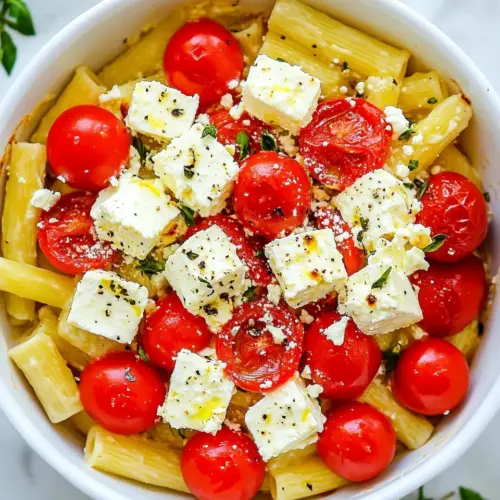
Creamy Baked Feta Pasta
Creamy Baked Feta Pasta is a creamy, tangy, and incredibly easy weeknight dinner that combines blistered cherry tomatoes, silky melted feta, and perfectly al dente penne. The roasted vegetables release a bright sauce that clings to the pasta, while asparagus and fresh herbs add springtime freshness. Make this for a quick, comforting meal that feels special and is ready in under an hour.
Equipment
- 9x13 casserole dish
- Large Pot
- Colander
- Large spoon
Ingredients
- 4 cups cherry or grape tomatoes Bursting with juicy flavor, used to create a sweet-tart roasted base that softens and releases juices to form the sauce for the baked feta pasta. Provides acidity and natural sweetness that balance the salty cheese and enrich the final texture when baked. Works with the olive oil and garlic to create a caramelized, concentrated tomato sauce that coats the pasta.
- 8 oz asparagus, ends trimmed and cut into bite-size pieces Tender and crisp when roasted, trimmed and cut asparagus adds a fresh vegetal note and slight earthy bitterness to contrast the creamy feta sauce. Retains a pleasant bite after baking, contributing texture and color to the dish. Complements the tomatoes and herbs while boosting nutritional value with vitamins and fiber.
- 1/3 cup extra virgin olive oil, plus 1 Tbsp to drizzle over cheese Fruity and rich, extra virgin olive oil helps macerate the tomatoes and carry flavors while promoting even roasting; a separate tablespoon is drizzled over the cheese to encourage browning and prevent sticking. Adds mouthfeel and helps emulsify the finished sauce when combined with pasta water and feta. Enhances aroma and provides healthy fats that carry the garlic and herb flavors.
- 1/4 tsp salt Seasoning foundational to balance sweetness and acidity, salt enhances the natural flavors of the tomatoes and rounds out the creamy feta mixture. Used sparingly here because feta contributes saltiness, so it’s added to taste to avoid over-salting. Helps coax moisture from the tomatoes during roasting for a more intense sauce.
- 1/2 tsp black pepper Warm and subtly bitter, black pepper adds mild heat and complexity to the roasted vegetables and feta sauce without overpowering. Ground over the tomatoes and asparagus before baking for integrated seasoning and finished over the dish to brighten flavors. Pairs well with garlic and herbs for a balanced savory profile.
- 8 oz block Feta Cheese Briny and creamy, the feta cheese melts into a silky, tangy center when baked with tomatoes, creating a rich sauce that clings to pasta. Serves as the main flavorful, salty element that contrasts with sweet roasted tomatoes and fresh herbs. Provides structure in the oven so the sauce thickens rather than becoming watery.
- 10 oz penne pasta Hearty and absorbent, penne pasta soaks up the creamy roasted tomato and feta sauce, providing the carbohydrate backbone of the meal. Cooked al dente then tossed with the warm sauce to ensure even coating and pleasing texture. Shapes like penne help trap bits of vegetable, garlic, and cheese for flavorful bites.
- 4 garlic cloves, finely minced, divided Pungent and aromatic, finely minced garlic is divided to layer flavor—some tossed with tomatoes before baking and some added afterward to preserve brightness. Contributes savory depth and a subtle bite that mellows with heat while maintaining an essential garlicky character. Helps bridge the flavors of olive oil, tomatoes, and feta into a cohesive sauce.
- 1/4 cup fresh parsley, or basil, finely minced Herbaceous and fresh, finely minced parsley or basil is added at the end to lift the dish with bright, green notes and visual contrast. Provides a clean, aromatic finish that complements the tangy feta and roasted tomatoes. Sprinkled over the assembled pasta to add freshness and subtle herbal complexity.
Instructions
- Preheat oven to 400˚F. Add tomatoes and asparagus to a 9×13 casserole. Add 1/3 cup olive oil, 2 minced garlic cloves, 1/2 tsp black pepper, and 1/4 tsp salt. Toss to combine. Make a space in the center and place your 8 oz block of feta in the pan. Drizzle the top with 1 Tbsp olive oil and another sprinkle of black pepper. Bake at 400 for 30 minutes until tomatoes start to burst.: As you preheat, notice the warm, dry heat building that will coax the cherry or grape tomatoes to blister and the edges of the Feta Cheese to brown slightly. This temperature encourages rapid roasting, producing caramelized sugars and intensified tomato flavor. If the oven is not fully preheated the tomatoes may release more liquid and stew rather than roast, which makes the sauce thinner. A common mistake is placing the dish in while the oven is still cold, so wait until it reaches a steady 400 degrees.
- About halfway through your baking time, bring a pot of salted water to a boil and add pasta. Cook according to package instructions, stirring a few times to keep the pasta from sticking. Drain pasta (reserving some cooking water if you decide to add it later).: The visual cue here is a roomy single layer where the cherry or grape tomatoes have space to blister and the asparagus can brown lightly. Tossing them in a large casserole lets hot air circulate and promotes even roasting. If you crowd the pan the vegetables will steam and fail to develop those sweet roasted notes. Avoid mixing in cold ingredients that will lower the pan temperature and lengthen cooking time.
- After 30 minutes, the tomatoes should burst and start to release their juice. Remove from the oven and immediately stir in remaining minced garlic and parsley and toss to combine. Use the back of a large spoon to press the cheese into the olive oil and stir until cheese is well dispersed in the dish.: The oil helps the surface of the tomatoes and asparagus develop a glossy, caramelized exterior, and the garlic begins to perfume the pan. You should see a light sheen on the vegetables after tossing. Measuring the salt sparingly is important because the Feta Cheese will contribute saltiness later. A frequent error is using pre minced garlic that can burn quickly; fresh minced garlic gives a cleaner, brighter flavor.
- Stir in drained cooked pasta. Add reserved pasta water if desired. Serve warm. Be mindful of those tomatoes (the juicy centers can be very hot if you eat them right away). Add reserved hot pasta water as desired for saucier pasta.: After you toss, the tomatoes should glisten and the asparagus should be evenly coated with oil and seasoning. This is the moment to adjust the distribution of ingredients so nothing is buried and heat reaches each piece uniformly. Uneven tossing can leave some tomatoes under seasoned and others oversalted. If you notice patches of dry vegetables, add a light drizzle of oil and redistribute.
- Make a space in the center and place your 8 oz block of feta in the pan: Setting the Feta Cheese in the center allows it to mellow and melt into the surrounding juices as the tomatoes roast. You want the cheese exposed so it softens on the surface while warmed by the surrounding vegetables. If you push the cheese deep beneath tomatoes it may not brown or release its creamy texture as well. Ensure the block has a little room to breathe so it can soften evenly.
- Drizzle the top with 1 Tbsp olive oil and another sprinkle of black pepper: This small drizzle encourages a slight browning and helps the top of the Feta Cheese become luscious rather than dry. The additional pepper adds a finishing warmth that complements the tomatoes. If you skip this step the cheese can form a dry skin on top, which makes it harder to incorporate later. Be careful not to over oil the surface which can make it feel greasy.
- Bake at 400 for 30 minutes until tomatoes start to burst: During baking, you will hear subtle popping and notice the tomatoes soften, their skins loosening and some splitting to release vibrant juices. The aroma will turn sweet and concentrated, and the Feta Cheese will become tender and milky. If after 30 minutes most tomatoes are still firm, your oven may run cool, so extend baking in short increments. A common mistake is removing the dish too early which yields unripe tomatoes and a less integrated sauce.
- About halfway through your baking time, bring a pot of salted water to a boil and add pasta: The sound of a rolling boil and the sight of vigorous bubbles signals readiness. Salt the water so the penne pasta absorbs seasoning as it cooks. Stirring a few times prevents sticking and ensures even cooking. If you add pasta too late you risk ending up with overcooked noodles while the vegetables finish, so time this with the oven. A frequent error is under salting the water which results in bland pasta that cannot be rescued later.
- Cook according to package instructions, stirring a few times to keep the pasta from sticking: Watch for the desirable al dente texture where the pasta has a slight chew. The sound of simmering water and intermittent clinking of the pasta is normal. Reserve a cup of cooking water before draining which can be used to loosen the sauce later. Overcooking here leads to mushy pasta that will collapse when mixed with the sauce, so check early and test by tasting a piece about a minute before the recommended time.
- Drain pasta (reserving some cooking water if you decide to add it later): The drained penne pasta should be slightly firm and steaming. Reserving cooking water is a smart trick because its starchy quality helps the sauce adhere to the pasta. If you forget to reserve it the sauce may be thicker than you want, but you can use a small splash of warm water to adjust. A common mistake is rinsing the pasta, which removes the surface starch that helps the sauce cling.
- After 30 minutes, the tomatoes should burst and start to release their juice: You ll see pools of ruby liquid forming and the Feta Cheese will be paler and soft around the edges. The aroma is deeply savory and slightly sweet. If most tomatoes remain intact, return the pan to the oven for a few more minutes. One pitfall is stirring while the dish is still too hot to handle, which can lead to splatters of extremely hot juice, so use caution.
- Remove from the oven and immediately stir in remaining minced garlic and parsley and toss to combine: Adding the fresh minced garlic cloves and fresh parsley at this stage preserves their bright character. As you toss, you will notice the garlic scent bloom and the herbs vibrant against the warm sauce. If you add these before baking they lose their freshness, so timing here preserves aroma. Watch for any areas where cheese bakes onto the pan and scrape gently to include those caramelized bits.
- Use the back of a large spoon to press the cheese into the olive oil and stir until cheese is well dispersed in the dish: Pressing the Feta Cheese helps it break down and emulsify with the olive oil and tomato juices, creating a silky, clingy sauce. You should see ribbons of creamy white folding into the red tomato liquid. If the cheese resists, give it another minute to warm from the pan s heat. A common misstep is overworking the cheese so it becomes grainy rather than smooth, so press gently and steadily.
- Stir in drained cooked pasta: Tossing the warm penne pasta into the sauce allows it to absorb flavor immediately, and you will notice the sauce coating each tube. The contrast between the warm pasta and the juicy tomatoes is part of the appeal. If the mixture seems dry, add reserved pasta water a little at a time until you reach the desired sauciness. Avoid flooding the pan with too much water at once which will thin the flavors.
- Add reserved pasta water if desired: The starchy hot water helps bind the sauce and makes it silky, not watery, when used sparingly. Add just enough to loosen the sauce to your liking, stirring to combine. One error is adding cold water which can cool the dish and hinder emulsification, so only use warm reserved water.
- Serve warm: The dish is best enjoyed immediately while the sauce is glossy and the tomatoes are still warm, releasing small bursts of juice with each bite. Be mindful that the tomato centers can be very hot, so I often let the pan rest a minute before serving. Serving too soon increases the risk of scalding and can mute some of the flavors that settle as the dish chills slightly.
Notes
- Choose firm, ripe tomatoes: Opt for cherry or grape tomatoes that are slightly firm to the touch and deeply colored. Overripe tomatoes can collapse too quickly and make the sauce watery, while underripe ones won t sweeten and pop properly. When roasting, aim for a mix of whole tomatoes that blister and a few that split to create concentrated flavor.
- Don t skimp on good olive oil: The extra virgin olive oil is a carrier for roasted flavors and helps the Feta Cheese emulsify into a silky sauce. Using a high quality oil will make the dish taste rounded and polished. Add the tablespoon of oil over the cheese to promote gentle browning and a glossy finish.
- Time pasta to finish with the bake: Start the penne pasta about halfway through the roasting so it finishes near the same moment as the vegetables. This synchronization means you can toss everything together while warm, which improves texture and flavor absorption. If your pasta finishes earlier, briefly toss it in a warm drizzle of oil to prevent sticking.
- Add herbs at the end: Fresh parsley or basil should be stirred in after baking to keep their color and aroma vivid. Adding them too early causes them to wilt and lose their bright note. Finishing herbs also add a nice green contrast to the roasted red tomatoes and white cheese.
- Adjust sauciness with pasta water: Use reserved hot pasta water to thin the sauce incrementally. The starch helps the sauce cling to the pasta without diluting flavor. Start with a tablespoon at a time and stop when the sauce reaches your preferred consistency.