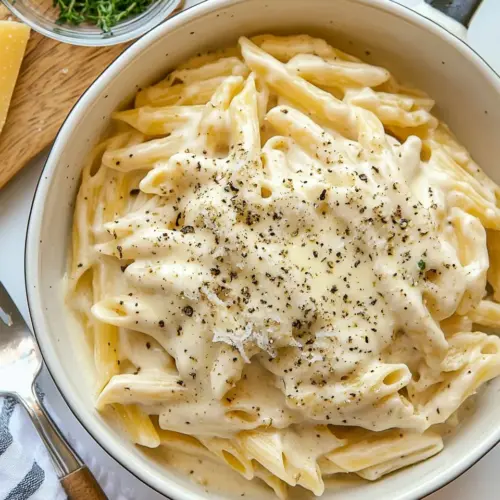
Creamiest Four Cheese Pasta
Creamiest Four Cheese Pasta is an ultra creamy, easy weeknight dinner that combines ricotta, heavy cream, Parmesan, mozzarella, and Asiago into a glossy, comforting sauce that clings to penne. It delivers rich, layered cheese flavor and a silky texture that feels indulgent without elaborate steps. Make it when you want a fast comforting meal that impresses and satisfies.
Equipment
- Large Pot
- Large Pan
- Colander
- Whisk
Ingredients
- 8 ounces penne pasta Boil until al dente to provide the pasta structure and absorb the creamy sauce; toss immediately to coat with sauce for best texture. Use penne shape to trap cheese in its ridges and hollow centers, enhancing each bite.
- 2 tablespoons olive oil Drizzle to lightly sauté aromatics and add a subtle fruity richness; warm the pan gently to avoid burning the garlic. Use high-quality olive oil for a silky mouthfeel that complements the cheeses.
- 1 tablespoon minced garlic Mince finely and sauté briefly to release aromatic sulfurous notes that deepen overall flavor; avoid overcooking to prevent bitterness. Use fresh minced garlic to brighten and balance the rich, creamy components.
- 1 cup reserved pasta water Reserve and add gradually to loosen the sauce and help it cling to pasta; the starchy water emulsifies fats and cheeses for a glossy finish. Adjust amount to achieve desired sauce consistency without thinning flavor.
- 1 cup ricotta cheese Spoon in dollops to contribute a mild, tangy creaminess and lighten the sauce texture; stir until just incorporated for a silky mouthfeel. Use whole-milk ricotta for richer flavor and a smooth, slightly grainy body.
- 1 cup heavy cream Pour to create the decadent base that binds cheeses and coats pasta; simmer gently to thicken without curdling. Use heavy cream for stability and luxurious richness that balances sharper cheeses.
- 1/2 cup freshly shredded Parmesan cheese Grate freshly and melt into the sauce to add salty, nutty umami and help thicken the mixture; stir continuously for even distribution. Use freshly shredded Parmesan for superior melting and intense savory depth.
- 1/2 cup freshly shredded mozzarella cheese Shred freshly and fold into the sauce to provide stretchy, milky pull and mild sweetness; melt fully for a cohesive texture. Use fresh mozzarella to add creaminess and a pleasing, elastic bite.
- 1/2 cup freshly shredded Asiago cheese Shred freshly and incorporate for a sharp, tangy punch that elevates complexity; balance its assertive flavor with cream and ricotta. Use Asiago for its nutty, piquant character that cuts richness.
- salt and pepper Season to taste at the end of cooking to enhance and balance flavors; start with a small amount and adjust gradually. Use salt to amplify savory notes and pepper for a gentle heat that complements cheeses.
Instructions
- Cook the 8 ounces penne pasta according to the package directions until al dente. Drain the pasta, reserving 1 cup of the pasta water, and set both aside.: As the water boils, you will hear a steady vigorous bubble and smell the wheat of the penne pasta releasing steam. Aim for al dente so the pasta holds structure when tossed in sauce, it should be tender with a slight bite. When you drain, reserve a cup of that cloudy water because its starch will act like glue, making the sauce cling to every tube. A common mistake is overcooking the pasta, which leads to a mushy texture once combined with the rich sauce, so start checking a minute or two before the package suggests.
- Heat the 2 tablespoons olive oil in a large pan over medium-high heat. Add the 1 tablespoon minced garlic to the pan and cook for 1 minute, until fragrant.: You will see the olive oil shimmer and then the minced garlic will sizzle softly, releasing a warm, aromatic perfume. Keep the garlic moving so it browns lightly rather than burning, because burned garlic tastes bitter. This step builds a flavor base, the oil carrying the garlic aromas into the sauce. If the garlic darkens too quickly, reduce the heat immediately to avoid bitterness.
- Slowly whisk the 1 cup reserved pasta water into the oil and garlic. Add 1 cup ricotta cheese and 1 cup heavy cream to the liquid, then reduce the heat to medium-low. Stir until the ricotta is melted and the sauce is smooth.: You will notice the liquid change from clear to slightly milky as starch disperses, and the whisking encourages an even suspension. Adding ricotta cheese and heavy cream straight into this warm mix helps them meld without scorching. Lowering the heat is critical so the dairy warms gently and combines into a smooth base rather than separating. The common error here is adding cold dairy to very high heat, which can cause curdling, so aim for gentle warmth.
- Add in the 1/2 cup freshly shredded Parmesan cheese, 1/2 cup freshly shredded mozzarella cheese, 1/2 cup freshly shredded Asiago cheese, and salt and pepper to taste. Reduce the heat to low and whisk the sauce until all the cheese is melted and the sauce is creamy and smooth.: As you stir, watch the texture evolve from grainy to velvety, and take in the soft dairy scent as the ricotta cheese integrates. The motion should be steady, coaxing the curds to dissolve into the cream, and you may notice the sauce thickening slightly. If you see lumps, continue stirring over gentle heat and use a whisk to encourage homogenization. A frequent pitfall is impatience, ramping the heat up, which risks breaking the emulsion.
- Add in the cooked pasta and stir to coat it in the cheese sauce. Remove the pasta from the heat and serve fresh with additional cheese as garnish.: The cheeses will melt at different rates, so give them time to incorporate and watch for a glossy sheen that indicates a successful emulsion. You will hear a soft, near silent merging as the cheeses relax into the cream, and the aroma becomes richer and more complex. If the sauce appears grainy, it may be too hot or the cheese was added too fast; reduce heat and whisk patiently. Over seasoning is easy at this point because the Parmesan cheese and Asiago cheese are salty, so taste before adding extra salt.
- Add in the cooked pasta and stir to coat it in the cheese sauce. Remove the pasta from the heat and serve fresh with additional cheese as garnish: When the penne pasta meets the sauce, you should see ribbons of creamy sauce clinging to each piece, and a gentle steam will rise as you toss. The tactile sensation should be creamy yet structured, not soupy. Tossing off heat preserves a glossy finish and prevents the sauce from tightening or separating. A typical misstep is leaving the pasta on residual high heat so the sauce becomes thick and pasty, so remove from heat and serve promptly for the best texture.
Notes
- Use fresh cheese: Freshly shredding the Parmesan cheese, Mozzarella cheese, and Asiago cheese prevents anti clumping agents from affecting melt quality, which keeps the sauce silky.
- Warm the dairy: Let the ricotta cheese and heavy cream sit at room temperature for a few minutes before adding so they integrate faster and reduce the shock of cold dairy into heat.
- Starch is your friend: Always reserve a cup of the pasta water when you drain the penne pasta, because it helps the sauce emulsify and cling properly to the pasta.
- Low steady heat: Melt cheeses over low to medium low heat to avoid separation; high heat will make the sauce grainy and oily.
- Adjust seasoning last: Taste after the cheeses have melted before adding more salt, since the cheeses bring their own saltiness.
- Gentle whisking: Use a whisk when combining the pasta water and dairy, it helps distribute starch uniformly and prevents lumps in the sauce.