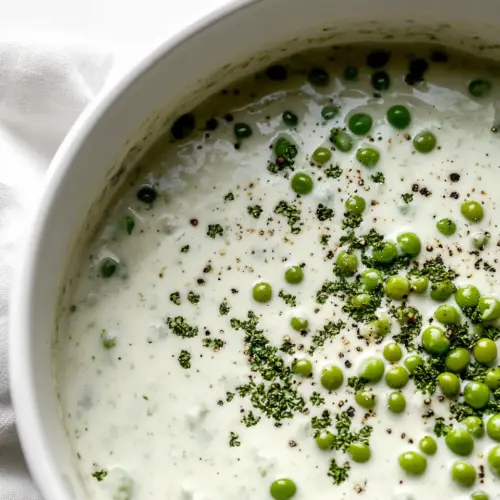
Creamed Peas
Creamed Peas is a creamy, satisfying side that combines velvety dairy with sweet, bright peas. This easy weeknight side is quick to make and delivers comforting texture and balanced flavor, perfect for family dinners or casual gatherings. Make it to add a classic, smooth element to your meal that pairs beautifully with roasted or grilled mains.
Equipment
- Medium Saucepan
- Whisk
- Spoon
Ingredients
- 2 tablespoons unsalted butter Melted to create a rich base that provides flavor and fat for the sauce; helps prevent curdling and contributes a silky mouthfeel. Use unsalted butter to control overall seasoning and allow the kosher salt to be added separately for precise taste balance.
- 2 tablespoons all-purpose flour Whisked in to form a roux that thickens the half-and-half into a creamy sauce; cooks briefly to remove raw flour taste. Maintain medium heat and stir constantly so the flour browns lightly without burning, ensuring a smooth, lump-free texture.
- 2 cups half-and-half Heated and combined with the roux to create the sauce’s creamy body; provides dairy richness and smooth consistency. Pour gradually while whisking to avoid lumps, and simmer gently until the mixture thickens to coat the back of a spoon.
- 1/2 teaspoon kosher salt Added to season the sauce and enhance the peas’ natural flavor; balances sweetness and creaminess in the dish. Measure carefully since kosher salt’s larger crystals can affect perceived saltiness differently than table salt.
- 1/4 teaspoon ground black pepper Sprinkled to add mild heat and aromatic depth; enhances overall flavor without overwhelming the peas. Use freshly ground black pepper for best aroma and adjust to taste toward the end of cooking to preserve its bright spice.
- 1 tablespoon granulated sugar Stirred in to brighten the peas’ natural sweetness and balance the savory cream sauce; helps accentuate fresh flavors in a frozen vegetable. Dissolve the sugar fully while simmering to integrate sweetness evenly without graininess.
- 20 ounces frozen peas Cooked into the sauce to provide the primary vegetable component and bulk of the dish; frozen peas add color, texture, and sweetness. Thaw or add directly and simmer until heated through, allowing the sauce to cling to the peas for a cohesive creamed texture.
Instructions
- In a medium saucepan, melt the butter over medium heat. Once melted, sprinkle over the flour and whisk to combine.: The moment the butter liquefies you will notice a gentle foaming sound and a nutty, dairy scent. This stage is about controlling temperature so it melts evenly without browning, which would add an unintended toasted flavor. If it starts to brown, lower the heat immediately, because burnt butter will make the sauce bitter. Use a saucepan with an even bottom to prevent hot spots.
- Slowly whisk in the half-and-half until combined. Whisk in the salt, pepper, and sugar.: As you sprinkle the all-purpose flour , the mixture will thicken and take on a satin appearance. Whisk continuously until the roux smells cooked but not toasted, this removes raw flour taste and builds the foundation for a smooth sauce. A common mistake is to rush and leave lumps, so whisk steadily and stop once it’s velvety and pale. If lumps form, remove from heat and whisk vigorously while adding a splash of liquid to smooth them out.
- Bring the mixture to a low simmer and cook until the mixture can coat the back of a spoon, about 2-3 minutes.: Pour the half-and-half gradually while whisking in circular motions to create an emulsion. You will see the sauce transform from thick paste to a creamy liquid without graininess. If you add the liquid too fast, it can shock the roux and create clumps, so patience here matters. The aroma will deepen into a warm dairy scent as it homogenizes.
- Stir in the peas and continue to cook until they are warmed through.: These small seasonings are the tune-up for the base, bringing out sweetness, savory depth, and a hint of warmth. Stir them in and taste a small spoonful; the sauce should be balanced yet slightly restrained, because the peas will add their own sweetness. Over-salting is easy, so season gradually and adjust at the end.
- Serve immediately.: As the sauce simmers, you will see gentle bubbles forming around the edges and feel a slight thickening when you drag a spoon through it. This coating test ensures the starch from the roux has activated and the sauce will cling to the peas . Avoid a vigorous boil which can break the emulsion and make the texture thin or grainy. Stir frequently to maintain even heat and prevent sticking.
- Stir in the peas and continue to cook until they are warmed through: When you add the peas , they should sizzle softly and release a bright vegetal aroma. Stir to distribute heat and watch their color pop to a vibrant green, which signals perfect doneness. Overcooking will make them mushy and dull the flavor, so aim for tender but still slightly firm. If they need longer, add short intervals of cooking and taste between checks.
- Serve immediately: The final dish should be glossy and cling to a spoon, with the peas evenly coated. Serve right away to enjoy the ideal texture and temperature, because cooling can thicken the sauce and change the mouthfeel. A common oversight is letting it sit too long, which results in a stiffer texture; gently rewarm with a splash of milk if needed before serving.
Notes
- Swap dairy carefully. Use whole milk or heavy cream in place of half-and-half depending on how rich you want the sauce to be. Heavy cream will yield a more luxurious mouthfeel, while whole milk keeps it lighter. If you choose milk, watch the simmer so it does not curdle at high heat.
- Adjust thickness gradually. If the sauce is too thick, stir in milk or chicken broth a tablespoon at a time until it loosens. If it is too thin, simmer gently to reduce, but stir frequently to prevent scorching. Small adjustments are kinder to texture than large ones.
- Use fresh tasting techniques. Finish with a tiny pinch of sugar or a squeeze of lemon if you want a brighter edge to the flavor, especially if your peas taste dull. Add these sparingly and taste after each addition to avoid overpowering the natural sweetness.
- Work with frozen peas. Do not thaw before adding, because direct heat helps them retain their shape and color. Stir them into the warm sauce until heated through, this keeps them vibrant and slightly crisp, which is a textural delight.
- Reheating guidance. Gently rewarm leftovers over low heat with a splash of milk, stirring often to restore the creamy texture. Avoid microwave blasts that can separate the sauce; slow, attentive reheating preserves the emulsion.