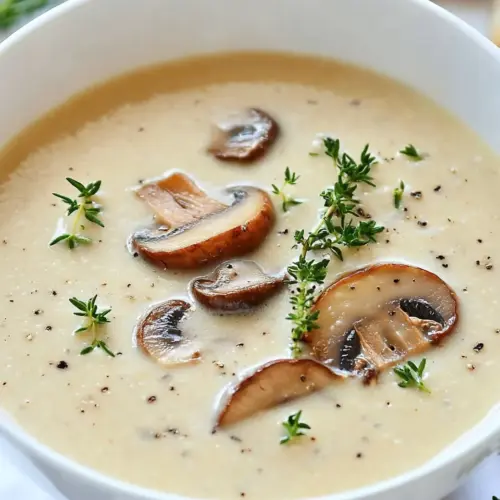
Cream of Mushroom Soup
Cream of Mushroom Soup is a creamy, earthy bowl that warms from the first spoonful. Rich mushroom flavor combines with silky half and half and a savory chicken broth base for an easy weeknight dinner or elegant starter. Ready in about 30 minutes, it is comforting, quick, and reliably delicious, making it a go to for busy evenings or casual entertaining.
Equipment
- Large heavy bottom sauce pan
- Wooden Spoon
Ingredients
- 2 tablespoons olive oil Sauté in a skillet to provide a flavorful fat base that helps brown aromatics and mushrooms, giving the soup depth; olive oil also contributes a subtle fruity note and helps prevent sticking during cooking.
- 1 tablespoon butter Melt gently to add a rich, creamy mouthfeel and help develop a silky texture when combined with other fats; butter also aids in browning the onions and mushrooms, enhancing overall savory flavor.
- 1 cup chopped sweet onion Sweat until translucent to build sweetness and a mellow aromatic foundation for the soup; chopped sweet onion releases natural sugars that balance the earthiness of mushrooms and enrich the broth.
- 12 ounces sliced button mushrooms Cook down to concentrate earthy, umami-rich flavor and provide body and texture; sliced button mushrooms release moisture and deepen the soup’s savory profile while contributing substantial mushroom character.
- 3 medium garlic cloves, minced Sauté briefly to release pungent, aromatic compounds that brighten and lift the soup’s flavor; minced garlic complements the mushrooms with sharp, savory notes and enhances overall complexity.
- 1 tablespoon chopped fresh thyme Add early in cooking to infuse a subtle, woodsy herbal aroma and gentle floral notes; chopped fresh thyme pairs well with mushrooms and helps round out savory flavors without overpowering.
- 1 whole bay leaf Simmer with the broth to impart a mild, aromatic background note that adds complexity and depth; whole bay leaf releases herbal, slightly floral and slightly spicy tones during long simmering.
- 3 cups chicken broth Simmer as the primary liquid to build a savory base and carry all flavors; chicken broth contributes umami salinity and body that supports the creamy mushroom elements.
- 2 cups half and half Stir in toward the end to create a luscious, creamy consistency and mellow the broth’s edges; half and half adds richness without being as heavy as cream and helps yield a smooth mouthfeel.
- 1 tablespoon Worcestershire sauce Whisk in for a punch of savory complexity and a subtle tang that enhances umami; Worcestershire sauce deepens flavor with fermented, slightly sweet and tangy notes that complement mushrooms.
Instructions
- Heat the olive oil and butter in a large heavy bottom sauce pan over medium heat.: Warm air lifts with a nutty, faintly sweet scent as the butter begins to foam in the olive oil , and you will notice a gentle shimmer across the pan surface when it is ready. This preheating creates an even cooking surface so the onion and mushrooms can brown rather than steam. If the fats start to smoke, the pan is too hot, so lower the heat and let it cool for a moment. A common mistake is rushing this step, which results in uneven browning and a one dimensional flavor profile.
- Add the onion to the pan and cook until softened, approximately 4 to 5 minutes.: As the onion softens, you will notice its aroma shift from sharp to sweet, and the edges will become translucent with tiny golden spots. The gentle sizzle should be steady but not frantic, indicating the right medium heat. Stir occasionally to prevent sticking, and if the onion begins to brown too quickly, reduce the temperature, because burnt onion imparts bitterness that will linger in the soup.
- Stir in the mushrooms. Cook until golden and softened, an additional 4 to 5 minutes.: The mushrooms will release moisture, causing the pan to quiet momentarily, then as the liquid evaporates you will hear a return to lively sizzling and begin to see golden edges form. That caramelization concentrates flavor, giving the soup its signature umami depth. Avoid crowding the pan, or they will steam instead of browning, which diminishes that rich, roasted note.
- Add the garlic, thyme and bay leaf. Cook for 1 minute.: A bright, aromatic burst should fill the kitchen when the minced garlic hits the hot pan, mingling with the herbal fragrance of the thyme . Keep stirring so the garlic softens without taking on any brown bits, since overcooked garlic turns bitter quickly. The bay leaf will begin to release a subtle perfume into the pan, layering into the base complexity.
- Stir in the chicken broth and bring to a boil.: As you add the warm chicken broth , you will hear an instant simmer, then bubbles will rise as the pot approaches a boil. This step extracts flavor from the browned bits on the pan and integrates them into the liquid, which is why deglazing now matters for a deeper tasting soup. Watch for boil over, and lower the heat to maintain a steady simmer, because a violent boil can dull delicate flavors.
- Add the half and half and Worcestershire.: When the half and half goes in, the surface calms and a soft sheen appears, signaling the soup is coming together into a creamy body. The Worcestershire sauce blends in to amplify umami, and you should taste for seasoning at this point. Keep the heat gentle, because boiling aggressively after adding dairy can cause slight separation. If the texture seems thin, a brief simmer will reduce and thicken the soup without breaking it.
- Serve immediately sprinkled with additional fresh thyme.: Spoon the soup into warm bowls so the temperature stays comforting, and sprinkle fresh thyme for an herbal lift that brightens each bite. The aroma of fresh herbs on top provides a contrast to the deep mushroom notes, and the visual of green flecks makes the bowl inviting. A common oversight is letting the soup sit too long before serving, which dulls the herb aroma and cools the texture, so serve promptly for best results.
Notes
- Heat management — Maintain a steady medium heat throughout sautéing so the onion and mushrooms brown evenly without burning, creating complex caramelized flavors.
- Batch cooking — If your pan is crowded, cook the mushrooms in two batches to promote golden edges rather than steaming, which preserves texture and depth.
- Dairy care — After adding the half and half, keep the pot at a gentle simmer to avoid curdling, and stir gently to integrate the cream into the broth.
- Broth selection — Use a flavorful, low sodium chicken broth to control salt and achieve a rich base, tasting as you go to adjust seasoning.
- Herb timing — Add fresh thyme near the end and as a garnish to preserve its bright perfume, rather than cooking it for too long which mutes the aroma.