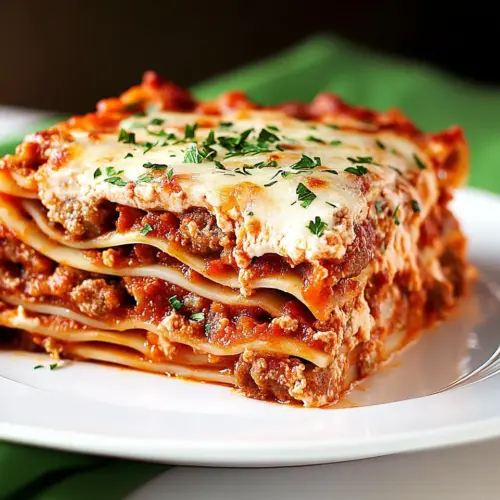
Cream Cheese Lasagna with Sausage
Cream Cheese Lasagna with Sausage blends creamy cream cheese, hearty Italian sausage, and melted mozzarella cheese into a comforting, crowd pleasing bake. This easy weeknight dinner offers rich, silky layers with a browned cheesy top and robust marinara, perfect for family meals or potlucks. Make it ahead to deepen flavors and enjoy effortless reheating that tastes fantastic the next day.
Equipment
- Large saucepan
- Large Pot
- 9×13 baking dish
- Wooden Spoon
Ingredients
- 1 box lasagna noodles Boil in salted water until tender; provides the structural layers that hold the lasagna together and absorb sauce. Break or trim noodles as needed to fit the pan and separate sheets to prevent sticking.
- 2 quarts homemade marinara or store-bought Simmer to develop rich tomato flavor and moisture that infuses the layers; acts as the primary sauce component. Use homemade or quality store-bought sauce to ensure balanced acidity and seasoning throughout the dish.
- 2 pounds Italian sausage Brown and crumble in a skillet to render fat and deepen savory flavor; supplies hearty meatiness and spices to the filling. Drain excess fat if desired to control greasiness and incorporate evenly with the sauce.
- 16 ounces cream cheese softened Soften at room temperature and whisk until smooth to create a creamy, tangy filling that contrasts with tomato sauce. Blend with herbs, cheeses, or beaten eggs if desired to add richness and help bind layers.
- 5 cups shredded mozzarella cheese Sprinkle or layer between sheets and on top to melt into gooey, stretchy strands; contributes mild, milky flavor and desirable melted texture. Distribute evenly for consistent cheesiness in every bite.
- 1 1/2 cups shredded Parmesan cheese Grate finely and scatter over layers or the finished top to add savory, nutty sharpness and umami complexity. Use it sparingly for pronounced flavor and to aid in browning the crust.
- Italian seasoning Season to taste and mix into sauces or cheese blends to provide aromatic herbal notes like oregano, basil, and thyme. Adjust quantity to complement the sausage and tomato without overpowering other flavors.
Instructions
- Preheat oven to 375 degrees F. In a large sauce pan, brown the sausage over medium heat, breaking into small pieces with a wooden spoon. Once the meat is fully cooked, add the marinara and simmer for 10 minutes.: As the oven warms, you will notice the early scent of heat and anticipation, which helps the lasagna cook evenly once assembled. A properly preheated oven ensures that the cheese melts at the right rate and the top develops a golden surface, rather than sitting in the oven cooling while it waits to reach temperature. One common mistake is skipping preheat and putting a cold dish into a cold oven, which lengthens cook time and can make the cheese separate; avoid that.
- Boil the noodles in a large pot of salty water, according to package instructions. Remove the noodles and lay them out on a clean dish towel.: When the Italian sausage hits the pan, it should sizzle and release flavorful fat, and as you break it apart with a wooden spoon, you will hear it change from a wet sound to a light crackle as moisture cooks off. Those browned bits are full of umami, which deepens the overall sauce. Make sure the pan is hot enough to brown rather than steam, and do not stir constantly; let the meat sit briefly between stirs to develop color. A frequent error is overcrowding the pan, which prevents browning and yields grey, steamed meat instead of browned flavor.
- Spray a 9×13-inch baking dish with non-stick spray. Smear 9-12 noodles with an equal portion of cream cheese. (The number of noodles used depends on the width of the pan.): Once the marinara joins the browned meat, you will see a fragrant steam and hear a gentle simmer as flavors meld. Simmering concentrates the sauce and helps the meat absorb tomato brightness, creating cohesive sauce layers that will not water down the lasagna. Stir occasionally and reduce heat if the sauce threatens to sputter aggressively, which can lead to a bitter, caramelized edge; if the sauce seems thin, let it reduce a bit longer to avoid a soggy lasagna.
- Start assembling the lasagna: One large scoop of meat sauce on the bottom, 3-4 noodles across (cream cheese side up), 1/3 of the mozzarella and parmesan. Repeat. After the third layer of noodles with cream cheese, pour the rest of the sauce over the noodles before adding the last layer of the mozzarella and parmesan. Sprinkle the top with Italian Seasoning.: The pot should roar when the noodles first go in, and the salted water seasons the lasagna noodles from the inside out. Cook to al dente; the noodles should be pliable but still offer a slight resistance when bitten. Overcooked noodles become fragile and tear during assembly, which makes a sloppy final dish. Drain carefully to keep them intact and lay them out flat on a clean towel to prevent sticking.
- Bake uncovered for 20-30 minutes—until the cheese is toasty and the sides are bubbling. Wait at least 10 minutes before cutting. Lasagna (as well as many other favorite pasta dishes) is considered better the second day. If making this ahead, cover well, refrigerate, and bake for 40-50 minutes to heat through!: The initial smear of room temperature cream cheese provides a creamy adhesive layer that helps the lasagna stay moist as it bakes. You will notice the cream cheese smoothing into a glossy spread that resists separation when applied evenly. Avoid using cold cream cheese, because it will clump and tear the noodles; if it is stubborn, warm slightly in a bowl set over warm water to make it spreadable.
- Start assembling the lasagna layer meat sauce noodles cheeses repeat: As you build layers, press gently so the components settle and you get even distribution; the assembled dish should look structured and balanced. The contrast between the bubbling, savory meat sauce and the creamy cream cheese creates both moisture and richness that are critical for texture. A typical misstep is piling sauce unevenly, which causes some areas to be dry and others soupy; take a moment to spread each layer thoughtfully.
- After the third layer pour the rest of the sauce over the noodles before adding the last layer of mozzarella and parmesan: Pouring the remaining sauce before the final cheeses ensures that the top noodles soak in flavor but the cheese still gets an opportunity to brown attractively. When the cheeses hit that warm surface, they will melt and then form a bubbly, toasty crust during baking. Resist the urge to overload cheese at the top only, since too much can prevent the interior from heating through evenly.
- Sprinkle the top with Italian Seasoning: When you add the Italian seasoning , inhale the aroma as it crowns the dish and gives an herbal finish that plays off the richness below. Herbs on top toast slightly, releasing fragrant oils that enhance the first bite. Use sparingly to avoid overpowering the cheese balance.
- Bake uncovered for 20 to 30 minutes until the cheese is toasty and the sides are bubbling: During baking you will hear a gentle bubbling at the edges and see the cheese change from glossy to blistered and golden, which signals readiness. The heat melds the layers and finishes the texture, so timing matters; check visually to avoid overbrowning which can lead to a dried top. If your oven runs hot, tent a bit of foil loosely to slow browning while allowing the interior to finish.
- Wait at least 10 minutes before cutting: Resting the lasagna allows the layers to set, making slicing cleaner and the servings neater. The pasta and cheese will firm slightly as residual heat redistributes, and the flavors also meld during this brief pause. Cutting too soon results in the filling oozing out and slippery slices that do not hold together, so patience really pays off here.
- If making ahead cover well refrigerate and bake for 40 to 50 minutes to heat through: When reheating from chilled, you will hear a longer, steadier bubbling as the interior comes back to temperature, and the cheese will regain its melted texture. Covering prevents the top from drying, and extended bake time ensures the center is hot. A common error is reheating at too high a temperature, which scorches the outside before the middle is warm; use a moderate oven for even reheating.
Notes
- Warm the cream cheese: Softening the cream cheese at room temperature makes it spread smoothly and prevents tearing the lasagna noodles during assembly.
- Don't overcrowd the sausage: Brown the Italian sausage in a hot pan without crowding so it can develop deep, caramelized flavor rather than steaming.
- Reduce watery sauce when necessary: If your marinara seems thin, simmer briefly to concentrate flavor and avoid a soggy final lasagna.
- Al dente noodles for the win: Cook the lasagna noodles until al dente so they finish cooking perfectly in the oven and maintain structure.
- Layer with intention: Spread sauce and cheese evenly across each layer to avoid dry pockets or overly saucy spots in the finished slices.
- Rest before slicing: Allow at least 10 minutes for the lasagna to set so slices hold together when served.