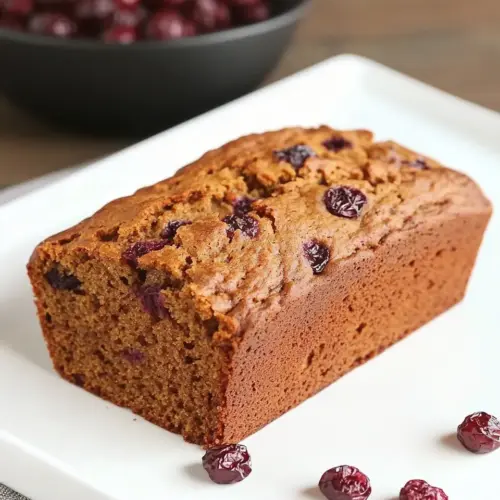
Cranberry Pumpkin Bread
Cranberry Pumpkin Bread is a moist, spiced loaf that blends creamy pumpkin with tart dried cranberries for a cozy, easy treat. This loaf has a tender crumb from oil and eggs, warm notes from pumpkin pie spice, and bright cranberry bites, perfect for easy weeknight baking or festive breakfasts. Make it for a crowd pleasing autumn bake that keeps well and tastes better day to day.
Equipment
- Loaf pans
- Large Bowl
- Medium Bowl
- Whisk
- Spatula
Ingredients
- 2 large eggs, slightly beaten Whisked to provide structure and moisture, eggs help bind the batter and contribute to a tender crumb when slightly beaten. Eggs also aid in leavening by trapping air, helping the loaf rise during baking. Their proteins set as the bread bakes, giving slices a cohesive texture.
- 2 cups granulated white sugar Sweetened to balance pumpkin earthiness, granulated white sugar adds sweetness and promotes browning through caramelization. Sugar also tenderizes the crumb by interfering with gluten formation and helps retain moisture for a soft loaf. Additionally, sugar contributes to the overall mouthfeel and shelf life of the bread.
- 1/2 cup canola or vegetable oil Neutral-flavored to keep the pumpkin flavors prominent, canola or vegetable oil supplies fat that moistens the bread and yields a soft, tender texture. Oil contributes to a longer-lasting moistness compared with butter and helps dissolve sugar and distribute fat evenly. Using a neutral oil ensures no competing flavors with pumpkin and spices.
- 1 cup canned pure (unsweetened) pumpkin Concentrated and moist, canned pure pumpkin imparts characteristic autumn flavor, vibrant color, and dense moisture to the batter. Pumpkin adds natural fiber and some richness, which helps create a tender, slightly dense crumb typical of quickbreads. Unsweetened pumpkin allows control over overall sweetness when combined with sugar and spices.
- 2 1/4 cups all-purpose flour Leavened and structural, all-purpose flour forms the batter’s framework by developing gluten that traps gases and provides crumb. Proper measurement ensures balanced hydration and texture; too much can yield a tough loaf while too little produces a loose crumb. Flour also influences absorbency of liquids and integration of mix-ins like cranberries.
- 1 tablespoon pumpkin pie spice Aromatic and warming, pumpkin pie spice seasons the bread with a blend of cinnamon, nutmeg, ginger, and cloves to enhance pumpkin’s natural flavors. Spice adds complexity and a signature autumn profile that complements sugar and pumpkin. Using the correct amount prevents overpowering heat while distributing flavor evenly.
- 1 teaspoon baking soda Leavening to aid rise, baking soda helps neutralize acidity from pumpkin and reacts with other ingredients to produce carbon dioxide. Properly measured baking soda contributes to lift and lightness in the quickbread’s crumb. It also affects browning and can influence pH, which impacts overall flavor and texture.
- 1/2 teaspoons salt Saline and balancing, salt enhances the bread’s sweetness and deepens the flavors of pumpkin and spices by suppressing bitterness. A small amount strengthens gluten structure and rounds out the overall taste profile. Precise measurement prevents overly salty or flat results.
- 1 cup chopped dried cranberries Chewy and tart, chopped dried cranberries provide bursts of fruity contrast against the sweet, spiced pumpkin batter. Cranberries add texture and concentrated sweetness, helping to break up the loaf’s crumb and introduce visual interest. Distributing them evenly prevents sinking and ensures bites with balanced flavor.
Instructions
- Preheat oven to 350°F. Grease and flour two 8-inch loaf pans.: As the oven warms, you should notice a dry, warm air beginning to gather in the kitchen, which primes the environment for even baking. Preheating to 350°F ensures the loaf starts rising promptly once it hits the heat, creating a steady oven spring that prevents overly dense centers. A common error is placing the batter into a cold oven, which leads to uneven rise and gummy texture. Listen for the oven clicking as it reaches temperature, and if you have an oven thermometer, use it to confirm accuracy since some ovens run hot or cold.
- In a large bowl, combine first 4 ingredients; mix well.: The greased and floured surface will help the loaves release cleanly, leaving intact crust and soft sides. As you tap excess flour out of the pan, you will feel the surface become slightly textured but not powdery. Omitting this step often causes the loaf to stick, tearing the crust when you remove it. Use a light coating of oil or nonstick spray, then dust with flour, tapping out the surplus to avoid a floury rim on the baked bread.
- In a separate medium bowl, whisk together the flour, spice, baking soda and salt. Add the pumpkin mixture, stirring just until dry ingredients are moistened. Stir in the cranberries.: When you whisk together the slightly beaten eggs , sugar , oil , and canned pumpkin , the mixture should become glossy and uniform in color. You will notice a thicker texture than batter made with butter, and it will have a sweet, spicy scent beginning to emerge. This step hydrates sugar and distributes fat, which is crucial for even crumb. A frequent mistake is under mixing, leaving streaks of unincorporated egg or pumpkin; mix until smooth but avoid vigorous beating which can introduce too much air.
- Spoon the batter into the prepared pans. Bake for 1 hour, or until a toothpick inserted into the center comes out clean.: As you combine the all purpose flour , pumpkin pie spice , baking soda , and salt , you should see a uniform tan color with tiny darker flecks from the spice. This dry blend ensures the leavening and spice are evenly distributed, preventing pockets of baking soda or spice. Sifting is optional but stirring thoroughly with a whisk prevents lumps. A common oversight is adding wet ingredients directly to unsifted flour, which can create uneven rise.
- Add the pumpkin mixture stirring just until dry ingredients are moistened: When folding the wet into the dry, you will notice the batter become thicker and pull away from the bowl slightly, forming a cohesive mass that still pours slowly. This minimal mixing preserves a tender crumb by avoiding gluten overdevelopment. If you keep stirring past the point of combined ingredients, the loaf can become tough, so stop as soon as you no longer see dry streaks. Use a spatula to scrape the bowl sides and ensure even incorporation.
- Stir in the cranberries: As you fold in the chopped dried cranberries , they should appear evenly scattered through the batter, creating little red pockets of contrast. The chew and tartness of the cranberries will punctuate each slice, and incorporating them last prevents them from breaking down. A trap to avoid is over-folding, which can crush the fruit, releasing excess moisture and altering bake time. If the cranberries clump, use a gentle turning motion to separate them for even distribution.
- Spoon the batter into the prepared pans: When you transfer the batter into the pans, it should mound slightly but not overflow. Smooth the tops gently; the surface will look glossy and slightly ridged from the spatula. The depth in each pan affects bake time, so fill them evenly for uniform results. Overfilling leads to spillage and uneven centers, while underfilling can produce a very thin loaf. Use a scale or eyeball to keep both pans similar in fill level.
- Bake for 1 hour or until a toothpick inserted into the center comes out clean: During baking you will notice the kitchen fill with warm, spicy aromas, and the tops will turn a deep, golden brown, slightly domed. The final indicator is a clean toothpick and a subtle spring back when the top is pressed lightly. If the loaf is still very moist in the center but browned on top, tent it with foil and continue baking to avoid overbrowning. A common mistake is removing the loaves immediately; allow them to rest so they finish setting. Expect an audible quieting of the oven as steam reduces and a faint caramelization scent at the end.
Notes
- Reduce sugar slightly — Lower the sugar by up to 1/4 cup for a milder sweetness, which lets the pumpkin and spice shine more. This is useful if you plan to serve the loaf with sweet spreads.
- Use olive oil for depth — Substitute the canola or vegetable oil with a light olive oil for a touch of savory depth, but avoid robust olive oils that can mask the spices.
- Make muffins — If you have extra batter, scoop into a muffin tin and bake until a toothpick comes out clean, about 18 to 22 minutes, for portable servings.
- Single large loaf — Combine the batter into one 9 inch loaf pan filled about three quarters full, this yields a larger, dramatic presentation for gatherings.
- Gently toast cranberries — Warm the chopped dried cranberries briefly in a saucepan with a teaspoon of water to intensify their flavor before folding into the batter.