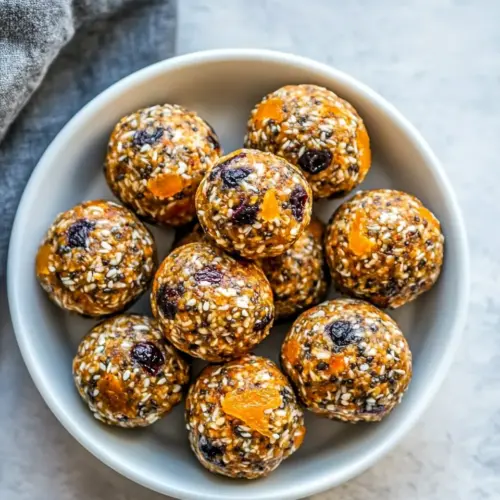
Cranberry Orange Protein Balls
Cranberry Orange Protein Balls are chewy, zesty, and easy to make with a bright orange aroma and nutty backbone. These portable bites blend nuts, dates, and juice sweetened cranberries for a satisfying, protein rich snack perfect for busy mornings or an easy weeknight pick me up. Make a batch to have ready for on the go energy and a guilt free treat.
Equipment
- Food Processor
- Seal able container
- Small Cookie Scoop
Ingredients
- 1 cup raw almonds Provide a crunchy, nutrient-dense base and healthy fats that help bind the mixture when processed; grinding raw almonds yields a textured backbone and adds vitamin E and magnesium to the protein balls.
- 1 cup raw walnuts Contribute a rich, earthy flavor and additional healthy fats that enhance the overall mouthfeel; chopping or pulsing raw walnuts increases omega-3 content and complements the almond base for balanced texture.
- 1/2 cup unsweetened flaked coconut Add a chewy, tropical note and subtle sweetness while helping absorb minor moisture; unsweetened flaked coconut brings fiber and coconut oil naturally present that deepen the flavor profile.
- 3 to 5 large pitted dates (I use 3) Offer concentrated natural sweetness and sticky texture that act as a primary binder when blended with nuts; pitted dates also contribute potassium and a caramel-like taste that balances tart cranberries.
- 1 cup juice-sweetened dried cranberries Supply bright, tart-sweet bursts of flavor and pleasant chewiness while contributing natural sugars and color contrast; juice-sweetened dried cranberries complement citrus notes and add fruity acidity.
- 2 tsp orange zest Impart intense citrus aroma and bright flavor that lifts the entire recipe while adding volatile oils; fresh orange zest blends with sweet and nutty elements to enhance overall freshness.
- 1/4 cup sunflower seed butter or almond butter Provide creamy, emulsifying fat that helps bind ingredients and adds depth of flavor; sunflower seed butter or almond butter contributes smoothness and additional protein to the mixture.
- 3 tbsp coconut oil or flax oil Add pliability and additional healthy fats to help the mixture hold together while contributing subtle coconut or nutty flavors; coconut oil or flax oil also aids in firming the balls when chilled.
- 2 scoops hemp protein powder or protein powder of choice Increase overall protein content and create a slightly denser texture while contributing mild, earthy or neutral flavor depending on choice; hemp or other protein powders boost the nutritional profile.
- 2 tsp pure vanilla extract Enhance sweetness complexity and aromatic depth with warm, familiar flavor notes while helping mask any raw protein powder aftertaste; pure vanilla extract ties the other flavors together.
- 1/4 tsp sea salt Balance and elevate flavors while reducing any bitterness or excessive sweetness; a small amount of sea salt sharpens the taste and rounds out the combination of sweet, nutty, and citrus elements.
Instructions
- Add all ingredients into your food processor and process until a thick dough-like mixture forms. It will be crumbly - this is okay!: You'll notice a steady hum as the blades gradually turn the nuts into smaller bits, releasing warm nutty oils that smell deeply toasty, and the room will take on a light citrus scent from the orange zest . Listen for the change in the processor timbre as the mix moves from grainy to more cohesive, and watch for the mixture to begin gathering around the blades into a mass. This is the point where the dates and the sunflower seed butter are doing most of the binding work, and the presence of small, even bits of raw almonds and raw walnuts ensures pleasant texture. A common mistake is over-processing into a paste, which can make the balls too dense; stop while there's still tiny flecks of nuts visible.
- Transfer the ball mixture to a sealable container and refrigerate for at least 2 hours. This helps the ingredients set up so that it’s easier to form the balls. If you try to form the balls right away, they will often crumble and not hold together.: At this stage the mixture may feel crumbly when you press a pinch between your fingers, yet it should hold when squeezed. The crumbly feel means the oils have not fully redistributed, and that is normal especially if your processor is not large or the ingredients were cool. Smell the mixture now, the bright cranberries and vanilla should be noticeable, which indicates a balanced flavor profile. If your mixture refuses to hold, it likely needs a touch more sunflower seed butter or a second pulse to help the fats meld; however avoid adding too much liquid, which can make the mixture sticky and difficult to work with.
- Store the balls in a sealable bag or container in the refrigerator or freezer.: When you move the mixture into a container you may notice the citrus scent intensify as it rests. Refrigeration chills the oils, which firms the texture and makes rolling easier. The cool temperature also lets the coconut oil solidify if you used it, providing structure. Leaving it less than the recommended time increases the chance the balls will fall apart while forming, which is the most common slip up here. Plan ahead and let them set, checking for a slightly firmer feel after the first hour to gauge readiness.
- This helps the ingredients set up so that it’s easier to form the balls: As the mix chills you will see it compact, becoming smoother to the touch and less sticky. The surface may glisten faintly from residual oils, but it should feel moldable. Use a spoon or small cookie scoop to portion, then roll between your palms with light pressure to form tidy spheres. If the mixture sticks to your hands too much, dampen them lightly with water or dust with a touch of extra unsweetened flaked coconut to keep the exterior neat. Avoid squeezing too hard, which will overly compress the balls and change the intended texture.
- If you try to form the balls right away they will often crumble and not hold together: Trying to shape the mixture while warm often results in broken or misshapen balls because the fats are still soft and the binders have not set. You may also find the surface becomes greasy if handled too much when warm. To fix a crumbled batch, collect the crumbs back into the processor and pulse in a teaspoon more sunflower seed butter or an extra date, then chill again. Prevent this by chilling the mixture long enough so it becomes springy rather than fragile.
- Store the balls in a sealable bag or container in the refrigerator or freezer: After forming, the balls will keep well chilled for several weeks in the refrigerator and for months in the freezer. When refrigerated, they maintain a tender chew and a firm shape; frozen, they become denser and more like a frozen treat. Pack them in single layers or with parchment between layers to avoid sticking. A common mistake is leaving them at room temperature for extended periods which softens the coconut oil and can lead to misshapen results; if you need to transport them, keep them chilled in a cooler bag.
Notes
- Swap nut butter: Try almond butter instead of sunflower seed butter for a rounder, more traditional nutty profile, which will slightly change the fat content and mouthfeel.
- Change the protein powder: Use a pea or rice protein if you prefer a neutral taste; hemp brings an earthy note, so choose the powder that best complements the juice-sweetened dried cranberries.
- Omit or reduce dates: If you want less sweetness, use only three large pitted dates or replace one date with a tablespoon of extra nut butter to maintain binding.
- Coat the balls: Roll finished balls in extra unsweetened flaked coconut or finely chopped nuts for texture and visual appeal.
- Use different oil: Substitute flax oil for a milder flavor and a softer finished texture, though keep these chilled to prevent spreading.