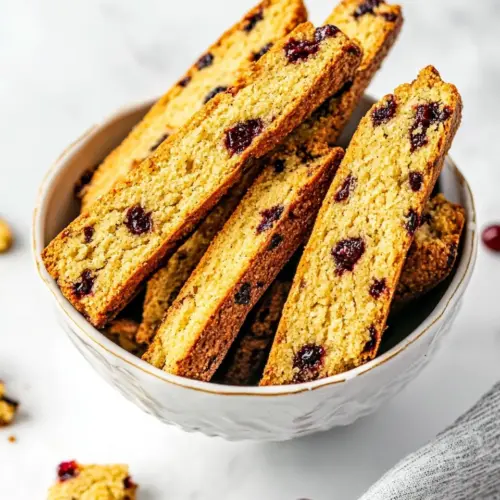
Cranberry Orange Biscotti
Cranberry Orange Biscotti is a crisp, citrus scented cookie studded with tart cranberries and a hint of almond. These twice baked slices are excellent for dunking, with a crunchy texture and bright flavor, making them an easy make ahead treat for holiday gatherings or casual coffee breaks. Try them for a simple yet impressive baked good to share.
Equipment
- Kitchen Scale (optional)
- Baking Sheet
- Stand mixer
Ingredients
- 4 tablespoons unsalted butter 57 grams, room temperature (1/2 stick) Creamed to add richness and tender crumb, providing a buttery base that helps bind dough and enhance flavor; use room-temperature butter for even incorporation and a smooth texture.
- 1/2 cup granulated sugar 100 grams Sweetened to balance tartness from cranberries and bright citrus, contributing to structure through caramelization and moisture retention during baking.
- 2 large eggs 100 grams, room temperature Beaten to add moisture and structure while contributing to leavening and binding; room-temperature eggs incorporate more evenly for a uniform dough.
- 1 teaspoon pure vanilla extract 4 grams Added for aromatic depth and warm, familiar flavor; pure vanilla extract enhances overall sweetness and complements citrus and almond notes.
- 1/4 teaspoon almond extract 1 gram, optional Optional for a delicate nutty aroma and flavor accent; a small amount heightens complexity without overpowering the other flavors.
- 1 1/4 cups all purpose flour 150 grams Combined as the primary dry structure provider, offering gluten for chew and stability; measure accurately for proper dough consistency.
- 1/4 cup almond flour 24 grams Folded in to introduce tender, nutty flavor and crumbly texture without adding gluten, contributing subtle almond richness to the biscotti.
- 1 teaspoon baking powder 4 grams Leavened to provide a modest rise and lightness, counteracting density from nuts and fruit while ensuring proper texture after twice-baking.
- 1 teaspoon orange zest 2 grams Zested to contribute bright citrus oils and aromatic lift, enhancing the cranberry’s tartness and bringing a fresh orange flavor throughout the dough.
- 1 cup dried cranberries 170 grams Folded in to add concentrated tart-sweet bursts and chewy texture while providing visual contrast and concentrated fruity flavor in each bite.
Instructions
- Preheat oven to 350°F and line a large baking sheet with parchment paper.: You will notice the kitchen warming as the oven preheats, a dry heat that will help set the log quickly. Preheating ensures even browning, so wait until the oven reaches 350°F before placing the dough inside. A common mistake is placing the dough into a cool oven, which can cause spreading and an uneven crust.
- In the bowl of a stand mixer fitted with the paddle attachment, cream the butter and sugar together on medium-high speed until light and fluffy, about 1 minute.: As you cream, watch for the butter to turn paler and the sugar to dissolve slightly, creating a smooth, aerated mixture. You'll hear a soft, steady hum from the mixer and see tiny air pockets form. Stop once the texture feels pillowy, because over-creaming can incorporate too much air and make the finished biscotti fragile.
- Add the eggs and vanilla (and almond extract, if using) and mix until well combined. Make sure to scrape the sides of the bowl a few times so everything gets well mixed.: After adding the eggs and extracts, the batter will become glossy and more fluid, releasing a fragrant steam of citrus and vanilla. Scrape the bowl sides frequently so there are no streaks of unincorporated butter. A frequent error is insufficient scraping, which leaves pockets of unblended fat and causes uneven texture.
- Add the flour, almond flour, and baking powder and mix just until no large lumps remain– make sure not to overmix!: When you add the dry ingredients, the dough will thicken and become denser. Mix only until large lumps disappear to avoid developing too much gluten, which would make the biscotti tough. The batter should look homogenous but still slightly tacky. Overmixing is the most common reason for dense, heavy biscotti.
- Add the orange zest and cranberries and gently fold them into the batter.: Folding releases bright aromas from the orange zest and disperses the cranberries without crushing them. You will see flecks of orange and ruby fruit throughout. Use a spatula to preserve the batter's lightness, and avoid vigorous stirring that could tear the cranberries or compress the batter.
- Transfer the batter to the baking sheet and pat it into an oval that is about 14 inches long, 3 inches wide, and 1/2-inch thick. It helps to wet your hands– this is a sticky batter!: When shaping, you will feel the dough resist, but wetting your hands gives you better control and prevents sticking. The surface should be smooth and even so it bakes uniformly. A common mistake is making the log too thick, which leads to underbaked centers or uneven slicing.
- Bake the biscotti for 20-22 minutes, or until it is golden brown around the edges.: During this bake the edges will deepen to a warm golden color and the aroma will intensify, with buttery and citrus notes becoming prominent. Listen for a faint settling sound as moisture begins to leave the dough. If the edges are not browning after the suggested time, give an extra few minutes rather than increasing temperature, to avoid overcooking the surface.
- Remove the biscotti from the oven and allow it to cool for 10 minutes.: Cooling slightly firms the log so it slices cleanly. You will feel the heat dissipate and the surface will set, not floppy. Cutting too soon can cause the log to crumble or deform, so be patient for the full ten minutes.
- Slice the biscotti into 1/2-inch slices and place them cut side up on the sheet pan. Bake for an additional 15-18 minutes, or until the biscotti are dry and golden brown.: As the slices bake, they will lose moisture and become crisp. You may hear a subtle toasting sound and see the edges take on a deeper golden hue. Rotate the pan if your oven has hot spots to ensure uniform color. Underbaking here leaves them soft, while overbaking will make them excessively hard.
- Allow the biscotti to cool fully before transferring them to an airtight container.: Fully cooled biscotti will be dry and brittle in the best way, and their flavor will have settled into a balanced bite. Touch a slice to confirm it is completely room temperature, then store in an airtight container to preserve crispness. Storing while warm traps steam and can make them lose their snap.
Notes
- Swap the nuts: Replace half of the almond flour with finely chopped toasted almonds for extra crunch and a more rustic bite.
- Boost citrus: Increase the orange zest to 2 teaspoons for a brighter, more aromatic profile, especially if your cranberries are very sweet.
- Soften dried fruit: Briefly soak the cranberries in warm water for 5 minutes if they seem leathery, then drain thoroughly before folding in.
- Make ahead: Refrigerate the shaped log up to 2 days before baking to develop deeper flavor and make the dough easier to handle.
- Storage trick: Keep the biscotti in an airtight container with a small piece of parchment to prevent sticking and preserve crispness for up to two weeks.