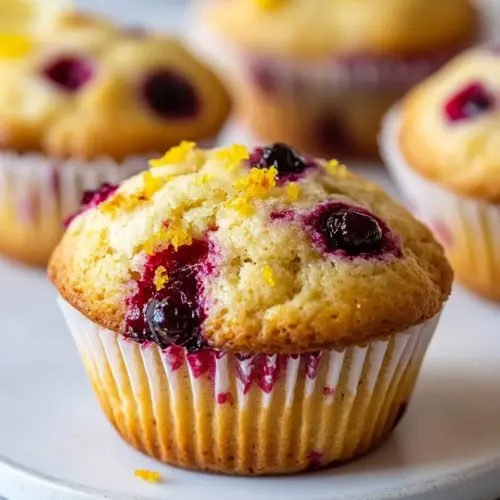
Cranberry Lemon Muffins
Cranberry Lemon Muffins are tender, bright, and slightly tangy with bursts of juicy cranberries and zesty lemon. This easy muffin recipe yields golden tops and a moist crumb, ideal for quick breakfasts or holiday brunch. The balance of Greek yogurt and butter keeps them rich but light, making them a must bake for cozy mornings and gatherings.
Equipment
- Muffin Pan
- Mixing Bowl
- Whisk
Ingredients
- 1 cup all-purpose flour Provides structure and bulk to the muffins by forming the gluten network when mixed with liquids; balances texture for a tender crumb and helps bind other ingredients together during baking.
- 1/2 cup granulated sugar Adds sweetness and helps with browning through caramelization while also contributing to batter aeration when creamed or dissolved; influences overall flavor and perceived moistness.
- 1 3/4 teaspoons baking powder Leavens the batter by releasing carbon dioxide when reacting with moisture and heat, creating lift and a light crumb; also helps neutralize acidity from lemon juice and yogurt.
- 1/4 teaspoons salt Enhances overall flavor by balancing sweetness and intensifying other tastes; supports gluten development control and contributes to proper chemical leavening action.
- 3 tablespoons milk Loosens the batter and provides necessary hydration for flour, aiding gluten formation and creating steam during baking for lightness; contributes slight richness depending on fat content.
- 1 tablespoon fresh lemon juice Adds bright acidity and aromatic citrus notes that brighten the muffin flavor; reacts with baking powder and dairy to help tenderize crumb and enhance overall taste.
- 1 tablespoon lemon zest Contributes concentrated citrus oil and aromatic brightness that intensifies lemon flavor; adds subtle texture and visual appeal while complementing the cranberries.
- 3 tablespoons Greek yogurt Adds creaminess, moisture, and slight tang that enriches the crumb and improves tenderness; provides some protein and acidity which interacts with leavening for lift.
- 6 tablespoons unsalted butter, melted Provides fat that enriches flavor, creates a tender, moist crumb, and aids in browning; when melted it distributes evenly for a uniform texture and mouthfeel.
- 1 large egg Adds structure and richness through proteins that coagulate during baking, contributing to setting the crumb and improving texture; also supports leavening by trapping air.
- 1 teaspoon vanilla extract Contributes aromatic depth and rounds out sweetness with warm, familiar flavor; enhances overall complexity and complements lemon and cranberry notes.
- 1/2 cup fresh or frozen cranberries, tossed with 2 teaspoons of all-purpose flour Provides fresh tart fruit bursts and visual contrast while the light flour coating prevents sinking; contributes acidity and texture that balance the sweetness of the muffins.
Instructions
- Preheat the oven to 425°F (220°C). In a large bowl, combine the all-purpose flour, sugar, baking powder, and salt, mixing well.: As the oven warms, you will notice a dry, warming heat that helps the initial blast of high temperature set the batter surface quickly, encouraging a strong rise. The first minutes of baking are critical because the rapid oven heat helps activate the leavening and produces those peaked muffin tops, so do not skip preheating. A common mistake is placing batter into a partially warm oven, which can yield flat muffins, so confirm the temperature with an oven thermometer if your oven is variable.
- Add the milk, lemon juice, lemon zest, Greek yogurt, melted butter, egg, and vanilla extract, and whisk everything together until well blended.: At this stage the dry ingredients should look evenly blended, pale, and powdery, with no concentrated pockets of leavening. Mixing them first distributes the rising agents and salt so the batter will ascend uniformly. If you under-mix, some muffins might rise more than others, and over-mixing will not occur here since these are dry components, but be careful when you later add liquids.
- Toss the cranberries with all-purpose flour, then gently fold them into the mixture.: When you add the wet items, the batter should become glossy and slightly thick but pourable, with flecks of lemon zest visible throughout. The aroma will shift to a warm, citrus-tinged scent from the zest and butter. Whisk just until combined to avoid overworking gluten, which can toughen the crumb. A common mistake is overmixing until the batter is smooth like a cake batter, which can create dense muffins, so stop when you see no large streaks of flour.
- Arrange the baking cups in the muffin pan and fill them evenly with the mixture.: After coating the cranberries they should appear slightly dusted and not clumped, which helps them suspend in the batter. Folding gently prevents bursting the berries and turning the batter pink, preserving pockets of bright tartness. You want to see little specks of fruit rather than uniform streaks of color. A frequent error is stirring too vigorously, which releases juice and yields an uneven crumb and color.
- Bake for 6 minutes to allow the cake to rise, then reduce the temperature to 356°F (180°C) and continue baking for 25 minutes, or until lightly browned on the surface and a cake tester comes out clean.: As you spoon batter into the cups, you should hear a soft plop and see batter settle with peaks that will round during baking. Filling uniformly ensures even baking times and consistent sizes; use an ice cream scoop for precision. Visually check that each cup is similar in height. Inconsistent filling will lead to some muffins underbaked while others overbake, so measure or scoop carefully to avoid that issue.
- Bake for 6 minutes to allow the cake to rise, then reduce the temperature to 356°F (180°C) and continue baking for 25 minutes, or until lightly browned on the surface and a cake tester comes out clean.: That first high heat jump-starts rising, and the subsequent lower temperature finishes the crumb without overbrowning. During the first minutes you will notice a rapid rise and a strong scent of butter and lemon; the surface should begin to set. After lowering the temp, the muffins will bake more gently, producing a tender interior and lightly golden tops. Check for a bounce back to the touch and a clean tester for doneness. A typical misstep is opening the oven repeatedly which lets heat escape and can cause uneven rise, so limit peeks until near the end time.
Notes
- Toss cranberries with flour — Tossing fresh cranberries with a little all-purpose flour before folding prevents them from sinking, helping each muffin get even fruit distribution and avoiding dense fruit pockets at the bottom.
- Handle frozen cranberries — If using frozen cranberries, thaw and pat them dry, then toss with flour; excess moisture from frozen fruit may thin the batter and affect texture, so drying helps maintain intended batter consistency.
- Try flavored Greek yogurt — Using a flavored Greek yogurt will subtly change the muffin profile, adding complementary tastes without altering technique; choose mild fruit flavors to avoid overpowering the lemon note.