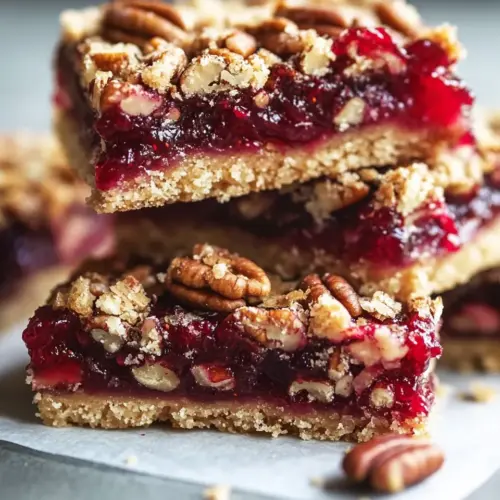
Cranberry Jam Pecan Bars
Cranberry Jam Pecan Bars showcase a buttery shortbread crust, a glossy, jamlike cranberry center, and a crunchy pecan streusel top. Bright and slightly tart, these bars balance sweet and nutty notes for an easy seasonal dessert that travels well. Perfect for holiday gatherings or weeknight treats, they are simple to prep and rewarding to share.
Equipment
- Stand mixer
- Paddle attachment
- 13 x 9-inch baking dish
- Parchment Paper
- Heavy-Bottomed Saucepan
- Wire Rack
- Mixing Bowls
Ingredients
- 2 1/2 cups (313 grams) all-purpose flour Provide structure and bulk to the bars, forming the dough base that holds fats and sugars together. Sift or whisk before measuring to ensure even distribution and a tender crumb when baked. Use room-temperature handling when combining with butter and egg to avoid overworking gluten.
- 3/4 cup (150 grams) granulated sugar Add sweetness and help with caramelization and slight crunch on the crust and crumb. Measure by spooning into the cup for accuracy or use a scale for precise results. Adjust slightly if you prefer a less sweet bar or to balance tartness from the cranberries.
- 1 teaspoon (3 grams) kosher salt Enhance overall flavor and balance sweetness while strengthening dough structure slightly. Dissolve or evenly distribute when mixing dry ingredients to prevent concentrated salty spots. Use kosher salt for consistent crystal size and measurable results.
- 3/4 teaspoon (3.75 grams) baking powder Leaven and lighten the crust slightly, contributing to a subtle lift in texture. Whisk with dry ingredients to ensure even activation and avoid clumps in the batter. Measure accurately to prevent over-rising or a metallic aftertaste.
- 1 cup (227 grams) cold unsalted butter, cubed Provide richness, moisture, and flakiness to the crust when cut into small cubes and worked into the flour. Keep cold until incorporating to create tender, layered pockets in the dough. Cut in quickly with a pastry cutter or fingers to avoid warming the butter.
- 1 large egg, (50 grams) Bind the dough, add moisture, and contribute to tenderness and browning in the crust. Beat briefly before adding to ensure even incorporation without overmixing. Use one large egg weighed for consistency in recipes demanding precision.
- 5 cups (520 grams) fresh or frozen cranberries, divided Deliver tartness, body, and natural pectin for the jam layer; reserve part for cooking and part for scattering. Rinse frozen before use if needed and thaw slightly to measure accurately. Cook with sugar and thickener to develop a spreadable, flavorful filling.
- 2 cups (400 grams) granulated sugar Sweeten the cranberry filling, balance tartness, and help create a syrupy jam when combined with fruit. Dissolve into cranberries gradually while cooking to prevent graininess and allow proper penetration. Adjust to taste if using especially sweet or tart fruit.
- 1/2 cup (120 grams) applesauce Add moisture and natural sweetness while reducing the need for additional fats; helps keep the filling tender. Substitute for some oil or butter in a lighter preparation and contributes to a softer texture. Use unsweetened applesauce unless specified otherwise.
- 1 tablespoon (5 grams) orange zest Brighten and enhance the fruit flavors while adding aromatic citrus oils that complement cranberries. Zest finely to avoid bitter pith and measure packed or loosely depending on desired intensity. Stir into the filling toward the end of cooking for fresh citrus notes.
- 1/8 teaspoon kosher salt Balance flavor in the filling and prevent it from tasting flat, functioning as a subtle seasoning for the fruit layer. Distribute evenly with other dry ingredients or dissolve in liquids to avoid salt pockets. Use a light hand since a small amount is sufficient for a single pan.
- 1 1/2 tablespoons (12 grams) cornstarch Thicken the cranberry mixture by forming a gel when heated with fruit juices, improving set and spreadability. Mix with cold water to create a slurry before adding to hot fruit to prevent lumps and ensure smooth consistency. Cook briefly after adding to activate the starch.
- 1 1/2 tablespoons (22.5 grams) water Create the slurry base for the cornstarch, helping to dissolve starch granules before heating and preventing clumping. Combine at room temperature and stir thoroughly before introducing to hot fruit for even thickening. Adjust quantity slightly if filling appears too loose.
- 1/2 cup (57 grams) roughly chopped pecans Add crunch, flavor, and nutty richness as a topping or mix-in to complement the tart-sweet filling. Toast lightly to enhance aroma and texture, then roughly chop to maintain pleasant bite-size pieces in each bar. Scatter evenly over filling before baking for balanced distribution.
Instructions
- Preheat oven to 350°F (180°C). Line a 13 x 9-inch baking dish with parchment paper, letting excess extend over sides of pan.: As the oven warms, you will notice a gentle heat that readies the air for even baking; this steady temperature ensures the crust browns uniformly while the filling sets properly. Lining the pan with parchment makes lifting the bar slab simple after chilling, and the overhanging edges act like handles so you do not disturb the bars when removing them. A common error is to skip the parchment, which can make removal messy or cause the bars to stick; always allow the paper to overlap the sides so you can lift the tray cleanly. If your oven runs hot, place a tray on the middle rack and monitor the first batch so the edges do not darken too quickly.
- For crust: In the bowl of a stand mixer fitted with the paddle attachment, whisk together flour, sugar, salt, and baking powder by hand. Add cold butter, and beat at medium speed until crumbly. Add egg, beating until combined and dough sticks together when pressed. Reserve 1 cup (130 grams) mixture in a small bowl; press remaining mixture into bottom of prepared pan.: You will feel and hear the dry ingredients turning into coarse crumbs as cold cubes of butter work through the flour, releasing tiny pockets of fat that bake into tender flakes. The mixture should look like coarse sand with pea to marble sized bits of butter . Adding the egg brings moisture and cohesion; the dough should hold when you press a handful. Reserving a cup of the crumb mixture creates a streusel like topping that will bake crisp. Avoid overmixing which warms the butter and yields a less flaky crust. If the dough feels greasy, chill it for a few minutes before pressing into the pan to prevent shrinking during baking.
- Bake for 18 minutes. Leave oven on.: As the crust bakes, it will emit a faint, toasty aroma and begin to firm so it can support the filling. You should notice the edges becoming lightly golden while the center remains paler, indicating it is set but not overbaked. This partial bake stabilizes the base to prevent a soggy bottom once the filling is added. A common mistake at this stage is baking until the crust is fully brown, which can cause it to become overly crisp when baked again with the filling. Keep a watch for visual cues rather than relying only on the clock.
- For filling: In a large heavy-bottomed saucepan, bring 3 cups (312 grams) cranberries, sugar, applesauce, orange zest, and salt to a boil over medium-high heat, stirring frequently until sugar dissolves. Reduce heat, and simmer, stirring occasionally, until cranberries begin to burst and mixture has thickened slightly, about 10 minutes.: The mixture will begin vocalizing its arrival with lively bubbling and a sweet citrus steam; the sugar should melt and coat the berries, and you will see glossy syrup form. Stirring helps prevent hot spots and ensures the orange zest oils disperse, contributing aromatic notes. If the mixture scorches on the bottom, the flavor will turn bitter, so keep the heat moderate and scrape the pan as needed. Using a heavy bottomed pot prevents burning and encourages even simmering.
- In a small bowl, whisk together cornstarch and 1 1/2 tablespoons (22.5 grams) water until smooth; stir into cranberry mixture. Cook until thickened, about 2 minutes. Remove from heat; stir in remaining 2 cups (208 grams) cranberries. Spread mixture in an even layer onto prepared crust. Sprinkle reserved 1 cup flour mixture and pecans onto cranberry mixture.: Here you will notice the cranberries transform from firm spheres to softened jewels that pop under the spoon, releasing bright, tangy juices. The sound shifts to a gentler bubbling and the texture becomes more cohesive. This step concentrates flavors and helps the filling approach that jamlike body, which allows it to set when cooled. Avoid boiling too vigorously which can break down the fruit too quickly and make the texture mealy. Stir occasionally to gauge progress and scrape the sides to incorporate any sticking bits.
- Bake until crust is golden brown and filling is bubbly, 30 to 45 minutes. Let cool completely in pan on a wire rack. Refrigerate until firm, about 1 hour, or freeze for 15 minutes.: The cornstarch slurry will suddenly thicken the filling, giving it a glossy, cohesive sheen that signals readiness; this happens quickly, so you will see the bubbling slow and the liquid transform into a more syrupy body. Stirring it in ensures there are no lumps, and after two minutes the mixture should cling to a spoon. Folding in the reserved whole cranberries at the end preserves freshness and contrast with softer cooked berries. Spread the filling evenly across the parbaked crust so each bar bakes uniformly. Scatter the reserved crumb mixture and pecans on top to create a crunchy, golden finish; a common error is piling too much topping in one spot which can lead to uneven baking, so distribute it evenly.
- Using excess parchment as handles, remove from pan, and cut into bars. Store in an airtight container for up to 4 days.: During this bake the top will crisp, the pecans will toast, and the filling will bubble around the edges, indicating it has thickened and set. You will notice a rich aroma of caramelized sugar and toasted nuts. Cooling completely is essential so the internal structure firms and slices cleanly; rushing this leads to gooey bars that fall apart. Chilling in the refrigerator helps the bars slice into neat squares, and a brief stint in the freezer speeds the process if you are short on time. Avoid cutting while warm, which causes messy, dragging slices.
- Using excess parchment as handles remove from pan and cut into bars Store in an airtight container for up to 4 days: Lifting the slab by the parchment makes transfer effortless, and when you slice, use a sharp knife wiped between cuts for clean edges. The bars should have a set filling with glossy pockets of cranberry and a golden, crumbly top with toasted pecans . Store in a sealed container to maintain texture; refrigeration keeps them firm for several days. A common pitfall is leaving them uncovered which causes the crust to soften and lose its crispness.
Notes
- Toast your pecans: Gently toast the pecans for a few minutes in a dry skillet until fragrant, this deepens their flavor and adds aromatic nuttiness that complements the cranberries.
- Use frozen cranberries when needed: Frozen cranberries are a convenient year round option, and they work well directly from frozen; just separate them before measuring so they cook evenly.
- Adjust sweetness carefully: If you prefer a less sweet bar, reduce the filling sugar by up to 25 percent and taste as you cook to ensure it still balances the tart berries.
- Make the filling ahead: Cook the cranberry mixture a day in advance and refrigerate, then assemble and bake when you are ready to serve for easier timing.
- Use cold tools: Keep the butter cubes and mixing bowl cold so the crust forms flaky crumbs; if the dough warms, pop it in the fridge for 10 minutes before pressing.
- Slice with a hot knife: Warm the blade under hot water, dry it, and slice in between wiping the knife for clean edges and neat presentation.
- Store properly: Place the bars in an airtight container and refrigerate; they firm up and maintain their texture for several days, making them great for advance prep.