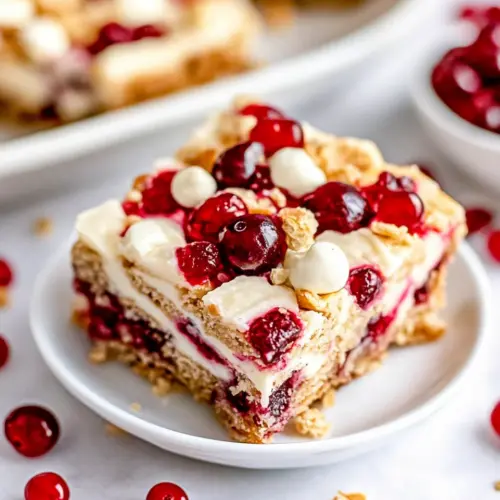
Cranberry Bliss Bars
Cranberry Bliss Bars combine tender, buttery base with tart dried cranberries and pockets of sweet white chocolate, finished with a creamy orange scented cream cheese frosting and glossy white chocolate drizzle. This easy to bake bar offers festive flavors and approachable technique, ideal for holiday gatherings or an easy weeknight dessert. Make a pan for sharing, they vanish fast and always impress.
Equipment
- 9 by 13 baking pan
- Parchment Paper
- Mixing Bowls
- Hand Mixer
- Wire Rack
- Offset Spatula
- Microwave-safe Bowl
Ingredients
- 1 cups salted butter Creamy and chilled, contributes moisture and richness to the bar base while helping create a tender, buttery crumb during baking.
- 1 3/4 cups brown sugar tightly packed Deeply sweet and molasses-forward, adds chewiness, caramel notes, and helps retain moisture so the bars stay soft for days.
- 2 large eggs at room temperature Room-temperature and beaten until incorporated, provides structure and lift while aiding in emulsification between fat and dry ingredients.
- 1 teaspoon vanilla extract Fragrant and floral, enhances overall flavor profile with sweet vanilla notes and balances the citrus and tart elements in the bars.
- 1 teaspoon orange extract Bright and aromatic, injects a concentrated citrus lift that complements cranberries and cuts through sweetness for a fresher finish.
- 2 1/4 cups all-purpose flour Sturdy and neutral-flavored, forms the bulk of the structure, creating the dough matrix that holds mix-ins and yields tender bars.
- 2 teaspoons cornstarch Fine and silky, lightens the texture by reducing gluten development and contributes to a delicate, cake-like crumb in the baked bars.
- 1 teaspoon baking powder Leavening agent that provides a gentle rise, helping the bars achieve a light, tender texture without becoming cake-like.
- 1/4 teaspoons salt Balances sweetness and enhances flavor, also contributing to proper chemical reactions with leavening for even texture and taste.
- 3/4 cup dried cranberries Tart and chewy, offers pops of acidity and textural contrast throughout the bars, balancing the sweetness of the dough and glaze.
- 3/4 cup white chocolate chips Sweet and creamy, disperses pockets of milky sweetness and softens the texture while complementing dried cranberries and white glaze.
- 8 ounces cream cheese softened Silky and tangy, creates a smooth, rich filling when mixed with sugar and extracts and adds a pleasant creamy contrast to the bar base.
- 1 teaspoon vanilla extract Fragrant and sweet, deepens the filling's flavor profile and blends with citrus notes for a layered, aromatic cream cheese topping.
- 1 teaspoon orange zest Zesty and bright, contributes fresh citrus peel oils to lift the cream cheese layer and intensify the orange notes throughout the bar.
- 1/4 teaspoons salt Enhances and balances savory-sweet interplay in the filling, helps round flavors, and supports texture by tightening the cream cheese mixture.
- 1 tablespoon cornstarch Thickening agent that stabilizes the cream cheese filling, preventing separation and ensuring a smooth, sliceable layer after baking and cooling.
- 2 cups powdered sugar Powdered and ultra-fine, sweetens and helps create a glossy, spreadable frosting that firms up while providing structure and sweetness.
- 1/2 cup dried cranberries Concentrated tartness and chewy texture, used sparingly in the topping to echo the bars' interior cranberries and add contrast.
- 1/4 cup white chocolate chips left whole Small whole inclusions that add creamy bursts and decorative texture to the top of the bars while complementing melted chocolate drizzle.
- 1/3 cup white chocolate chips melted Smooth and liquid when warmed, used for drizzling to create a glossy white chocolate accent that ties the topping flavors together.
- 1/2 teaspoon vegetable oil Light and neutral, thins melted white chocolate for a shiny, pourable consistency and helps produce a smooth drizzle without clumping.
Instructions
- Preheat the oven to 350 degrees. Line a 9” by 13” baking pan with parchment paper or a silicone baking mat.: The moment you preheat, you will notice a faint warmth in the oven as the elements come to life, which helps the batter bake evenly from the first minute. Getting the pan ready with parchment or a silicone mat means the bars will release cleanly, and you will see the edges start to pull away when they are done. A common mistake is skipping the lining, which can make removal messy and risk breaking the bars, so take the extra minute to prepare the pan.
- Cream butter and sugar together. Add eggs, vanilla extract, and orange extract. Mix until combined and set this aside.: As you cream the softened butter with the brown sugar , listen for a slight softening and watch the mixture turn lighter in color, a sign that air has been incorporated. When you add the room temperature eggs , add them one at a time and watch the batter become glossy, which indicates proper emulsification. The aromatic burst of vanilla extract and orange extract will become noticeable, promising flavor depth. Avoid overmixing at this stage, which can lead to a tougher crumb, so stop as soon as the mixture is even.
- In a separate bowl, whisk together the flour, cornstarch, baking powder, and salt.: Whisking dry ingredients aerates them and evenly distributes the baking powder and salt , which ensures uniform rise and seasoning. You will see the fine white cornstarch dissolve visually into the flour, creating a softer blend that reduces gluten development. A common slip up is adding leavening directly to wet ingredients without sifting or whisking, which can create pockets of uneven rise, so take a moment to combine thoroughly.
- Gradually add the dry ingredients to the wet ingredients, stirring only as much as necessary to blend.: When you fold the dry into the wet, watch the texture shift from glossy batter to a thicker, more cohesive dough. Use a spatula and fold with gentle strokes, scraping the bowl sides so no streaks of flour remain. This restrained mixing preserves tenderness because overworking activates gluten, leading to a denser bar. If you see streaks of dry flour after a few folds, that is fine; stop once it is mostly even to keep the crumb light.
- Gently fold in the dried cranberries and white chocolate chips. Spread the batter into the prepared pan.: As you fold in the dried cranberries and white chocolate chips , notice the contrast in texture, the chewy berries against the smooth chips. Spreading the batter into the lined pan should be done with an offset spatula or lightly oiled fingers so the surface is even and there are no low spots. A common error is pressing the chips into the batter unevenly, which can create dense pockets, so distribute them carefully for an even bite across the pan.
- Bake for 20 minutes. Check with a toothpick. You want there to be just a few crumbs stuck on the toothpick which means it is ready to come out. If it is still quite wet, give it another 5 minutes. Place the pan on a wire rack and allow the bars to cool completely.: While baking you will notice the aroma intensify and the edges will set and pull slightly from the pan. The toothpick test is key, and removing the bars at the right moment ensures they remain moist rather than dry. Cooling on a wire rack prevents steam from accumulating underneath, which helps maintain a tender top. A mistake is cutting too soon while warm, which leads to messy slices, so be patient and cool fully.
- While the bars are cooling, prepare the frosting. Beat the cream cheese until creamy. Beat in the icing sugar and cornstarch. Add in the vanilla extract, orange zest, and salt. Beat this until well blended.: As you whip the cream cheese , it should become airy and smooth, without lumps, which produces a silky frosting. Adding the powdered sugar a bit at a time prevents dust clouds and helps you achieve a consistent thickness; the cornstarch stabilizes the frosting and prevents it from weeping. The scent of the orange zest will bloom as you beat, lifting the aroma. A common pitfall is using cold cream cheese , which makes the frosting lumpy, so always soften it first.
- When the bars are cooled, spread the icing all over the top. Then sprinkle evenly with the dried cranberries and white chocolate chips.: Spreading the frosting when the base is completely cool prevents melting and keeps a neat finish. Use an offset spatula for an even layer, and press the extra dried cranberries and whole white chocolate chips gently so they adhere without sinking. The visual contrast is inviting, and the added chips provide textural variety. Avoid piling the toppings too thickly, as they can slide off when slicing.
- In a microwave safe bowl, melt the chocolate chips with the vegetable oil. Melt and stir in 15 second intervals – chocolate can burn very quickly.: Melting the white chocolate chips with a small amount of vegetable oil yields a shiny drizzle that flows smoothly. Work in short bursts and stir between intervals to evenly distribute heat and prevent scorching. The smell will be rich and sweet as the chips liquefy. If you overheat, the chocolate can seize and become grainy, so stop microwaving as soon as it is glossy and mostly melted.
- When this is fully melted, use a fork to beat it smooth, then use the fork to drizzle the melted chocolate over the frosted bars. For best results, place the pan in the fridge and allow the finished bars to cool for an hour before cutting and removing from the pan.: The final drizzle should form thin ribbons that harden slightly when chilled, creating a beautiful pattern. Using a fork gives you controlled, thin lines; the chilled frosting helps the drizzle set quickly. Refrigerating for an hour firms everything up, making clean cuts easier. A common mistake is cutting before the drizzle sets, which can smear the design, so give it that chill time for best presentation.
Notes
- Soften butter properly — Make sure your butter yields slightly when pressed but still holds shape, about 65 to 70 degrees F, for ideal creaming with brown sugar.
- Room temperature eggs — Cold eggs can cause the batter to seize and will not incorporate as smoothly, so pull them out 30 minutes ahead.
- Stabilize the frosting — Adding the tablespoon of cornstarch to the frosting prevents weeping and helps it keep a spreadable consistency when refrigerated.
- Evenly distribute mix ins — Toss dried cranberries and white chocolate chips with a tablespoon of flour to prevent sinking and ensure even distribution.
- Watch the oven closely — Start checking at 18 minutes and use the toothpick test to avoid overbaking, which dries the bars out quickly.
- Melt chocolate gently — Use short microwave bursts and stir to avoid scorching; adding a half teaspoon of vegetable oil helps smooth the drizzle.