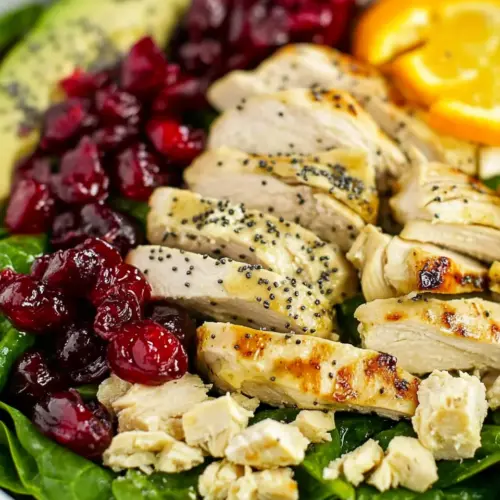
Cranberry Avocado Spinach Salad with Chicken and Orange Poppy Seed Dressing
Cranberry Avocado Spinach Salad with Chicken and Orange Poppy Seed Dressing is a creamy bright salad that balances sweet dried cranberries and tangy citrus with crunchy toasted almonds and tender grilled chicken, perfect as an easy weeknight dinner or a festive lunch. The silky orange poppy seed dressing ties everything together for a vibrant, crowd pleasing dish you will want to make again and again.
Equipment
- Blender
- Large Bowl
- Jar
- Skillet
Ingredients
- 1/4 cup olive oil Lightly emulsify and carry flavors; provides a fruity, smooth base for the dressing and helps coat the salad evenly. Balances richer oils and contributes healthy monounsaturated fats for mouthfeel and shine.
- 1/4 cup canola oil Lightly neutral and high-heat oil used to balance the olive oil; helps create a milder dressing flavor while adding body and richness. Blends with other liquids to form a stable vinaigrette that coats ingredients.
- 2 tsp orange zest Brighten and lift the dressing with concentrated citrus aroma; adds essential oils that intensify orange flavor without extra liquid. Complements the sweet and tangy components while providing a fresh scent.
- 1/4 cup fresh orange juice Juice and provide sweet-tart citrus liquid to form the dressing base; adds natural acidity that brightens the salad and helps balance honey and oil. Contributes vitamin C and a light, juicy orange flavor.
- 2 tbsp fresh lemon juice Add sharp acidity and brightness to the dressing; lemon juice balances sweetness and enhances other flavors. Also helps slightly tenderize chicken if used in a marinade.
- 2 tbsp honey Sweeten and round out the dressing profile; honey adds viscosity and a natural sweet counterpoint to the citrus and mustard. Helps the dressing adhere to greens and pairs well with dried cranberries.
- 2 tsp dijon mustard Emulsify and add subtle savory tang to the dressing; Dijon mustard helps bind oil and acid into a stable vinaigrette. Provides a gentle piquancy that contrasts the sweet and fruity elements.
- 1/4 tsp salt Season and enhance overall flavor in small measure; salt rounds flavors and heightens sweetness and acidity in the dressing and salad. Distributes throughout the vinaigrette to ensure balanced seasoning.
- 1 tbsp poppy seeds Add tiny crunchy pops and visual interest in the dressing; poppy seeds contribute mild nutty flavor and speckled texture. Help suspend in the vinaigrette and complement citrus notes.
- 1 lb chicken, grilled Provide lean protein and a smoky, savory element when grilled; chicken adds substance and makes the salad a complete meal. Sliced or cubed, it blends with greens and flavors to create a hearty texture contrast.
- 9 oz baby spinach Supply tender leafy greens and a mild earthy flavor; baby spinach acts as the salad base that holds toppings and dressing. Offers a delicate texture and nutrients such as iron and vitamins.
- 2 medium avocados, cored and diced Introduce creamy texture and buttery richness; diced avocado provides healthy fats that complement the dressing and balance acidity. Adds a smooth mouthfeel and pleasant contrast to crunchy elements.
- 1 cup crumbled feta Contribute salty creaminess and tang; crumbled feta adds a pronounced savory note that offsets sweet cranberries and honey. Sprinkled over the salad, it creates pockets of flavor and a crumbly texture.
- 3/4 cup sliced almonds, toasted Provide toasted crunch and a warm nutty flavor; sliced almonds add texture contrast and a toasty aroma when prepared ahead. Enhance the salad’s mouthfeel and offer additional protein and healthy fats.
- 3/4 cup dried cranberries Offer sweet-tart chewiness and bright color; dried cranberries supply pockets of concentrated fruity sweetness that pair with citrus and honey. Add natural sweetness and a chewy contrast to creamy and crunchy components.
Instructions
- Add olive oil, canola oil, orange zest, orange juice, lemon juice, honey, dijon mustard and salt to a blender. Pulse until well emulsified. Pour into a jar and stir in poppy seeds. Refrigerate until ready to use.: As the blender whirs you will notice a bright citrus aroma rising from the lid, the oils becoming glossy and the honey dissolving into the liquid, creating an inviting fragrance. This emulsification is critical because it creates a smooth dressing that clings to spinach and avocado , ensuring even flavor distribution. A common mistake is rushing the process at high speed for too long which can heat the dressing and dull the citrus notes, so pulse briefly and check the texture, aiming for a slightly thickened but pourable consistency. If the mixture looks separated, pause and scrape down the sides before pulsing again to encourage cohesion.
- Add all salad ingredients to a large bowl. Pour dressing over top and toss to evenly coat. Serve immediately.: You will see the dressing turn opaque and slightly thicker as tiny oil droplets suspend within the acidic juices, releasing a fruity scent and a velvety mouthfeel. This texture helps the dressing adhere to leaves and crunchy elements rather than pooling at the bottom of the bowl, which matters for consistent bites. If you over blend, the emulsion can become too viscous and heavy, so stop when the oils appear fully incorporated and the surface is shiny. To test, dip a spoon and watch how the dressing coats it; it should cling in a thin sheet without sliding off immediately.
- Recipe source: Cooking Classy: As you transfer the dressing, you will notice the peppery brightness of the citrus combined with the honeyed sweetness, and the poppy seeds will lend a subtle gritty crunch and visual interest. Stirring seeds in by hand avoids breaking them and keeps their texture intact. One pitfall is adding seeds before the emulsion forms, which can cause them to cluster; adding them after pouring ensures even distribution. Seal the jar and chill the dressing to let flavors settle, which will soften any sharp edges from the citrus and integrate the mustard more fully.
- Refrigerate until ready to use: Cooling the dressing deepens the flavor harmony and allows the oils to firm slightly, which can make it easier to pour a controlled stream when dressing the salad. Refrigeration also prolongs freshness, particularly because the dressing contains fresh orange and lemon juice. However, chilling for too long can mute aromas, so I usually let it rest for at least 15 to 30 minutes but not for days if possible. A common oversight is forgetting to bring the dressing back to room temperature briefly before serving, which helps it loosen and reclaim full aromatic vibrancy.
- Add all salad ingredients to a large bowl: When you assemble the salad, the scent profile will shift as the roasted almond aroma meets the tang of feta and the bright green of spinach . Layering matters here, placing heavier items like sliced chicken and diced avocado so they do not get crushed by tossing. A frequent mistake is adding dressing to a too small bowl which causes uneven coating and bruising of the leaves; use a roomy bowl so you can toss gently without squeezing the components.
- Pour dressing over top and toss to evenly coat: As you drizzle the dressing you will hear a soft rustle and see the leaves take on a glossy sheen, the poppy seeds speckling the surface. Toss with care so the crunchy almonds remain crisp and the avocado pieces stay intact. The why is simple, even coating ensures every forkful has balanced flavors rather than pockets of salt or sweet. Avoid over toss which can bruise the spinach and cause the avocado to break down into mush.
- Serve immediately: Freshness is key, serving right away preserves the contrast between crisp and creamy, and the toasted almonds retain their crunch while the spinach stays bright. The aroma of citrus will be most pronounced at this moment, making each bite lively and fragrant. Waiting too long allows juices to accumulate and softens textures, so plan to present the salad shortly after tossing. If you must wait, keep dressing separate and combine just before serving to maintain integrity.
- Recipe source Cooking Classy: Knowing the source helps you appreciate the recipe's tested background and gives you confidence in its balance of ingredients. Referencing a trusted origin is valuable when adapting quantities or techniques because you can trace why certain choices were made. A common misstep is assuming a source's method will suit every kitchen; consider local ingredient variations and adjust minor elements like salt or acidity to your taste. If adapting, test small changes first so you preserve the established harmony.
Notes
- Toast nuts for aroma Toasting the sliced almonds in a dry pan until golden releases oils and amplifies their nutty flavor, but remove them promptly to a cool plate to prevent carryover cooking which can quickly burn them.
- Keep dressing texture stable Add the Dijon mustard while emulsifying to help the dressing bind; if separation occurs, a brief whip with a fork or a quick pulse in the blender brings it back together.
- Prep smart for gatherings Chop and store all salad components separately and mix at the last moment, which preserves the crispness of the spinach and the creaminess of the avocado.
- Adjust sweetness carefully The dried cranberries add sweetness, so if your honey or oranges are extra sweet reduce the honey slightly to maintain balance.
- Protect avocado color Toss diced avocado with a splash of lemon juice right after cutting to minimize browning without affecting flavor.