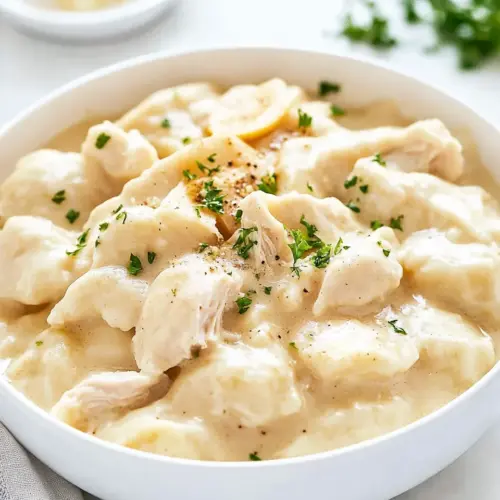
Cracker Barrel Chicken and Dumplings
Cracker Barrel Chicken and Dumplings is a creamy, comforting bowl of tender chicken and pillowy dumplings in a savory broth, ideal for an easy weeknight dinner or cozy winter supper. With simple pantry ingredients and a straightforward method, this recipe delivers nostalgic flavors and satisfying texture that will have everyone asking for seconds. Make it when you want warm, homey comfort with minimal fuss.
Equipment
- Large Pot
- Mixing Bowl
- Rolling surface
- Fine-mesh strainer
Ingredients
- 2 tablespoons salted butter Melted and slightly nutty, provides a rich, savory base that helps sauté vegetables and build depth; adds mouthfeel and helps carry flavors throughout the dish. Use melted butter at the start to gently soften aromatics without burning and to enrich the broth for a more comforting dumpling stew.
- 1/2 cup diced carrots Finely diced to release gentle sweetness and earthy notes, contributes texture and color while softening into the broth during simmering; balances savory components and adds natural sweetness. Add carrots early so they become tender and integrate with the sauce, offering small pops of flavor in each bite.
- 1/2 cup diced celery Crisp and aromatic when raw, but softens to a subtle pungency when cooked, supporting overall savory profile and adding vegetal texture; works together with other aromatics to create a classic soup base. Sauté celery with onions to build foundational flavor and provide slight crunch within the finished dish.
- 1/2 cup diced white onion Finely chopped to provide aromatics and savory backbone, caramelizes to release sugars that deepen the broth and harmonize with other vegetables; adds pungency and complexity. Cook onion until translucent to unlock sweetness and enhance the overall savory character of the chicken and dumplings.
- 1 teaspoon salt divided use Balances and enhances all flavors, helps season both the broth and dumpling dough evenly when divided between components; controls overall saltiness and brightness. Dissolve part in the cooking liquid and reserve some to season the dough or adjust final taste to ensure a well-rounded seasoning.
- 6 cups water Neutral cooking medium that makes up the bulk of the dish, provides liquid for simmering chicken and forming a comforting broth; helps hydrate dumpling dough during cooking. Maintain a gentle simmer in the water to extract flavor from the chicken and vegetables without reducing too quickly.
- 6 teaspoons chicken base Concentrated savory seasoning that boosts chicken flavor and umami in the broth, effectively enhancing depth without additional cooking time; dissolves into the liquid to create a rich base. Use measured teaspoons to reach desired savory intensity while avoiding overpowering saltiness.
- 1 pound chicken tenders Lean protein that becomes tender and flavorful when simmered, contributes body and substance to the stew while releasing collagen and juices into the broth; cuts into bite-sized pieces for easy eating. Poach chicken tenders gently until cooked through, then shred or slice to fold into the dumplings and broth.
- 2 cups all-purpose flour Provides structure and body to the dumpling dough, forming gluten when mixed and giving the dumplings a tender yet hearty chew; also thickens the cooking liquid slightly. Combine flour with leavening and buttermilk to create a cohesive dough that holds together while steaming in the simmering broth.
- 2 teaspoons baking powder Leavening agent that creates lightness and lift in the dumplings, producing a fluffy interior and slightly risen exterior when steamed; balances density of flour for tender results. Whisk into the dry ingredients to ensure even distribution and consistent rise during cooking.
- 1 cup buttermilk Tangy liquid that reacts with baking powder and adds moisture, tenderizes the dumpling dough while imparting subtle acidity for brighter flavor; helps create a soft, delicate crumb. Fold into the flour and baking powder just until combined to avoid overworking the dough and achieve tender dumplings.
Instructions
- Melt the butter in a large pot over medium heat. Add the carrots, celery, and onions to the pot along with 1/2 teaspoon of salt. Cook until the onions are translucent.: You will notice the butter shimmer and begin to soften the air with a warm, toasty scent, signaling the fat is ready to carry flavor. The sizzling should be gentle, not loud, and the pan surface will look glossy. This step softens the vegetables quickly and helps them release their sugars, creating a sweet savory base. If the butter starts to brown or smoke, reduce the heat, because burned butter will add a bitter note. One common mistake is rushing the heat, which can scorch the butter and ruin the depth we want to build here.
- Add the water and chicken base to the pot. Stir until the chicken base is incorporated into the water. Add the chicken tenders and cook for about 20 minutes on medium-low heat.: As you stir these aromatics, your kitchen will fill with layered, savory smells that deepen as the vegetables soften. You are aiming for translucent onions and tender carrots, which usually takes several minutes; the celery will lose its raw edge and contribute a subtle savory sting. Stir frequently so nothing sticks, and adjust the heat if you hear hard sizzling rather than a mellow whisper. Avoid undercooking the onions, since raw onion flavor can be sharp and interfere with the mellow broth we are building.
- While the chicken is cooking, prepare the dough for the dumplings: Combine the flour, baking powder, buttermilk, and 1/2 teaspoon of salt in a mixing bowl. Stir until the dough just comes together—it will be shaggy. Transfer the dough to a floured surface and roll it out into a rectangle about 1/4 inch thick. Cut the dough into 1-inch squares, separating the squares as you cut them so they do not touch one another. Sprinkle the squares with more flour.: When you pour the water in, the pot will steam and the scent will shift toward a brothy fragrance as the chicken base dissolves. Stir until the granules are fully incorporated and the liquid looks uniform, because undissolved base can create pockets of intense saltiness. At this stage, bring the mixture to a low simmer before adding the chicken , so the proteins start cooking gently. A frequent error is adding the base unevenly and not stirring, which leads to inconsistent flavor in the broth.
- Strain the chicken and vegetables from the broth and return the broth to the pot. Bring to a boil. Slowly add the dumplings, a few at a time, stirring as you go.: As the chicken poaches, you will see the surface shift from pink to opaque and the broth will take on a richer hue. The gentle bubbling should be steady, not furious, so the meat stays tender and juicy. After the time passes, test a tender at its thickest point to ensure it flakes easily, which shows it is done. Overcooking will dry the chicken and make it stringy, so avoid a rolling boil that toughens the protein.
- Return the chicken to the pot. Reduce the heat to medium-low and simmer for 15 minutes to ensure the dumplings are cooked through. Taste and adjust the seasonings.: The dough will look shaggy and slightly sticky, with buttermilk adding a tangy scent. Work quickly and lightly, because overmixing develops gluten and makes dumplings tough rather than tender. When you transfer the dough to a floured surface, it should hold together but still feel soft. A common pitfall is kneading it like bread dough, which firms the texture and prevents the dumplings from puffing up properly.
- Transfer the dough to a floured surface and roll it out about 1/4 inch thick: As you roll, the dough should spread evenly and show slight elasticity. Dust your rolling surface and the dough with flour to prevent sticking, but avoid using too much flour which can dry the pastry. Roll to a relatively even thickness so the dumplings cook uniformly; thin spots will overcook and thick spots will remain doughy. If the dough resists rolling, let it rest briefly to relax the gluten.
- Cut the dough into 1 inch squares separating the squares as you cut them: The act of cutting releases a soft, doughy aroma and the squares should hold their shape. Separating the pieces prevents them from fusing during cooking; they should be dusted with a little flour so they do not stick together. If squares are uneven, some will cook faster; aim for uniformity for predictable results. A frequent mistake is stacking or crowding the pieces, which makes them clump as they steam.
- Strain the chicken and vegetables from the broth and return the broth to the pot: Straining clarifies the liquid and concentrates flavor, and the broth will smell cleaner and purer after you remove solids. Use a fine mesh strainer so you capture small bits, and press gently on the vegetables if you want every drop of flavor. Returning only the liquid ensures dumplings cook in a smooth medium, not a chunky one that can break them apart. One common error is skipping straining, which can lead to uneven cooking and dumplings snagging on solids.
- Bring the broth to a boil and slowly add the dumplings a few at a time stirring as you go: When the broth reaches a rolling boil, you will see surface movement and feel steam rising quickly. Add dumplings gently and give the pot a light stir to keep them separated; they will steam and grow, the edges turning matte as they set. Adding too many at once can drop the temperature and cause them to clump, so add a few and space them out. Avoid stirring aggressively, since that can break the dumplings into irregular pieces.
- Return the chicken to the pot and reduce the heat to medium low and simmer for 15 minutes: During this final simmer, the broth will become fragrant and slightly thickened from starches released by the dumplings. The chicken reabsorbs some broth and becomes tenderly integrated with the dumplings. Keep a gentle simmer so the dumplings cook through without disintegrating, and cover partially if the surface is losing too much moisture. A common mistake is boiling too hard, which can make the dumplings fall apart.
- Taste and adjust the seasonings: As the pot finishes, the aroma will be full and balanced, but seasoning might need a tweak. Taste carefully and add small amounts of salt if needed, because the chicken base already contributes sodium. Adjustments at the end let you dial in brightness and balance. Avoid over salting in one go; it is much harder to fix oversalted broth than to gently build flavor.
Notes
- Don’t overmix the dumpling dough, because overdeveloped gluten creates tough, rubbery dumplings rather than light pillows. Mix until ingredients just come together and handle the dough gently when rolling and cutting.
- Maintain a gentle simmer, since vigorous boiling will jostle and break dumplings apart. Keep the heat low enough that the broth barely bubbles, and adjust the lid position to control the simmer.
- Allow resting time, rest the finished dish for 5 to 10 minutes off heat so the dumplings set and flavors meld. This pause improves texture and brings harmony to the broth and fillings.
- Season gradually, add salt in small increments and taste as you go, because it is easier to add more than to fix oversalting. Remember the chicken base contributes sodium, so err on the cautious side early.
- Use uniform vegetable dice, cutting the carrots, celery, and onion to similar sizes ensures even cooking and a balanced texture in every bite. It also makes the pot visually pleasing and professional looking.