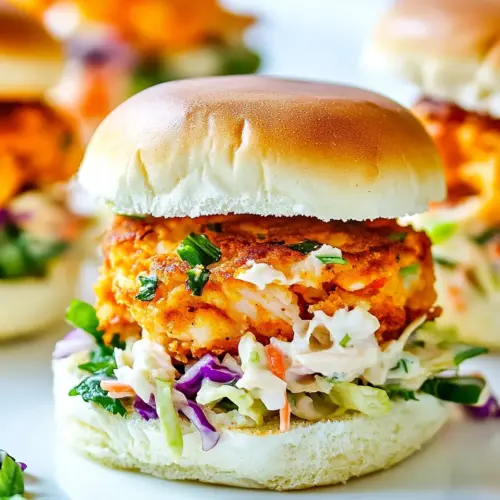
Crab Cake Sliders with Coleslaw
Crab Cake Sliders with Coleslaw are crispy baked seafood bites nestled in soft slider buns, topped with tangy, creamy slaw and a hint of blue cheese. This easy weeknight or party recipe blends bright lemon, flaky crab, and crunchy cabbage for a sensory rich bite that travels well. Perfect for summer gatherings and casual dinners, these sliders are simple to scale and sure to impress.
Equipment
- Oven
- Baking Sheet
- Parchment Paper
- Mixing Bowl
- Spoon
- Measuring Spoons
Ingredients
- 8 ounce crab meat (canned, drained) Provide delicate, sweet seafood flavor and tender texture to form the base of crab cakes; drain thoroughly to avoid excess moisture that can make patties soggy. Gently flake the meat to preserve lumps and combine carefully with binders so the cakes hold together without becoming rubbery.
- 1 red bell pepper (chopped finely) Add bright, crisp sweetness and subtle crunch when chopped finely; balance the crab's richness and add visual color contrast. Sauté briefly if desired for a milder flavor or include raw for fresh crunch in the mixture.
- 4 green onions (chopped) Contribute mild oniony bite and fresh herbal notes when chopped; distribute evenly to lift the overall flavor profile. Use both white and green parts as needed for texture, and avoid overmixing so pieces remain distinct in the cakes.
- 2 ounce crackers Provide dry bulk and binder when crushed into crumbs, helping absorb excess moisture and add structure to the patties. Select a neutral cracker variety for subtle flavor that supports the crab without overpowering it.
- 2 tablespoon mayonnaise Bind ingredients and add creaminess to the crab mixture, helping to keep patties moist while contributing a subtle tang. Mix thoroughly but gently to incorporate without breaking up the crab meat.
- 2 tablespoon lemon juice Impart bright acidity that balances the richness of crab and mayonnaise while enhancing overall freshness. Add gradually and taste to achieve a lively, but not overpowering, citrus note.
- salt and pepper to taste Season the crab mixture to taste, enhancing and balancing the natural flavors without masking them. Start with a light hand and adjust incrementally to maintain the delicate seafood profile.
- 2 tablespoon all-purpose flour Help absorb moisture and firm up the crab cake mixture so patties hold their shape during cooking; provide a light coating if pan-frying. Whisk into the mix evenly to prevent lumps and ensure consistent binding.
- 1 egg Act as a primary binder to help hold the crab cakes together and add richness; beat lightly before folding into other ingredients. Avoid overbeating to keep a tender texture and prevent toughness.
- 3 cups cabbage (shredded) Form the crisp, crunchy base of the coleslaw with a neutral, fresh vegetable texture; shred finely for even dressing distribution. Keep refrigerated until ready to combine to maintain maximum crunch and freshness.
- 1/4 cup buttermilk Contribute tangy creaminess and a subtle tang to the slaw dressing, thinning the mayonnaise while adding a slightly cultured flavor. Adjust amount to reach desired dressing consistency without making the slaw watery.
- 2 tablespoon lemon juice Brighten the coleslaw with citrusy acidity that balances creamy mayo and cuts through richness. Add gradually and taste to maintain a pleasant, refreshing acidity that complements the cabbage.
- 3 tablespoon mayonnaise Provide creamy body and a smooth mouthfeel to the coleslaw dressing while binding spices and liquids together. Use measured amounts to avoid an overly heavy dressing that can weigh down the slaw.
- salt and pepper to taste Season the coleslaw to taste, enhancing a balanced interplay of sweet, tangy, and savory elements. Add salt and pepper gradually, tasting as you go to achieve a harmonious dressing.
- 10 slider buns (click for recipe) Serve as the handheld vessel for sliders, offering a soft, slightly sweet bread that complements savory fillings; split and lightly toast for texture. Choose fresh buns to prevent sogginess and ensure easy assembly and eating.
- 3 medium tomatoes (sliced thinly) Offer juicy acidity and bright, fresh tomato flavor when sliced thinly; layer on sliders for moisture and a pop of color. Pat slices dry if needed to prevent excess moisture from making buns soggy.
- 1/2 cup blue cheese Deliver sharp, tangy, and creamy crumbled cheese flavor that adds richness and depth when used as a topping. Sprinkle sparingly to complement crab and slaw without overwhelming the delicate seafood taste.
- baby arugula Contribute peppery, fresh green notes and a slightly bitter contrast to rich crab cakes and creamy slaw when used as a garnish or small bed. Add just before serving to keep leaves crisp and vibrant.
Instructions
- Preheat oven to 375℉. Line a baking sheet with parchment paper.: You will sense the warmth building in your kitchen as the oven reaches temperature, and the parchment will prevent sticking while promoting even browning. This step matters because a properly preheated oven yields a consistent golden crust, instead of pale, undercooked outsides. A common mistake is not waiting for the oven to fully preheat, which leads to uneven texture and longer cook times. Also ensure the parchment lies flat so heat circulates evenly under each patty.
- Mix all ingredients for the crab cakes in a bowl. Shape into patties and place on prepared baking sheet. You should get at least 10 crab cakes. Bake for about 15 minutes or until golden.: As you combine the crab meat , crushed crackers , chopped red bell pepper , chopped green onions , mayonnaise , lemon juice , all purpose flour , egg , and seasoning, notice the mixture come together into a cohesive, slightly tacky mass. The aroma of lemon and seafood will be subtle but inviting, and the texture should be moist yet manageable. This technique matters because gentle mixing preserves the flake of the crab meat , keeping the cakes light. Avoid overmixing, which can make the patties dense and gummy; fold ingredients gently until just combined.
- To make coleslaw, mix all coleslaw ingredients in a bowl and set in the fridge until crab cakes are done.: When shaping, form small, even patties that fit your slider buns . Feel for gentle firmness, not rock solid compression, and place each on the parchment with space to brown. Even sizing ensures uniform baking and a consistent texture. If patties are uneven, some will finish before others, creating a mismatch in color and moisture. A helpful tip is to use a small scoop for uniformity.
- To assemble start with bottom slider bun, top with tomato, a bit of the blue cheese, crab cake, coleslaw, baby arugula and top bun. Repeat with remaining ingredients.: During baking you will notice a light scent of seafood and citrus rise, and the tops will turn a warm, golden hue. The edges should feel set and slightly firm to the touch while the center remains tender. Baking rather than pan frying keeps the interior delicate and prevents excess oiliness. A typical error is opening the oven frequently, which lets heat escape and extends cook time; resist peeking until near the end of the window.
- To make coleslaw, mix all coleslaw ingredients in a bowl and set in the fridge until crab cakes are done.: Toss shredded cabbage with buttermilk , lemon juice , mayonnaise , and seasoning until every shred is lightly coated, then chill. The slaw should taste bright and slightly tangy, with a cool crunch that contrasts the warm cakes. Chilling helps the flavors meld and keeps the texture crisp. Avoid overdressing the cabbage; too much liquid will make the slaw limp and the slider soggy.
- To assemble start with bottom slider bun, top with tomato, a bit of the blue cheese, crab cake, coleslaw, baby arugula and top bun.: Assemble while the cakes are still slightly warm for the best melding of flavors, placing a thin slice of tomato directly on the bun to create a barrier that prevents sogginess. Sprinkle the blue cheese sparingly so it underscores the flavor profile without overwhelming the crab meat . The contrast of warm cake and cool slaw is key to the slider experience. One common misstep is stacking too many toppings, making the slider hard to handle; keep the layers balanced for clean bites.
Notes
- Drain the crab meat well, pressing gently in a sieve or between paper towels to remove excess liquid. Excess moisture is the most common reason crab cakes fall apart or become soggy while baking. After draining, handle the crab meat gently to keep larger flakes intact, which creates a light texture in the finished cakes.
- Crush crackers to a fine crumb so they distribute evenly and absorb moisture. If the crumbs are too large the cakes may not bind as reliably, and pockets of dry cracker can form. Pulse in a food processor for a uniform texture, or place crackers in a zip bag and roll with a pin.
- Keep slaw crisp by adding dressing gradually and chilling it before assembly. The cabbage should still have a snap when you bite into it, which prevents the slider from becoming mushy. If you expect to serve later, toss the slaw just before assembly to keep it freshest.
- Toast buns lightly to create a barrier against moisture. A short toast adds flavor and prevents the bottom bun from turning soggy under the weight of the slaw. Use a hot pan or oven broiler for 30 to 60 seconds until just golden, watching closely to avoid burning.
- Warm crab cakes gently if preparing ahead of time by reheating at low oven temperature. Reheat at about 300 to 325 degrees fahrenheit until warmed through, which helps maintain their texture without drying them out. Avoid microwaving, which can make them rubbery.