Crab Cake Recipe
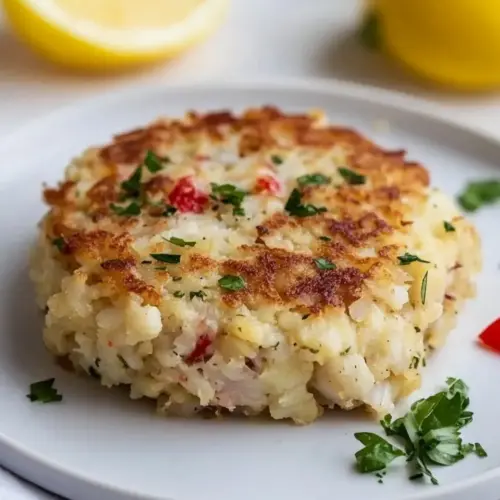
Crab Cake Recipe offers crispy golden exteriors and tender, flaky interiors, showcasing sweet lump crab with bright lemon and savory Old Bay notes. This easy weeknight dinner or impressive appetizer is creamy, crispy, and approachable, making it perfect for casual meals or feeding a crowd. Try it for a quick summer dinner and experience why it becomes an instant favorite.
Equipment
- Large Nonstick Skillet
- Mixing Bowl
- Sheet Pan
- Spatula
Ingredients
- 1/2 tablespoon extra virgin olive oil Drizzle extra virgin olive oil at the start for sautéing aromatics and adding a fruity, silky base that helps soften shallots and peppers without overpowering the dish. Use a modest amount to prevent greasing the mixture while preserving a light Mediterranean nuance. Heat gently to release flavor before adding other ingredients.
- 1 small shallot, minced Mince shallot finely to provide a delicate, sweet-onion flavor that brightens the crab filling without dominating it. Sauté briefly until translucent to mellow sharpness and release savory aromatics that meld with mayonnaise and mustard. Ensure even distribution so each bite has subtle savory complexity.
- 1/2 cup finely chopped red bell pepper Finely chop red bell pepper to add sweet crunch, fresh color, and a mild vegetal note that contrasts the tender crab meat. Incorporate small pieces to maintain textural interest while balancing moisture in the mix. Cook slightly with shallot to soften and concentrate sweetness.
- 1/2 cup Panko breadcrumbs, for filling Add Panko breadcrumbs for filling to bind the crab mixture gently while preserving light, airy texture inside the cakes. Use measured amount to absorb excess moisture without making the filling dense, ensuring cakes hold together when formed. Opt for fine, flaky crumbs to keep interior delicate.
- 1 large egg, lightly beaten Lightly beat egg to serve as the primary binder that helps hold the crab mixture together during shaping and cooking. Mix thoroughly with mayonnaise and seasonings so it disperses evenly, creating a cohesive structure. Use just enough to avoid soggy texture while ensuring stability.
- 2 tablespoons mayonnaise Incorporate mayonnaise to lend creaminess, richness, and moisture that keeps crab cakes tender and flavorful. Blend with egg and mustard to create a cohesive, smooth emulsion that carries seasoning throughout the mixture. Choose full-fat mayo for optimal silkiness and mouthfeel.
- 1 teaspoon Worcestershire sauce Stir in Worcestershire sauce to introduce a savory, umami depth with subtle tang that enhances overall complexity. Add modestly to complement Old Bay and mustard without overwhelming delicate crab flavors. Allow flavors to meld to avoid any single note dominating the profile.
- 2 teaspoon dijon mustard Whisk Dijon mustard to contribute sharp, tangy heat and help emulsify the wet ingredients for consistent binding. Use Dijon for its smooth texture and piquant flavor which brightens the filling and pairs well with mayonnaise and lemon. Balance quantity to enhance, not mask, crab.
- 1 tablespoon fresh lemon juice Squeeze fresh lemon juice for bright acidity that lifts the richness of the crab mixture and balances mayonnaise and egg. Combine just before forming to maintain freshness and prevent breakdown of other ingredients. Lemon also complements Old Bay and highlights seafood sweetness.
- 1 teaspoon Old Bay seasoning Season with Old Bay seasoning to provide classic, robust seafood spices including celery salt and paprika that define crab cakes' savory profile. Sprinkle evenly to ensure each bite features the traditional seasoning blend associated with crustacean dishes. Adjust slightly if other salty elements are present.
- 1/2 teaspoon hot sauce Add hot sauce sparingly to introduce subtle heat and an extra layer of piquancy that accentuates flavors without overpowering the crab. Mix well so the spice distributes uniformly through the filling. Use a balanced amount to appeal to a range of heat tolerances.
- 1 pound lump crab Fold in lump crab gently to preserve delicate, flaky texture and prominent sweet, briny seafood flavor that is central to the recipe. Handle carefully to avoid breaking large pieces while ensuring even distribution for consistent bites. Choose high-quality crab for best taste and appearance.
- 1/2 cup Panko breadcrumbs, for breading Coat with Panko breadcrumbs for breading to create a crisp, golden exterior when pan-fried, providing a pleasing contrast to the tender interior. Press crumbs lightly to adhere without compressing the cakes, preserving airy crunch. Use fresh Panko for maximum crispness.
- 1 tablespoon extra virgin olive oil, for pan frying crab cakes Heat extra virgin olive oil for pan frying crab cakes to achieve an evenly browned, flavorful crust and prevent sticking. Maintain moderate heat so cakes cook through without burning, replenishing oil between batches if necessary. Use a sturdy skillet for best control.
- lemon wedges for serving Serve with lemon wedges for finishing acidity and bright, fresh flavor that cuts through richness and enhances seafood sweetness. Offer wedges on the side so diners can control brightness to taste. Squeeze just before eating to preserve maximum citrus aroma.
Instructions
- Heat 1/2 tablespoon extra virgin olive oil in a large nonstick skillet over medium-high heat. Add 1 small shallot (minced) and 1/2 cup finely chopped red bell pepper to the oil and cook for 3-4 minutes or until just softened. Remove the peppers and shallots to a small mixing bowl and allow to cool slightly.: As the pan warms you should hear a faint whisper as oil levels out across the surface, and within seconds the oil will shimmer slightly indicating it is hot enough. Adding the minced shallot and finely chopped red bell pepper produces a gentle sizzle, releasing sweet, aromatic notes that fill the kitchen. Cook until the pieces are softened but not browned, about three to four minutes, which keeps their flavor bright and prevents bitterness. The softening helps the vegetables fold into the mixture easily, and prevents hard bits in the finished cakes. A common mistake is letting the heat climb too high, which causes overbrowning and a bitter flavor, so manage the flame and stir frequently.
- In a large mixing bowl, mix together 1/2 cup Panko breadcrumbs with 1 large egg, 2 tablespoons mayonnaise, 1 teaspoon Worcestershire sauce, 2 teaspoon dijon mustard, 1 tablespoon fresh lemon juice, 1 teaspoon Old Bay seasoning, and 1/2 teaspoon hot sauce. Add in the pepper and shallot mixture and 1 pound lump crab and fold together until just combined.: When you transfer the softened vegetables, you will notice warm, perfumed steam rising, and letting them cool preserves the delicate texture of the lump crab when mixed. This pause also stops residual heat from cooking the egg prematurely, which is essential for a tender, cohesive interior. If you skip the cooling, the egg could begin to set and change the mouthfeel, so allow a few minutes for the temperature to drop.
- Shape the mixture into 8 crab cakes, about 1/3 cup mixture each. Place onto a tray and refrigerate the crab cakes for at least 30 minutes, or up to 24 hours before pan-frying.: As you whisk these binders, the mixture will become glossy and slightly thick, signaling a good emulsion. The mayonnaise contributes smoothness, while the egg tightens the structure when chilled, creating a mixture that will hold but not become dense. The combined aroma of lemon and spices should be noticeable, promising a bright finished cake. Overmixing here can lead to tougher cakes, so combine until uniform and stop once you have a cohesive base.
- Remove the crab cake from the refrigerator and coat each side of each crab cake with the remaining 1/2 cup Panko breadcrumbs.: Folding preserves the large, flaky pieces of lump crab that are the heart of this dish. When you fold, perform gentle strokes, watching for ribbons of crab to remain intact instead of pulverizing into the binder. The visual cue to stop is when the ingredients look evenly distributed but you still see distinct chunks of crab. A common pitfall is vigorous stirring, which breaks up the crab and yields a paste rather than delicate cakes, so be patient and gentle.
- To pan-fry the crab cakes (preferred) Heat half of the 1 tablespoon extra virgin olive oil in a large nonstick skillet over medium-high heat. Once the oil is heated, add 4 crab cakes to the skillet and pan-fry for 4 minutes per side, or until golden. Remove the crab cakes to a platter. Add the remaining oil to the pan and repeat with the 4 remaining crab cakes.: As you form each cake, press just enough to compact the mixture so it holds together; you should feel a gentle cohesion, not a rock solid patty. The surface should be slightly tacky, which indicates the binder is doing its job. Placing the cakes on a tray gives them room to chill evenly. If you shape them too tightly, they can become dense, and if too loose, they may fall apart in the pan, so aim for a balanced, compact feel.
- To bake the crab cakes, place the prepared crab cakes onto a sheet pan that has been sprayed with an olive oil cooking spray. Lightly spray the exposed surfaces of the crab cakes with additional cooking spray. Bake at 450℉/230℃ for 7 minutes, remove from the oven and flip the crab cakes, lightly spray again with cooking spray and then return to the oven to continue baking for 5-6 minutes, or until the exterior is golden brown.: Cooling firms the exterior and lets the binders set, which is crucial for achieving a crisp crust without disintegration. You will notice the cakes feel more stable after chilling and slicing a small test one will reveal a clean interior texture. Refrigeration also deepens flavor as the seasonings meld. A frequent misstep is skipping this rest, which increases the chance of the cakes falling apart during cooking, so give them the time they need.
- Serve with lemon wedges and tartar sauce if desired.: As you press the exterior crumbs onto the chilled surface, they adhere more readily, and the result is a tactile, roughened coating that will crisp beautifully. The coating takes on a sandy texture, and you should be able to see an even layer all around each cake. If the coating looks patchy, press more firmly in targeted spots, but avoid soaking the cakes in liquid, which can make the crumbs gummy.
- To pan-fry the crab cakes (preferred) Heat half of the 1 tablespoon extra virgin olive oil in a large nonstick skillet over medium-high heat: The oil should ripple and shimmer, and when a breadcrumb gently touched to the pan browns in seconds, the surface is ready. Adding the cakes produces an immediate satisfying sizzle, and as they fry you will hear a steady, gentle crackle. Aim for about four minutes per side until deeply golden, an audible cue that moisture has reduced and the crumbs have crisped. Flip carefully with a thin spatula to preserve the shape. Overcrowding the pan drops the oil temperature and prevents browning, so fry in batches if needed.
- Once the oil is heated, add 4 crab cakes to the skillet and pan-fry for 4 minutes per side, or until golden: During cooking you will smell toasted crumbs and a toasty, savory aroma that signals proper caramelization. The surface should appear uniformly golden and slightly crackly, while the interior remains moist and flaky. If you notice excessive spattering or rapid darkening, your heat is too high, which can char the exterior before the middle warms, so reduce the temperature slightly.
- Remove the crab cakes to a platter: Allow cakes to rest on a paper-lined platter for a minute to drain excess oil and firm up slightly. The rest allows carryover heat to settle, making them easier to handle and less likely to fall apart when plated. A common oversight is stacking them immediately, which traps steam and softens the crust, so give each piece breathing room.
- Add the remaining oil to the pan and repeat with the 4 remaining crab cakes: Replenishing the oil restores the pan surface for the second batch and helps ensure consistent browning. You may notice the pan has residual browned bits, which you can swirl into the oil for more flavor, but do not scrape aggressively as that can release burnt particles. Maintain the same heat level to achieve uniform results across batches, and avoid crowding to keep that crisp exterior.
- To bake the crab cakes, place the prepared crab cakes onto a sheet pan that has been sprayed with an olive oil cooking spray: When baking you will trade some of the direct sizzle for dry heat that crisps the exterior evenly. Lightly spraying the surfaces helps browning and encourages a golden finish. Bake at a high temperature to mimic pan-fried color, turning once halfway through. A typical mistake is baking at a low temperature, which yields pale, soft exteriors instead of a satisfying crust.
- Lightly spray the exposed surfaces of the crab cakes with additional cooking spray: This small step encourages even browning without adding extra oil that could make the cakes greasy. As they bake, the aroma will shift toward a gentle roasted note, and the texture will firm while staying tender inside. Avoid heavy oiling, which defeats the purpose of baking for a lighter finish.
- Bake at 450℉/230℃ for 7 minutes, remove from the oven and flip the crab cakes, lightly spray again with cooking spray and then return to the oven to continue baking for 5-6 minutes, or until the exterior is golden brown: The high initial heat promotes rapid browning; after flipping you complete the color development while ensuring the center is warmed through. Visual cues include an even golden tone and a slight crispness at the edges. If the cakes are still pale after the timing, give them a couple more minutes, but watch closely to avoid drying.
- Serve with lemon wedges and tartar sauce if desired: The bright scent of fresh lemon will complement the savory cakes, and any sauce adds a cool contrast. Squeeze just before eating to keep the texture intact, and present with garnishes if you like. Avoid overdressing with heavy sauces that mask the subtle sweetness of the lump crab .
Notes
- Pick through the crab to remove any stray shells or cartilage, which ensures every bite is tender and shell free.
- Chill before cooking to let binders set, which prevents the cakes from falling apart when you flip them in the pan.
- Use Panko for both texture roles because it yields a light interior and a crisp exterior that contrasts beautifully with the crab.
- Moderate the heat while pan frying to achieve even browning without burning the crust or leaving the center cold.
- Brighten with lemon at the end, squeezing just before serving to preserve the crisp texture while enhancing the overall flavor.