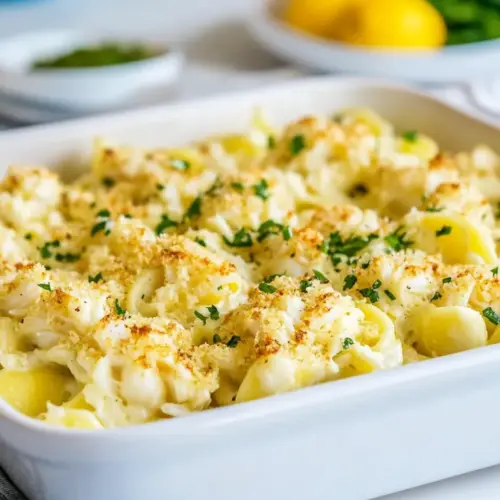
Crab Alfredo Shells
Crab Alfredo Shells are a creamy, comforting pasta bake featuring tender pasta shells filled with a rich heavy cream and Parmesan cheese sauce, studded with sweet crab meat and finished with a crunchy panko topping. This easy weeknight dinner is indulgent yet approachable, perfect for sharing with guests or family, and delivers a restaurant style feel without the fuss.
Equipment
- 9x13-inch Baking Dish
Ingredients
- 12 ounces medium pasta shells Boil as the primary starch component to hold sauce and fillings; cook until al dente so shells retain shape. Drain and reserve some pasta water to adjust sauce consistency if needed for better coating.
- 2 3/4 cups heavy cream Enrich as the creamy base that provides body and silky texture to the Alfredo sauce; simmer gently to avoid scorching. Combine with butter and cheese to create a cohesive, luxurious sauce that clings to pasta shells.
- 12 tablespoons salted butter, cut into cubes Melt as the fat and flavor carrier that adds richness and a smooth mouthfeel to the sauce; cut into cubes for even melting. Incorporate gradually into warm cream to create an emulsion and help the cheese blend smoothly.
- 1/2 cup finely diced sweet onion Sauté finely to add a subtle sweet, aromatic foundation to the sauce without overpowering delicate crab flavor. Cook until translucent to release natural sugars and deepen overall savory complexity.
- 1/2 teaspoon garlic powder Season lightly to impart a mellow garlic note without the moisture or bite of fresh garlic, ensuring even distribution. Use sparingly to prevent overpowering the sauce and to complement Parmesan and crab.
- 1/2 teaspoon pepper Season freshly to introduce mild heat and balance richness; adjust to taste for desired pepperiness. Sprinkle during sauce finishing to brighten flavors and lift creamy elements.
- 1/4 teaspoon ground nutmeg Flavor subtly to add warm, nutty undertone that complements dairy and seafood; use sparingly. Stir into the sauce near the end to avoid losing delicate aroma through prolonged heat.
- 1/4 to 1/2 teaspoons crushed red pepper flakes Spice optionally to introduce a kick and contrast creamy richness; choose the lower or higher amount based on heat preference. Add early while infusing the cream or sprinkle at the end for more pronounced heat.
- 2 teaspoons lemon juice Acidify lightly to brighten flavors and cut through the creaminess, enhancing both cheese and crab taste. Add near the end of cooking to preserve fresh citrus aroma and balance richness.
- 2 1/2 cups freshly grated Parmesan cheese, divided Melt into the cream to provide savory, salty, and umami depth; reserve a portion for topping or folding in. Grate freshly for best melting and flavor, which ensures a silky, cohesive Alfredo sauce.
- 1 pound lump crab meat Fold gently to add sweet, briny seafood flavor and substantial texture within the shells; handle delicately to avoid breaking lump pieces. Incorporate at the end to warm through without overcooking and becoming rubbery.
- 2 tablespoons chopped fresh parsley Garnish chopped to add fresh herbal brightness and color contrast that lightens the dish visually and on the palate. Sprinkle just before serving to preserve fresh flavor and aromatic lift.
- 1/2 cup panko crumbs Crisp as a textural topping when toasted to golden brown, offering crunchy contrast to creamy filling. Mix with a touch of butter or oil and broil briefly or bake until golden before sprinkling over assembled shells.
Instructions
- Preheat oven to 350 degrees and grease a 9×13-inch or slightly smaller baking dish.: You will smell the warm oven air as it comes up to temperature, and a preheated oven ensures even baking and a properly crisped topping. Greasing the dish prevents sticking and helps the edges brown evenly. If the oven temperature is too low you may end up with a soggy top, so allow the oven to fully reach 350 degrees before inserting the casserole.
- Cook pasta according to package directions in salted water. Rinse pasta under cold water. Drain well.: When the water comes to a rolling boil, you should hear a lively, bubbling sound, and the pasta will become slightly translucent at the edges when it is al dente. Salting the water seasons the shells from within, so they do not taste flat. Rinsing in cold water stops further cooking so the shells hold their shape in the bake. A common mistake is overcooking the pasta, which leads to a mushy texture once baked.
- While pasta is cooking, bring heavy cream, butter, onion, garlic powder, pepper, nutmeg, and crushed red pepper flakes to a simmer in a medium saucepan. Simmer for 3 to 5 minutes to thicken some. Be sure to stir frequently.: As the cream warms you will notice steam and a faint dairy aroma, and the butter will melt into a glossy pool. The diced onion will soften and give off a mild sweet scent, signaling that flavors are marrying. Stir frequently to prevent scorching, and maintain a gentle simmer rather than a vigorous boil to keep the cream smooth. If the heat is too high you risk scorching the cream and creating off flavors.
- Stir in the lemon juice and 2 cups of Parmesan. Stir until the parmesan is melted. Remove from heat and stir in the crab.: During this brief simmer the sauce will reduce and thicken, coating the back of a spoon with a velvety texture. You may hear a soft bubbling and smell the warming spices like nutmeg . Stirring keeps the sauce homogeneous and helps the diced onion soften evenly. If you skip stirring, the cream can cling and burn on the pan bottom, leading to a grainy sauce.
- In a large bowl, stir together the pasta, parsley, and crab mixture. Transfer to prepared baking dish.: When you add the grated Parmesan cheese it will melt into the warm cream, releasing a savory, nutty fragrance and creating a glossy sauce. The splash of lemon juice lifts the flavor, adding a bright citrus snap. Fold in the lump crab meat gently so the flakes remain intact and visible in the sauce. If the sauce sits too long on high heat after adding cheese, it can become grainy, so remove it from heat to preserve creaminess.
- Combine the remaining 1/2 cup parmesan cheese and the panko crumbs. Sprinkle over the shells.: Combine the drained shells with the sauce and chopped parsley , tossing until each shell is coated; you should see glossy sauce clinging in the shell crevices. The parsley adds fresh green flecks and herbaceous notes. Transfer evenly into the greased dish so the heat distributes uniformly during baking. Overfilling the pan can result in uneven cooking, so leave a little room at the top.
- Bake for 15 minutes and then broil for a few minutes to brown the panko crumbs.: The combination of Parmesan cheese and panko crumbs creates the toasty, golden topping that provides pleasing contrast. The dry crumbs will turn fragrant and golden under high heat, offering a crunchy bite. Distribute the mixture evenly for uniform browning. If you pile the crumbs too thickly they may brown on top but remain soft underneath.
- Bake for 15 minutes and then broil for a few minutes to brown the panko crumbs: In the oven you will notice bubbling at the edges and the aroma of toasted cheese and crumbs as the casserole heats through. The 15 minute bake warms everything and helps flavors meld, while the brief broil caramelizes the topping to a crisp, golden color. Watch closely during broiling since the crumbs can brown rapidly, and remove as soon as they reach your preferred color to avoid burning.
Notes
- Keep the crab dry The crab can carry water from packing liquid, which will thin the sauce. Gently drain or pat the crab meat with paper towels and fold it in at the end to preserve texture and prevent a watery casserole.
- Grate cheese fresh Freshly grated Parmesan cheese melts more smoothly and has brighter flavor than pre grated options, which often contain anti caking agents that affect texture. Grating just before use gives the creamiest sauce texture.
- Control heat when simmering Keep the cream at a gentle simmer and stir frequently, this avoids scorching and keeps an even, silky consistency. If the sauce shows signs of separating, remove from the heat and whisk vigorously to bring it back together.
- Adjust the spice Use the crushed red pepper flakes sparingly to start, you can always add more at the table. A light touch preserves the delicate crab meat flavor while giving a hint of warmth to the dish.
- Timing the broil Bake fully first, then use the broiler for just a few minutes to crisp the topping. Keep the oven door slightly ajar and watch closely because the broiler can brown the panko in under two minutes depending on your oven.