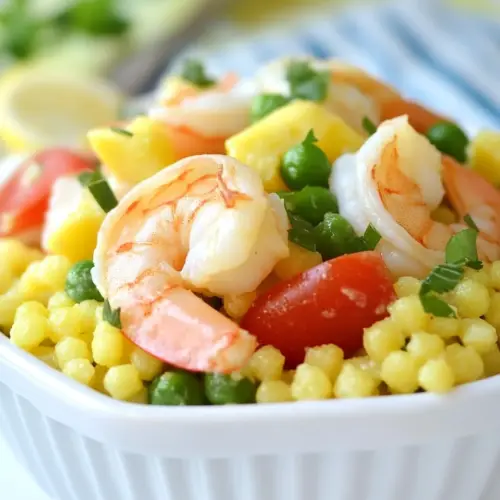
Couscous Salad with Shrimp
Couscous Salad with Shrimp is a bright, easy summer dish that pairs nutty toasted Israeli couscous with saffron scented stock and garlicky lemon shrimp. The mix of juicy tomato, sweet peas, and fresh parsley creates a lively texture contrast, making it an ideal easy weeknight dinner or casual weekend lunch. Make it for its speed and satisfying balance of flavors.
Equipment
- Large Pot
- Skillet
- Fork
Ingredients
- 2 tablespoons butter Melted to provide a rich, silky base for toasting and cooking aromatics, helping to develop depth and mouthfeel in the couscous; assists in coating grains for a glossy finish and carries fat-soluble flavors throughout the dish.
- 1 cup diced onion Diced finely to release sweet and savory flavors when sautéed, forming the aromatic backbone of the salad; softens to blend with other components and contributes texture and natural sweetness when caramelized.
- 2 cloves garlic minced Minced to infuse the dish with a sharp, pungent garlic flavor; disperses evenly when cooked to enhance savory complexity without overpowering other ingredients.
- 1 1/2 cups Israeli Couscous Toasted or simmered as the primary starch, providing a chewy, pearl-like texture distinct from regular couscous; absorbs stock and seasonings to create the body of the salad.
- 1 3/4 cup chicken stock Simmered to cook and hydrate the couscous, imparting savory depth and ensuring tender grains; acts as the main liquid that flavors and plumps the pearls.
- 1/4 teaspoon oregano Sprinkled subtly to add an earthy, slightly bitter herbaceous note that complements tomatoes and seafood; used sparingly so it doesn't dominate the delicate saffron and lemon flavors.
- big pinch saffron Infused briefly to lend a floral, honeyed aroma and a warm, slightly bitter saffron flavor that elevates the entire dish; used in a small pinch to provide color and subtle complexity without overwhelming other tastes.
- salt & pepper to taste Seasoned to balance flavors, enhance natural sweetness, and control overall taste intensity; adjusted to personal preference to ensure the dish is neither bland nor oversalted.
- 1 cup fresh tomato diced Diced to contribute fresh acidity, juiciness, and bright tomato flavor that contrasts the cooked couscous; adds color, texture, and a refreshing element to the salad.
- 2/3 cup frozen peas Added to provide pops of sweetness and a tender bite, contributing color contrast and nutritional value; thawed or briefly cooked to retain vibrant green color and pleasant texture.
- 2 tablespoons chopped parsley Chopped to introduce fresh herbal brightness and a clean, slightly peppery note that lifts the dish; sprinkled near the end to preserve vibrant color and aromatic freshness.
- 1 tablespoon butter Melted to enrich the final assembly, adding a small boost of fat and silkiness to finish the couscous mixture; helps bind ingredients and carry flavors.
- 1 tablespoon olive oil Poured to offer a fruity, slightly bitter fat that adds aromatic depth and a light, healthy mouthfeel; used for sautéing or finishing to enhance flavor complexity.
- 3 cloves garlic smashed Smashed to release a stronger garlic aroma for sautéing the shrimp, creating a robust base flavor on the pan; crushed cloves infuse oil rapidly and can be removed or left in for intensity.
- salt & pepper to taste Seasoned to taste so the shrimp develops a balanced savory profile while cooking; used after cooking to adjust final flavor and ensure pleasant seasoning.
- 1 lb peeled and deveined shrimp any size Prepared to provide tender, protein-rich seafood with natural sweetness and a slightly briny character; cooks quickly and should be handled to avoid overcooking for best texture.
- juice of 1/2 lemon Squeezed to add bright acidity and a citrus counterpoint that cuts through richness, enhancing the shrimp and couscous flavors; balances fat and salt for a fresher finish.
- 1/2 tablespoon chopped parsley Chopped finely to garnish and reinforce herbal notes, providing a final hint of freshness and color that ties the dish together; used sparingly to avoid overpowering delicate flavors.
Instructions
- Melt butter in large pot over medium heat. Saute onions and garlic until softened, 3 minutes. Stir in couscous and cook until it starts to brown lightly.: You will smell a warm, nutty aroma as the butter liquefies and begins to shimmer, signaling the perfect moment to add aromatics. The sound is a soft hiss, not a roar, which tells you the heat is moderate. This gentle start prevents burning and allows the upcoming onion to soften evenly, building a sweet foundation. If the butter browns too quickly, your pan is too hot, which can impart bitter notes, so lower the heat and wipe out any burnt residue before continuing.
- Pour in chicken stock, saffron, oregano, salt and pepper. Bring to boil. Reduce to simmer and cover with lid. Couscous should be cooked completely after 15-20 minutes. Remove from heat and fluff with fork. Stir in peas, diced tomatoes and parsley. Set aside.: As the onion and minced garlic cook, you will notice their scent transform from sharp to mellow and slightly sweet; the texture should become translucent rather than browned. Keep stirring to ensure even softening and to prevent the garlic from sticking to the pan. If the pieces start to brown, reduce heat immediately, because browned garlic can become bitter and overpower the saffron that follows.
- Heat garlic in butter and olive oil in skillet over medium heat until fragrant. Sprinkle shrimp with salt and pepper. Pour shrimp into hot pan and stir for about 3 minutes or until all shrimp are pink and opaque. Remove from heat and pour in lemon juice and parsley.: Tossing the couscous in the warm fat will coat each pearl, and you should hear a faint toasting sound as moisture evaporates. Visually, look for a light golden edge on some pearls, which indicates the nutty flavor has developed. This toasting step deepens the final dish, helping the grains stay distinct. If you skip toasting, the couscous will be milder and may clump more after absorbing liquid.
- To serve, spoon couscous into a bowl and top with shrimp.: When the warm chicken stock hits the toasted couscous , steam will rise with the aromatic saffron perfume. Stir briefly to distribute the spices and aromatics evenly. The saffron will begin to release color, tinting the liquid a soft gold. Be mindful of salt levels, because the stock may already contain sodium, and over salting at this stage is hard to correct later.
- Bring to boil: When the pot reaches a gentle boil you will hear a rolling, energetic sound and see steady bubbles across the surface. This active heat jump starts the hydration that will cook the couscous . Watch the pot so it does not boil over, which can happen if left unattended; if bubbles threaten to spill, tip the heat down slightly and skim any froth.
- Reduce to simmer and cover with lid: Lowering to a simmer quiets the surface action to small, gentle bubbles, and the covered pot traps steam for even cooking. The couscous will absorb the liquid gradually, becoming plump and tender. Keep the lid on to maintain steam, lifting only to check toward the end so you do not lose too much evaporation required for proper texture.
- Couscous should be cooked completely after 15 to 20 minutes: At this point, the pearls should be tender yet slightly chewy, with most liquid absorbed. Use a fork to fluff; the grains should separate easily and look glossy rather than gummy. If it feels underdone, cover and give it a few more minutes, but avoid overcooking, which yields a pasty mouthfeel instead of the intended chewy bite.
- Remove from heat and fluff with fork: Fluffing introduces air, separates the pearls, and prevents clumps, while releasing steam so the mixture cools slightly. The texture should shift from dense to light and airy, with each pearl intact. If you stir too vigorously while hot, you risk breaking the pearls and creating a mushy texture, so be gentle.
- Stir in peas, diced tomatoes and parsley: Adding the peas , fresh diced tomato , and chopped parsley at this stage preserves their color, crispness, and brightness. The residual heat warms them without cooking them fully, keeping the salad lively. If you add them too early, they will lose their fresh snap and the tomatoes may become watery, diluting the overall flavor.
- Set aside: Letting the couscous mixture rest allows flavors to meld and the temperature to come down enough so the shrimp can be plated hot on top without wilting the fresh components. This pause is also a good time to taste and adjust seasoning. Avoid leaving it uncovered for too long, which can dry out the surface; cover loosely if resting for more than a few minutes.
- Heat garlic in butter and olive oil in skillet over medium heat until fragrant: As the smashed garlic sizzles in the butter and olive oil , you will get a fragrant, savory perfume that signals readiness. The pan should be hot enough to coax flavor without browning the garlic. If the oil smokes, reduce heat, because overheated oil will alter the taste and can burn the garlic quickly.
- Sprinkle shrimp with salt and pepper: Seasoning the shrimp just before cooking draws out flavor and helps create a slight crust as they hit the hot fat. Even seasoning distribution ensures every bite is balanced. Over salting at this stage is a risk if your stock or other components are already salty, so season conservatively.
- Pour shrimp into hot pan and stir for about 3 minutes or until all shrimp are pink and opaque: The pan will produce a confident sizzle on contact, and within minutes the shrimp will change color to pink with an opaque center. They should be just firm to the touch and springy, not rubbery. Overcooking here is the most common error, leading to a chewy texture, so remove promptly when opaque.
- Remove from heat and pour in lemon juice and parsley: Off the heat, adding the juice of half a lemon preserves its bright acidity and prevents it from cooking off, giving a fresh pop. The chopped parsley adds a cool green lift and aroma. If you add lemon too early while the pan is still at high heat, you will lose the fresh citrus top note.
- To serve, spoon couscous into a bowl and top with shrimp: The final presentation should show the warm, fragrant couscous bed dotted with tomatoes and peas, with the hot, lemon kissed shrimp layered on top. The contrast of warm and bright, tender and crisp, makes each bite appealing. Serve promptly to enjoy the best textures; letting it sit too long can blur the contrasts you worked to create.
Notes
- If you need a gluten free option: Substitute pearl couscous with cooked quinoa or millet, which provide a similar texture and soak up saffron scented stock well, though the flavor profile will shift to a nuttier, lighter base.
- For brighter citrus: Add an extra splash of lemon juice just before serving to lift the overall dish; this preserves the fresh acid note that contrasts the buttery elements and enhances the shrimp.
- To boost herb flavor: Increase the chopped parsley and add a small amount of chopped mint if you like a fresher, cooler herbal edge that pairs beautifully with the saffron and tomato.
- To avoid watery tomatoes: Use firm, ripe tomatoes or drain any excess juices after dicing so the salad does not become diluted; this keeps the seasoning balanced and the texture pleasing.
- If you want more richness: Finish the shrimp with an extra pat of butter off heat for a silkier pan sauce that clings to the pearls, but use sparingly to avoid overpowering the fresh elements.
- For make ahead service: Store the couscous base and cooked shrimp separately in airtight containers, then combine just before serving to preserve texture and brightness.
- To scale up for a crowd: Multiply ingredients proportionally and cook the couscous in a larger pot to ensure even heat distribution; sear shrimp in batches to maintain a consistent quick cook and avoid steaming.