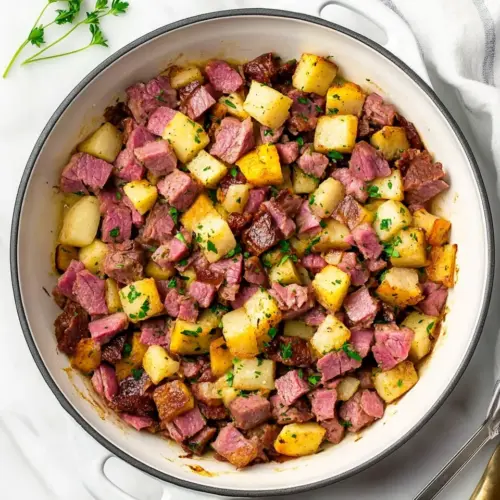
Corned Beef Hash
Corned Beef Hash is a crispy, savory skillet dish featuring tender potatoes, caramelized onion, and hearty corned beef, finished with a silky egg. This easy weeknight dinner or brunch favorite delivers satisfying textures and bold flavor in a short time, perfect when you want a comforting meal without fuss. Try it for a quick, flavor packed reason to cook tonight.
Equipment
- Medium Pot
- Large Cast Iron Skillet
- Small glass or ramekin (for wells)
Ingredients
- 2 cups potatoes diced Dice and cook until tender to provide a hearty, starchy base that soaks up flavors and adds texture to the hash. Use a medium dice to ensure even browning and a pleasant bite throughout the dish.
- 1 tablespoon olive oil Heat to coat the pan and help crisp potatoes while providing a light, fruity flavor that complements the beef. Combine with butter for a balanced frying medium and prevent sticking during sautéing.
- 2 tablespoons butter Melt to enrich the pan with creamy, savory fat that promotes browning and adds depth to the dish. Use alongside olive oil to enhance mouthfeel and contribute a slightly nutty aroma.
- 1 medium onion finely diced Finely dice and sauté until translucent to release sweet, aromatic flavors that build the savory backbone of the hash. Cook gently to develop soft texture and caramelization without overwhelming other components.
- salt to taste Season sparingly to enhance and balance overall flavors, adjusting toward the end of cooking to avoid over-salting. Taste as you go since corned beef may already be quite salty.
- black pepper to taste Grind fresh to provide sharp, warming heat and to brighten the dish, sprinkling during cooking and at the finish for aromatic lift. Adjust coarseness to control intensity and visual contrast.
- 2 cups corned beef cooked, diced Dice cooked corned beef and brown to infuse the hash with savory, salty meatiness and rich umami character. Mix thoroughly with potatoes and aromatics to distribute flavor and provide hearty substance.
- parsley fresh, chopped, for garnish Chop fresh and sprinkle as a finishing touch to add herbal brightness, color contrast, and a hint of peppery freshness. Use sparingly to avoid overpowering the savory, rich components of the hash.
- 4 large eggs cooked, sunny side up, fried or poached Cook sunny side up, fried, or poached to add a silky, runny yolk that enriches each bite and binds the hash when broken. Serve immediately so yolks remain warm and provide a luscious finishing sauce.
Instructions
- Place diced potatoes in a medium pot and cover with water. Bring to a boil and boil for about 10 minutes or until just fork tender.: The scent of cold water meeting potatoes is neutral at first, but as the pot heats you'll smell a faint starchiness that signals the cooking is beginning. Covering the potatoes with water ensures even cooking from the outside in. A common mistake is starting with too hot water, which can make the exteriors mushy before the centers are tender. Use cool water to avoid that problem.
- Drain potatoes and set aside.: You'll hear the water move from gentle ripple to a rolling bubble, and the potatoes will yield to a fork with minimal resistance at the correct point. This timing ensures they are soft enough to mash slightly against the pan but still firm enough to hold shape when browning. Boiling too long turns them grainy and prone to falling apart in the skillet.
- Heat a large cast iron skillet over medium heat and add oil and butter.: The act of draining concentrates the texture, and you'll notice steam lifting from the potatoes as excess moisture leaves. Letting them sit for a moment dries the surface, which is crucial so they can brown instead of steam. Skipping this rest often results in a soggy hash.
- Add diced onions and slowly cook until they begin to caramelize, about 10 minutes.: When the skillet warms you should see a faint shimmer on the surface of the olive oil , followed by the soft foam of melting butter . That aroma of toasty dairy tells you the skillet is ready. Cast iron holds heat well, producing an even crust. If the pan is too cool the potatoes will not brown properly, and if it is too hot the butter can burn.
- Stir in potatoes and cook until potatoes begin to brown, stirring and flipping occasionally. Season with salt and pepper.: The onion will go from sharp and crystalline to sweet and translucent, then to an amber color as sugars gently caramelize. You'll hear a gentle hiss and smell a rich, sweet aroma when this is happening. Rushing this process by increasing the heat leads to bitter, charred edges rather than deep, sweet flavor.
- Add diced corned beef at the end, cooking just until warmed through.: As the potatoes hit the hot fat you'll get a louder sizzle and the surface will start to take on golden brown patches. Turning them occasionally ensures even browning and those desirable crispy bits. This texture contrast is essential to the finished dish. Over stirring prevents crust formation, while leaving them untouched too long can cause excessive sticking.
- Remove from heat, garnish with fresh chopped parsley and serve hot with sunny side up egg on top of each serving.: Adding the pre cooked corned beef late preserves its tenderness and keeps it from drying. The meat should warm and release savory aromas without losing moisture. If it's heated too long at high heat, it can tighten and become chewy, so gentle warming is the key.
- Alternatively, you can place a few wells in the hash with the bottom of a small glass and crack the eggs right into the skillet. Bake in the oven at 350° F until desired doneness is achieved (10-20 minutes). I prefer a super runny yolk, so I like to cook them separately.: The finishing touch is the bright, herbaceous scent of parsley , and the glossy, golden yolk of a sunny side up egg adds visual allure. Serve immediately while the hash is hot so the yolk melds with the crisp and tender elements. Waiting too long cools the dish and flattens the texture contrasts.
- Alternatively, you can place a few wells in the hash with the bottom of a small glass and crack the eggs right into the skillet: When you create wells the sizzling slows as the eggs settle into protected pockets and the aroma becomes richer and more indulgent. Baking at 350 F gently firms the whites while keeping yolks soft, offering a hands off finish. Watch closely during baking, because oven times vary and eggs can go from runny to fully set quickly.
- Bake in the oven at 350° F until desired doneness is achieved (10 to 20 minutes): In the oven the dish develops a uniform set around the eggs , and you may notice the surface browning slightly, emitting a toasty scent. This method produces a communal skillet ready to share. The most common mistake is assuming the same time works for every oven; check early to ensure yolks match your preference.
- I prefer a super runny yolk, so I like to cook them separately: Cooking eggs separately allows precise control over doneness and keeps the hash crisp beneath. Pan frying produces a delicate crisp on the white and a glossy yolk, while poaching yields a tender finish. If you try to time everything at once you risk overcooked eggs or a soggy base.
Notes
- Even dice - Cut the potatoes into uniform pieces so they cook at the same rate, preventing some pieces from turning mushy while others remain firm.
- Pat dry - After boiling, let the potatoes steam off and pat them dry to encourage a crisp surface when they hit the hot fat.
- Low and slow for onions - Cook the onion gently until golden to develop sweet, complex flavors that complement the savory corned beef.
- Finish with butter - A knob of butter at the end enhances browning and gives the hash a silky mouthfeel without overpowering the other flavors.
- Control salt - Because corned beef can be salty, add salt incrementally and taste before serving to avoid an overly salty dish.