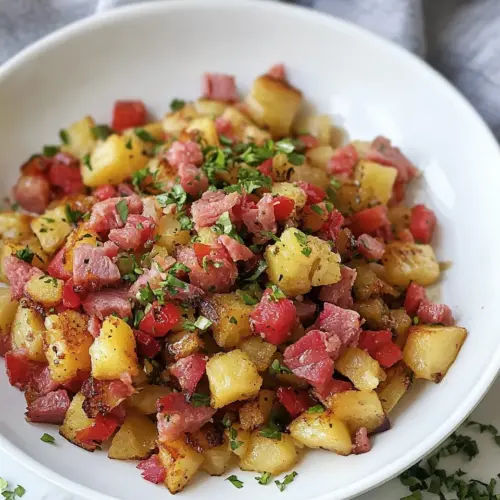
Corned Beef Hash
Corned Beef Hash is a crispy, savory skillet favorite with golden roasted potatoes, tender cubed corned beef, and sweet sautéed onion. This easy weeknight dinner or brunch option brings satisfying textures and comforting flavors, perfect for cold evenings or a hearty morning meal. Make it for a quick, flavorful plate that uses simple ingredients and delivers big taste.
Equipment
- Oven
- Baking Sheet
- Cast-Iron Skillet
- Mixing Bowl
Ingredients
- 1 cup cubed red potatoes Provide a starchy base that becomes tender when boiled and crisp when pan-fried, offering a mildly sweet, earthy flavor that balances richer elements in the dish. Cube evenly to ensure uniform cooking and golden browning during skillet frying. Retain the skins if desired for texture and extra nutrients.
- 1 cup cubed white potatoes Offer a firmer, neutral-flavored starch that crisps up nicely and adds contrast to red potatoes, helping create a hearty, textural hash. Cube to match cooking time with the red potatoes so both varieties brown evenly. Absorb flavors from seasonings and fats during frying.
- 1 tablespoon olive oil Coat the skillet to prevent sticking and promote even browning while imparting a light fruity flavor at medium heat. Measure precisely to control fat content and prevent overpowering the butter’s richness. Heat until shimmering before adding potatoes to achieve a crisp exterior.
- 1/2 teaspoon dried thyme Infuse a subtle, savory-herb note throughout the hash with an aromatic, slightly floral quality that complements meat and potatoes. Sprinkle in early so heat releases its essential oils and distributes flavor evenly. Use dried form to provide stable, long-lasting seasoning.
- 1/2 teaspoon ground black pepper Season the dish with a warm, pungent kick that enhances savory components and balances richness without overwhelming other flavors. Grind freshly if possible for brighter aroma and distribute evenly to taste. Adjust amount for personal heat preference.
- 2 tablespoons salted butter Add a rich, creamy fat that promotes deep browning, silky mouthfeel, and a slightly nutty flavor when melted in the skillet. Combine with olive oil to increase browning temperature and add layered richness. Spoon in toward the end of frying for glossy finish.
- 1 white onion diced Provide a sweet, aromatic foundation that softens and caramelizes, lending savory-sweet complexity and textural contrast to the hash. Dice uniformly so pieces melt into the mix and develop golden edges. Sauté until translucent before combining with potatoes and meat.
- 2 cups cubed fresh corned beef Contribute the main savory, salty protein element with tender, beefy flavor and cured notes that define corned beef hash. Cube to small, uniform pieces so each bite contains meat distributed throughout and edges brown pleasantly. Fold in gently to avoid overworking.
- chopped fresh parsley for garnish Brighten the finished dish with a fresh, herbaceous garnish that adds color, a light grassy flavor, and a subtle palate-cleansing note. Chop finely and sprinkle over hot servings to preserve aroma and visual appeal. Use sparingly to complement rather than dominate.
Instructions
- Preheat oven to 400°F. Line a baking sheet with parchment paper or spray a baking sheet with nonstick spray. Set aside.: As the oven warms you will notice a faint warmth filling the kitchen, which primes the potatoes to start browning quickly and evenly. Getting the oven fully hot matters because it creates immediate surface heat that forms a crisp crust on the potatoes, rather than slowly steaming them. A common mistake is sliding the tray in too early, which yields limp rather than golden pieces, so wait until the temperature is stable before you load the baking sheet.
- In a medium bowl combine the potatoes, oil, thyme, and pepper. Mix until the potatoes are evenly coated.: When you toss the cubed red potatoes , cubed white potatoes , olive oil , dried thyme , and ground black pepper together, you should feel the oil coating each cube so seasoning clings. The oil promotes Maillard browning and the thyme will release a warm, herby aroma as it heats. Avoid overcrowding the bowl or using too much oil, because excess oil will create soggy surfaces instead of crisped exteriors.
- Pour the potatoes onto the prepared baking sheet. Spread them into an even layer.: When you spread the potatoes into an even layer on parchment or a greased sheet, listen for the quiet whisper of cubes touching the metal, and notice that they are arranged so air can circulate around each one. This arrangement encourages even browning. A frequent error is piling the potatoes, which traps steam and prevents that desirable golden color, so keep them single layered.
- Bake the potatoes for 20 minutes, until golden brown.: During baking you will start to smell a roasted, nutty perfume from the potatoes as sugars caramelize and edges turn golden. Visual cues are important here, so look for evenly colored surfaces and small roasted spots. If you find some cubes are browning faster, rotate the sheet halfway through. Avoid opening the oven too often, because heat loss slows the browning process.
- While the potatoes cook, melt the butter in a cast iron skillet set over medium-high heat. Add the onions and cook for 2-3 minutes.: The butter should foam and then subside, releasing a warm, nutty aroma that signals it is ready. Cast iron holds heat and gives a consistent sear for the onion and corned beef . If the butter browns too quickly, lower the heat slightly to prevent burning, because burnt butter will introduce bitter notes that overwhelm the dish.
- Add the corned beef to the skillet and cook for another 4-5 minutes.: As the diced white onion hits the hot butter it will sizzle and begin to soften, releasing sweet, caramel notes. You want the onion translucent with a little browning at the edges, which adds depth. A common misstep is cooking at too high a temperature, which leads to raw centers and overly charred exteriors, so adjust the heat to keep a gentle sizzle.
- When the potatoes are golden brown, remove them from the oven and add to the skillet. Mix well and cook for 2-3 minutes. Serve with parsley and enjoy.: When you add the cubed fresh corned beef , listen for the satisfying sizzle of meat meeting hot fat, and watch as edges develop rich, browned spots. This searing creates concentrated savory flavor, and you may notice a savory aroma lifting from the pan. Be careful not to stir constantly; letting the meat sit briefly helps form those caramelized bits, but avoid burning by monitoring heat closely.
- When the potatoes are golden brown remove them from the oven and add to the skillet: The contrast between the warm roasted potato cubes and the skillet sear creates a lovely textural marriage, with the potatoes crisping further as they meet the butter and juices in the pan. As you mix, you will hear the faint clink of potatoes and meat tumbling together, and steam will carry a comforting aroma. If you add them too soon, the skillet may cool and you will miss that last step of crisping, so ensure the potatoes are fully roasted before combining.
- Mix well and cook for 2 to 3 minutes: In these final minutes the components finish marrying, and you should see edges deepen to a rich brown while internal centers remain tender. Smell the mingled savory and herby notes, and watch small browned bits form on the skillet surface, which add flavor to each spoonful. Avoid overcooking here, because prolonged heat will dry the meat and toughen the potatoes, so aim for just long enough to bring everything together.
- Serve with parsley and enjoy: A scatter of chopped fresh parsley adds a fresh, green aroma and a visual lift that balances the dish emotionally and on the palate. The herb introduces a clean note that complements the savory, caramelized flavors. The usual mistake is skipping the garnish, but that final touch truly completes the plate and brightens each bite.
Notes
- Preheat fully before roasting so the potatoes hit hot air and crisp instead of steaming.
- Uniform cubes ensure even cooking, aim for pieces roughly one inch across for balanced texture.
- Moderate oil is enough to promote browning, avoid drenching the potatoes which leads to sogginess.
- Choose a hot skillet to finish the hash, cast iron gives superior searing and holds heat well.
- Don't overcook when combining the potatoes and meat, a couple minutes is enough to marry flavors without drying components.