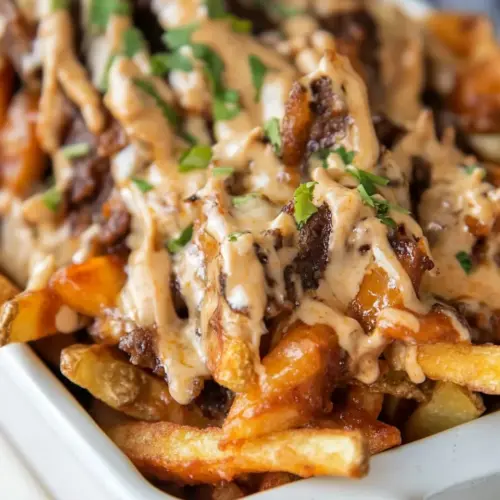
Copycat In Out Animal Style Fries
Copycat In Out Animal Style Fries are crispy sweet potato fries piled with melted cheese, deeply caramelized onions, and a creamy tangy special sauce, offering a sweet savory contrast that is irresistibly shareable. This approachable comfort food is perfect for an easy weeknight dinner or a casual gathering, delivering crispy texture and bold flavors that make it a must try.
Equipment
- Non-Stick Skillet
- Oven
- Baking Sheet
- Spatula
- Mixing Bowl
Ingredients
- 2 large sweet potatoes Roast or bake to develop natural sweetness and soften for easy frying; provides the starchy base and substantial body for the fries that mimic the original dish.
- 3 tbsp tapioca flour Bind with starch to create a light crisp coating that helps absorb oil and encourages even browning when cooking the sweet potato fries.
- 3 tbsp avocado oil Coat and fry the fries for high-heat cooking; contributes a neutral flavor and supports a crispy exterior without overpowering other ingredients.
- 2 tsp sea salt Season generously to enhance the natural flavors and balance sweetness; also helps with drawing out moisture slightly for crisper fries.
- 3 slices cheese of choice or 1/2 cup grated Melt over hot fries or sprinkle grated for creamy, savory richness that adds a gooey, indulgent texture to the finished dish.
- 2 tbsp avocado oil Drizzle or toss to fry or roast the potatoes; provides additional fat for cooking and helps achieve a crisp, golden finish.
- 1 large yellow onion Caramelize slowly to create sweet, savory flavor and soft texture; serves as a flavorful topping that complements the fries and sauce.
- 1/4 tsp sea salt to taste Season sliced onion during cooking to draw out moisture and build savory depth; helps balance sweetness and adds tenderness.
- 1/3 cup avocado oil mayonnaise Thicken and enrich the sauce base while adding a smooth, creamy mouthfeel that ties the ketchup and relish together.
- 1 tbsp ketchup Sweeten and acidify the sauce, contributing classic burger-like tang and balancing the richness of mayonnaise and oil.
- 1 tbsp yellow onion very finely chopped Add sharp, pungent onion flavor in tiny pieces to the sauce for texture and bursts of savory bite without overwhelming the mix.
- 1 tbsp sweet pickle relish Introduce sweet, briny contrast and slight crunch to the sauce; balances acidity and adds complexity to the overall flavor profile.
- 1 tsp lemon juice Brighten the sauce with acidity for balance; lemon juice cuts through richness and lifts the combined flavors.
- 1/4 tsp paprika Provide smoky warmth and subtle color to the sauce, enhancing aroma and complementing savory and sweet components.
- 1/4 tsp sea salt to taste Season the sauce to taste to bring all elements into harmony and ensure the final condiment matches desired salt level.
Instructions
- Begin by preparing a batch of Crispy Sweet Potato Fries. Of course, if you aren’t into sweet potato fries, you can go with your favorite homemade or store-bought fry.: Warmth and the scent of baked starch will fill your kitchen as the fries crisp, signaling progress before you even peek. As they bake, listen for a gentle, steady sizzling and look for edges that turn a deep golden brown, signs the surface moisture has evaporated and the coating is crisp. This stage matters because properly crisp fries provide the contrast that offsets the creamy sauce and melted cheese . A common mistake is slicing the sweet potatoes unevenly, which leads to some pieces burning while others stay underdone, so aim for uniform cuts. If the oven seems to be cooking unevenly, rotate the tray halfway through so all fries brown consistently.
- Add the avocado oil to a non-stick skillet and heat to medium-high. Add the sliced onion and sauté, stirring occasionally, until onion is translucent and begins to brown around the edges, about 5 to 8 minutes. Reduce the heat to medium-low and continue sautéing, stirring occasionally until the onion is deeply brown and caramelized, about 40 minutes.: The oil should shimmer but not smoke, creating a hot surface that encourages initial browning on contact. When you add the sliced onion , you should hear an immediate soft sizzle, and the pieces will begin to lose their raw edge. Starting at medium high helps build color quickly, which adds complex flavors later when the onion caramelizes. Avoid overheating the oil, as that can scorch the onion and introduce bitterness rather than sweetness. If the pan smokes, reduce heat and let it cool briefly before continuing.
- While the onion is caramelizing and the fries are baking, make the special sauce. Simply stir all of the ingredients together in a bowl and set aside. Do note that the sauce will become more flavorful as it sits, so if you can make it 1 day ahead of time, feel free to do so!: In these early minutes the scent shifts from sharp and pungent to sweetly softened, and you can see the edges taking on golden tones. Stir occasionally so the pieces brown evenly, and watch for steam to escape, which indicates moisture is leaving and caramelization is starting. This phase is important because it sets up the foundation for deeper browning that follows; rushed stirring prevents the sugars from pooling and browning properly. A frequent error is stirring too often which cools the pan and slows the browning process.
- Use a spatula to transfer the sweet potatoes to an oven-safe serving plate (or you can leave them on the baking sheet and simply scoot them closer together).: Over time the kitchen will be filled with a deep, sweet aroma as the onion transforms, becoming sticky and jam like in texture. This slow, patient cooking extracts natural sugars and builds savory complexity that a quick cook cannot achieve. Pay attention to color and texture rather than the clock; the onion should be evenly golden brown with no raw white centers. Common pitfalls include cooking too hot, which leads to burnt edges with raw interiors, or crowding the pan, which traps steam and prevents proper caramelization.
- Add your cheese of choice followed by the caramelized onions. Place in the hot oven (it should be around 415 from baking the fries) and allow the cheese to melt – about 5 minutes.: Stirring together the mayonnaise , ketchup , finely chopped raw yellow onion , sweet pickle relish , lemon juice , paprika , and the final pinch of sea salt creates a sauce that is cool and creamy, with bright and tangy highlights. The texture should be smooth with tiny flecks of relish and onion visible, and the aroma will be a pleasant blend of sweet vinegar notes and citrus. Making the sauce ahead allows flavors to meld and mellow, which is why I often prepare it while other components cook. Watch for an overly thin sauce, which can happen if too much lemon juice is added; if that occurs, chill it briefly to thicken the emulsion.
- Remove the plate (or baking sheet) from the oven and add the special sauce on top. Be sure to serve on top of a heat-safe surface and let your people know the plate is hot!: When you move the fries from the baking sheet to a hot serving surface, be mindful of steam rising and the texture changing slightly as they sit. The fries should retain a good crisp, and this transfer sets the stage for layering with cheese and onion . Allow some space between pieces for heat circulation so the cheese can melt evenly later. A common error is piling them so high that steam gets trapped, softening the crusts, so arrange them in a single, slightly overlapping layer.
- Add your cheese of choice followed by the caramelized onions: As you top the hot fries with shredded or sliced cheese , watch it begin to soften and lose its structure. When you add the glossy, deeply brown caramelized onion , it melds into the melting cheese , creating ribbons of savory sweetness. This assembly step is critical because the residual oven heat melts the cheese just enough to bind components without turning the fries into a soggy mess. Avoid adding cold onions straight from the fridge, which can cool the plate and impede cheese melting.
- Place in the hot oven and allow the cheese to melt, about 5 minutes: The oven should already be hot from baking the fries, around 415, so the cheese will melt rapidly into bubbly, glossy pockets that cling to the fries. Keep the oven door closed and watch through the glass for a few minutes, as the transformation is quick. This brief return to the oven ensures the cheese achieves a smooth, stretchy quality without overbrowning. A mistake here is leaving it too long, which can dry out the fries and over crisp the cheese; five minutes is typically perfect but adjust by eye.
- Remove the plate from the oven and add the special sauce on top: As soon as the dish comes out, spoon the sauce over the hot, cheesy fries so it warms slightly and becomes glossy, but not so much that it separates. The contrast between the hot, melty layers and the cool, tangy sauce is where the magic happens, creating a balanced mouthfeel in each bite. Serve on a heat safe surface and warn guests that the plate will be hot. A common misstep is drizzling too much sauce, which masks the crisp texture and makes the fries soggy, so apply judiciously and offer extra on the side.
Notes
- Switch the oil, if you prefer an oil with a different flavor profile select one with a similar high smoke point to avocado oil to maintain crisping ability without introducing smoke or bitterness.
- Adjust the starch, if you do not have tapioca flour you can experiment with a light dusting of cornstarch to encourage crisping, though the mouthfeel will be slightly different.
- Make ahead sauce, prepare the special sauce up to a day in advance and keep it chilled to allow the flavors to mellow and meld for a more rounded finish.
- Cheese choices, choose a melting cheese like Monterey Jack, mild cheddar, or a young mozzarella for gooey results, and shred fresh for best texture.
- Onion timing, if you are short on time, start the onion earlier in the day and gently rewarm before assembling so it retains its jam like quality without overcooking during final melt.
- Serving size, to stretch this into a larger party snack, keep fries warm in a low oven and place toppings on the side for guests to customize so the fries remain crisp.