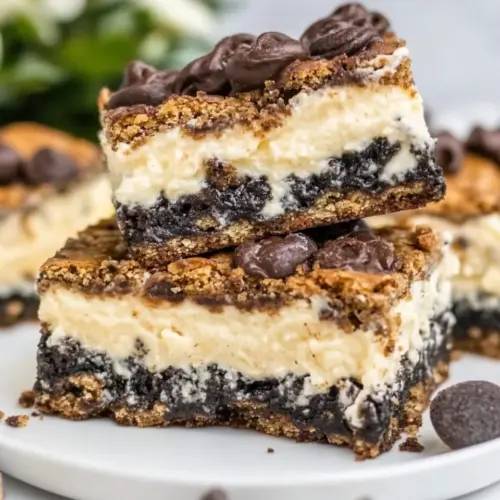
Cookies and Cream Gooey Bars
Cookies and Cream Gooey Bars deliver a creamy, slightly tangy filling layered over a chocolatey base with crunchy cookie bits throughout. These easy to slice bars are gooey in the center, crowd friendly, and perfect for bake sales or dessert tables. Make them when you want a simple, show stopping treat that travels well and satisfies chocoholic cravings.
Equipment
- Electric Mixer
- 9×13-inch pan
- Spatula
- Mixing Bowls
Ingredients
- 1 box chocolate cake mix Provides a chocolate-flavored base and structure for the bars, bringing sweetness and cocoa depth; combines with other wet ingredients to form a cohesive crust or layer. Offers convenience and consistent texture, simplifying baking by using pre-mixed dry components.
- 1/2 cup melted butter Adds rich fat to the batter, contributing moisture and tenderness while helping bind the cake mix into a pliable crust; melted form ensures even distribution and a fudgy texture. Enhances mouthfeel and prevents dryness during baking.
- 1 large egg Acts as a binding and leavening-supporting agent that helps set the cake mix and gives structure to the bar; contributes slight richness and moisture. Beaten into the batter, it promotes cohesive texture and a tender crumb.
- 8 ounces cream cheese Supplies a creamy, tangy component that balances sweetness and adds a soft, luscious layer when combined with sugar; creates a cheesecake-like filling with smooth mouthfeel. Softened cream cheese enriches flavor and enhances density of the gooey center.
- 1 teaspoon vanilla extract Contributes aromatic complexity and enhances other flavors, adding warm vanilla notes that round out sweetness; small amount intensifies overall flavor profile. Blended into the filling, it smooths and unifies the taste.
- 1/2 cup melted butter Provides additional fat for a richer, moister texture in another layer or component; melted butter improves spreadability and contributes to a tender bite. Reinforces flavor and helps create a glossy, cohesive mixture.
- 3 large eggs Serves as multiple binding agents that build structure, increase volume slightly, and create a firm yet tender filling when combined with sugar and cream cheese. Eggs also contribute moisture and assist in setting the gooey interior during baking.
- 16 ounces confectioners' sugar Delivers concentrated sweetness and a fine texture that creates a smooth, thick filling when mixed with cream cheese and eggs; helps stabilize and sweeten the gooey layer. Powdered sugar dissolves readily for a glossy, uniform finish.
- 15 Double Stuff Oreo Cookies, coarsely crumbled Adds crunchy texture and distinctive cookies-and-cream flavor when folded into the filling or sprinkled between layers; coarsely crumbled pieces provide contrast to the gooey interior. Infuses chocolate cookie crumbs and cream bits for the signature taste.
- whipped cream and oreos for garnish, optional Provides optional finishing touches that enhance presentation and texture; whipped cream adds airiness and lightness while extra Oreos reinforce crunchy contrast. Used sparingly, garnishes create visual appeal and an extra layer of flavor for serving.
Instructions
- Preheat oven to 350 degrees and spray a 9×13-inch pan with cooking spray.: When you preheat, notice the warmth of the oven ramping up and the faint smell of dry heat when you open the door, that tells you it is ready; preheating ensures even baking from the moment the pan goes in, which helps the base set without relying on oven timing alone. A common mistake is skipping preheat, which can cause uneven rising and a denser texture, so always wait until the oven signal is reached.
- In a large bowl, use an electric mixer to beat cake mix, melted butter and egg until evenly mixed. It will be very thick. Transfer to prepared pan and pat it out evenly.: As you beat, pay attention to how the cake mix absorbs the melted butter , turning into a coarse, almost cookie dough like mass; the texture should be thick and slightly grainy. Pressing it into the pan with your hands or a spatula gives a uniform base that will brown consistently, so work quickly before the butter firms. Avoid overmixing at this stage, which can make the base tough; stop once ingredients are homogenous.
- In the same bowl, beat the cream cheese and vanilla until smooth.: The moment you begin to beat, the room will fill with a faint dairy aroma of the cream cheese , and the mixture will go from lumpy to silky; that smoothness is crucial for a velvety filling. If you still see lumps, scrape the bowl and continue briefly, but overheating the mixer can warm the cheese too much and make the filling runny.
- Add the melted butter and 3 eggs and beat until blended.: Adding warmed butter and eggs should result in a glossy, cohesive batter; the sound of the mixer will soften as it emulsifies. This step helps the filling set while keeping it tender, so make sure the eggs are fully incorporated but do not overbeat, which can whip in air and create unwanted cracks after baking.
- Beat in confectioners' sugar.: As you sift or add the confectioners' sugar , the mixture will thicken and sweeten; mixing should produce a creamy custard like texture that holds peaks softly. If the filling feels grainy, continue beating briefly to dissolve the sugar, but beware of overbeating which can create a fragile structure that weeps when baked.
- Stir in the crushed oreos. Pour over the cake mix layer.: When you fold in the coarsely crumbled Oreo Cookies , you will see dark flecks distributed through the creamy filling, which creates pleasing contrast. Pouring it gently over the base and using an offset spatula to spread prevents tearing the base and ensures even coverage; a common error is pressing too hard and embedding the filling into the crust rather than sitting atop it.
- Bake for 40 to 44 minutes. It should still be gooey in the middle. Be careful not to overbake it.: During baking you will notice the edges set and the center slightly wobble when nudged; the aroma will be a rich mix of chocolate and baked cream. Aim for a gentle jiggle in the middle because carryover heat will finish the set while cooling, and removing it when fully firm will yield a dryer bar. Overbaking is the usual pitfall, resulting in a cakier, less indulgent texture.
- Cool completely and refrigerate for at least 1 hour before cutting into squares.: As the pan cools, the filling firms and the flavors meld; chilling tightens the structure so slices come out clean and glossy. Resist the urge to cut while warm, which makes the filling ooze and ruins presentation; patience here ensures neat squares and a perfect gooey interior.
- Serve with whipped cream and additional cookies.: When plated, the cool whipped topping contrasts with the slightly dense bar and adds lightness, while extra oreos make a pretty garnish. Serve chilled or at room temperature, and avoid drizzling anything hot over the bars which can make them weep and lose structure.
Notes
- Chocolate swirl Add a few spoonfuls of softened chocolate spread on top of the filling and drag a knife through to create a marbled look and added chocolate depth.
- Extra cookie crunch Press a handful of additional coarsely chopped Oreos onto the top before baking for a crunchy crown and dramatic presentation.
- Whipped topping finish Instead of serving plain, pipe sweetened whipped cream over each cooled square for a bakery style look and lighter mouthfeel.
- Pan size swap Use an 8 by 8 inch pan for thicker bars, just add a few minutes to bake time and watch the center for that gentle jiggle.
- Decorative dusting Sift a little extra confectioners' sugar over the chilled squares for a delicate, snow like finish before serving.