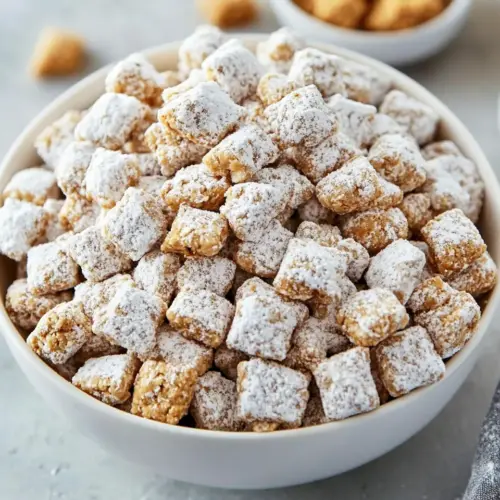
Cookie Butter Muddy Buddies
Cookie Butter Muddy Buddies is a creamy, crispy snack mix that combines spiced Biscoff spread, white chocolate coating, and crunchy Corn or Rice Chex cereal. This easy to make treat offers a balanced sweetness with a delightful texture contrast, perfect for parties or an easy weeknight snack. Make a batch to share or gift, it stores well and disappears fast.
Equipment
- Microwave-safe Bowl
- Spatula
- Large Bowl
Ingredients
- 6 ounces Corn or Rice Chex cereal Provide a light, crispy base that soaks up coatings; adds volume and a neutral toasted corn or rice flavor to balance sweetness. Works as the crunchy vehicle for the sticky coatings and powdered sugar.
- 1 cup Biscoff spread (cookie butter), (can be found by the peanut butter) Add rich, spiced, and creamy cookie-butter flavor while acting as the primary binder to help the coatings adhere to the cereal. Melt slightly to evenly coat the cereal and contribute sweetness and depth.
- 4 ounces almond bark, Candiquik, or white chocolate chips, (about 1/2 cup if using white chocolate chips) Melt into a smooth, sweet coating that helps bind and thicken the mixture while adding a white chocolate-like creaminess. Select almond bark, Candiquik, or white chocolate chips based on desired sweetness and texture.
- 1 cup powdered sugar, (plus up to 1/2 cup more as desired) Provide a fine, sweet dusting that creates the signature muddy-buddies coating and prevents pieces from sticking together. Add gradually to achieve desired coverage and sweetness balance.
- 1/2 cup Biscoff cookies, crumbled Contribute crunchy cookie bits and intense Biscoff flavor that reinforce the cookie-butter profile and add textural contrast. Crumble and fold in at the end for bursts of caramelized spice.
Instructions
- In a large bowl, add the cereal.: The sound of the cereal falling into the bowl is light and airy, and you should see an even bed of intact pieces with no dust at the bottom. This is important because bits and dust will make the final mix gummy when coated. If you notice broken pieces, scoop them out to keep the final texture clean. One mistake people make is using a bowl that is too small, which makes thorough coating messy and uneven. Use a roomy bowl so you can fold without spilling, and take a moment to admire the crunchy base before proceeding.
- In a small microwave safe bowl, heat Biscoff and the almond bark, Candiquik, or white chocolate chips in 30 second intervals, stirring in between until smooth.: As you heat, you will notice the chocolate softening and the Biscoff spread loosening, releasing a warm, spiced aroma. Stirring between intervals is crucial to prevent scorching, and the mixture should be velvety and glossy when ready. If you overheat, the coating can seize and become grainy, so stop as soon as it is smooth and fully combined. A common error is rushing the microwave intervals, so take the extra few seconds to stir thoroughly and achieve a uniform texture.
- Pour over cereal and stir thoroughly until well coated. Sprinkle with the powdered sugar and stir until fully coated. You can add up to another 1/2 cup of powdered sugar as needed to coat if you wish. Try to not add very much if you can so that you can taste the cookie butter and it just doesn't taste like powdered sugar.: When you pour the warm mixture onto the cereal you will hear gentle plinking as the liquid meets the crisp pieces, and the surface should begin to shine. Use a spatula to fold, watching for even distribution, and keep movements light to protect the cereal shape. The goal is an even, thin coat, not thick globs, because too much coating can make the mix heavy and reduce crunch. A frequent mistake is stirring aggressively, which crushes the cereal, so fold with broad, gentle strokes and stop when the cereal is uniformly glossy.
- Sprinkle the Biscoff cookies on top. Store in an airtight container.: The powdered sugar should fall like soft dust, instantly mattifying the glossy surface and giving the mix its signature wintery look. Stirring will transform the glossy sheen into a fine, snowlike coating that clings to the cereal. If the powdered sugar seems to clump, break it up gently with the spatula, and spread it evenly. A trouble I see is adding too much powdered sugar too quickly, which causes uneven patches, so add gradually and check coverage before adding more.
- You can add up to another 1/2 cup of powdered sugar as needed to coat if you wish.: Adding extra powdered sugar will make the coating thicker and sweeter, and you should watch texture as you fold it in to prevent the mix from feeling pasty. Taste a small piece to ensure the cookie butter flavor still shines through; don’t mask it with excessive sugar. One common pitfall is overdoing the sugar, which hides the spice notes from the Biscoff spread , so add sparingly and stop when the desired nuttiness and spice remain prominent.
- Try to not add very much if you can so that you can taste the cookie butter and it just doesn't taste like powdered sugar.: The subtlety of the Biscoff spread is what elevates this treat, so preserving its presence matters. Let your palate guide you by sampling as you go, and remember the coating will mellow as it rests. If you over-sweeten, the mix can feel one dimensional, which is a common regret, so err on the side of less and adjust next time.
- Sprinkle the Biscoff cookies on top.: The crumbled cookies should land with a pleasant textural contrast, offering little toasted pockets of flavor. Scatter them evenly so each handful has crunchy bits, and press down gently if you want them to adhere. Adding them too early while the coating is very wet can make them soggy, so wait until the mix is mostly set. A typical mistake is mixing the crumbs in too vigorously, which buries them instead of letting them punctuate the surface.
- Store in an airtight container.: Once cooled, the mix will hold its texture when sealed, and the container will keep humidity out to preserve the crispness. Label and date if you are gifting or planning to store long term, and keep in a cool, dry place. Putting the mix in a loosely sealed container can invite moisture, causing clumping, so be sure the lid fits well. A simple oversight is storing near a stove or sink where steam can soften the cereal, so choose a dry cupboard instead.
Notes
- More cookie butter flavor — Gently increase the amount of Biscoff spread by a few tablespoons, warming it slightly before mixing so it coats smoothly without weighing down the cereal.
- Sweeter finish — Add up to an extra 1/2 cup of powdered sugar gradually, stopping when the mix is snowier but still lets the cookie butter notes come through.
- Smoother coating — If the coating seems thick, add a teaspoon or two of neutral oil to the melted mixture to loosen texture and improve shine.
- Extra crunch — Reserve a portion of the crumbled Biscoff cookies to sprinkle on top after coating so you get pronounced crunch in every serving.
- Gift ready — Portion into mason jars and press a piece of parchment on top before sealing, then tie a ribbon around the jar for a tidy presentation.
- Make ahead — Prepare up to 24 hours in advance and keep sealed at room temperature, shaking gently before serving to redistribute any settled sugar.