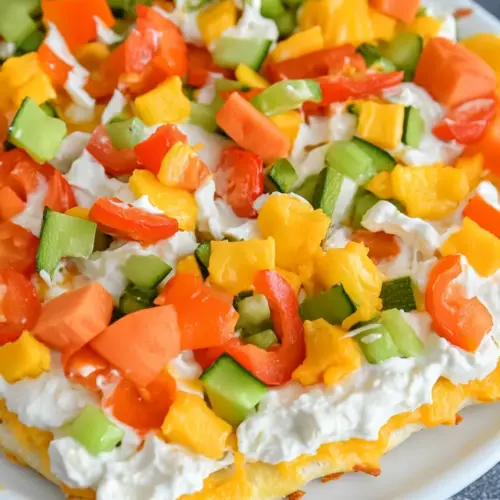
Cold Veggie Pizza
Cold Veggie Pizza offers a creamy, crunchy, and colorful appetizer that is easy to assemble and perfect for gatherings. The flaky crescent dough base topped with a tangy cream cheese and sour cream spread, shredded cheddar, and crisp vegetables creates a delightful texture contrast. Make it for a crowd or a casual lunch, it's an effortless crowd pleaser you'll keep returning to.
Equipment
- Oven
- Rimmed baking pan
- Parchment Paper
- Mixing Bowl
- Spatula
Ingredients
- 16 ounces crescent dough two sheets, or pinch together two tubes of regular crescent dough Provide a flaky, buttery base that is prebaked until golden to support the cold toppings; pinch seams together if using two tubes to create a single crust. Ensure even thickness and allow to cool completely before assembling to prevent sogginess from the creamy spread and vegetables.
- 8 ounces cream cheese softened Offer a rich, creamy spreadable layer that softens easily for mixing with sour cream and seasonings; beat until smooth to avoid lumps in the topping. Help bind the shredded cheese and vegetables to the crust while adding a mild tang and silky mouthfeel.
- 1 cup sour cream Add a cool, tangy creaminess that loosens the cream cheese for easy spreading and lightens the overall texture; stir until homogenous with seasonings. Balance richness and help create a dip-like topping that keeps the pizza refreshing and not overly heavy.
- 1/4 teaspoon garlic powder Contribute a mild garlic aroma and background savory note when mixed into the cream base; sprinkle sparingly to avoid overpowering other flavors. Enhance depth without adding moisture, making the spread more flavorful and suited to raw vegetables.
- 1/2 teaspoon onion powder Provide a sweet, savory onion undertone that rounds out the creamy mixture; distribute evenly to ensure consistent flavor throughout the spread. Accentuate other aromatics and mirror the freshness of the vegetables without adding texture.
- 3/4 teaspoon dill dried Impart a bright, herbaceous flavor that evokes dill pickles or fresh herbs; crumble dried dill into the cream mixture for balanced seasoning. Complement the creaminess and vegetables with a slightly grassy, citrusy note that refreshes each bite.
- 1/2 teaspoon salt Contribute essential savory balance to the topping, enhancing all other flavors when measured accurately; dissolve into the creamy base for even seasoning. Prevent blandness and help the cheeses and vegetables shine without making the pizza taste salty.
- 1/4 teaspoon pepper Add a subtle heat and earthiness that sharpens flavors when ground into the spread; use sparingly for mild background spice. Lift the overall profile and provide contrast to the richness of the cream cheese and sour cream.
- 1 cup cheddar cheese shredded Supply a sharp, savory melt-in-your-mouth element when mixed into the topping or sprinkled on top; use freshly shredded for best texture and flavor. Offer color contrast and a familiar cheese note that pairs well with raw vegetables and creamy dressing.
- 2 large carrots shredded Bring sweet, crunchy texture and vibrant color when finely shredded and scattered over the cream layer; pack tightly when shredding for consistent size. Add natural sweetness and satisfying bite that contrasts with the creamy spread and soft crust.
- 1 cup broccoli chopped small Introduce a fresh, slightly bitter crunch and bright green color when chopped small and distributed evenly; blanching briefly is optional but raw maintains crispness. Add nutritional value and a fibrous texture that complements the other vegetables and creamy base.
- 1 cup bell pepper chopped small, about two peppers Contribute sweet, juicy crunch and colorful appeal when chopped small, using a mix of colors for visual interest; distribute evenly for balanced bites. Provide a crisp, refreshing counterpoint to the creamy spread and shredded cheeses, enhancing overall mouthfeel.
- 2 green onions optional - green tops, chopped finely as garnish Serve as a delicate, oniony garnish with bright green color when finely chopped and sprinkled on top; include only the green tops for mild flavor. Add finishing visual appeal and a hint of sharpness without overpowering the chilled pizza's flavors.
Instructions
- Preheat the oven to 375. Lightly oil a rimmed baking pan or line with parchment paper.: The first sensory cue is the gentle warmth filling the kitchen, carrying the scent of a clean oven as it climbs toward 375 degrees. This temperature is chosen so the crescent dough sets evenly into a sturdy crust without overbrowning too quickly, giving you a slightly flaky exterior and a tender inside. Pay attention to the oven's actual temperature, as older ovens can run hot or cool, which affects browning. A common mistake here is preheating insufficiently, which can cause uneven bake and a doughy center. If your oven fluctuates, rotate the pan halfway through the brief bake for even color.
- Lay the crescent dough on the pan, overlapping the sheets. Pinch and press the dough together to seal the seams to make one large sheet, folding any extra dough down around the edges.: When you brush the pan with a thin sheen of oil or lay parchment, you immediately reduce the risk of sticking, and you create a clean underside that slides off easily. The tactile step of smoothing the parchment or oiling with a pastry brush makes the dough handling simpler. Skipping this can cause the crust to tear when you try to remove it, so take the extra minute. If you see pooling oil, blot the excess with a paper towel to avoid greasiness under the crust.
- Place the dough on the pan into the oven. Bake for 13-15 minutes or until lightly brown. Let the pan and dough cool completely to the touch before adding toppings.: As you unroll or unfold the crescent sheet, you will notice the dough's slightly tacky feel. Overlap the sheets and press seams together firmly so they seal into a single continuous layer. This joining prevents seams from opening and lets you fold excess dough down around the edges for a defined rim. The dough should appear uniform in thickness; if you see thin spots, gently press them to even out. A common error is leaving seams loose, which can let toppings slip underneath during baking.
- In a medium sized bowl stir together softened cream cheese and sour cream until smooth. Add the garlic powder, onion powder, dill, salt and pepper. Mix until thoroughly combined.: As you press, you'll feel the dough give and then hold, forming a cohesive sheet that will crisp at the edges. Folding the extra dough creates a shallow crust that frames the topping visually and provides a firmer bite at the edge. Work gently to avoid tearing; if small rips occur, pinch them closed. Overworking the dough can make it tough, so handle it with a light, confident touch.
- Spread the cream cheese mixture over the cooled crust, leaving a thin space for a crust along the edge.: Sliding the pan into the warm oven gives off the faint aroma of baking dough as it begins to set. Bake for 13 to 15 minutes, watching for a light golden color across the top, and slightly deeper color at the edges. This brief bake transforms the sheet into a supportive base while keeping it tender. Remove when gently golden, not dark brown, to avoid a hard crust. A common pitfall is baking too long; if the crust becomes too crisp it can overpower the gentle creamy topping.
- Sprinkle the cheddar cheese and shredded carrot across the cream cheese mixture.: When the crust reaches that pale golden stage, it will sound slightly crisp if you tap the surface. Let the pan and dough cool completely to the touch before adding toppings, because a warm crust will cause the creamy topping to melt and slide. Cooling helps the spread hold its shape and keeps the vegetables crunchy. Resist the urge to top while warm; rushing this leads to a soggy, less attractive result.
- Add the finely chopped broccoli and bell pepper evenly to the pizza. Top with green onions. Slice into rectangles and enjoy!: As you whip the cream cheese and sour cream , the mixture becomes silky and aerated, releasing a clean, tangy aroma. This texture makes spreading effortless and ensures every bite is balanced. Use a sturdy spatula or a small whisk to smooth out any lumps. If lumps persist, let the cream cheese sit a touch longer at room temperature. Over mixing can make the base too loose, so stop once it is homogeneous and spreadable.
- Add the garlic powder, onion powder, dill, salt and pepper: Folding in the seasonings releases subtle aromatics that blend into the dairy base, giving it a savory backbone. These dried seasonings disperse evenly here, so you taste them in every bite rather than pockets of spice. Taste cautiously after mixing, because dairy can mute salt levels; adjust if needed. A frequent error is under seasoning, which results in a bland spread, so sample and tweak gently.
- Mix until thoroughly combined: Once combined, the mixture should be glossy and smooth, holding its shape but not stiff. That balance allows it to be spread in an even layer while giving structure for the vegetables. If the mixture seems too stiff, a teaspoon of additional sour cream will loosen it without thinning too much. If it is too loose, chilling briefly firms it up. Avoid overly watery additions, which can make the tiled topping slide.
- Spread the cream cheese mixture over the cooled crust, leaving a thin space for a crust along the edge: When you spread, the texture should feel cool and velvety under your knife or spatula. Work in even motions to leave a thin border so the crust edge shows, creating a framed presentation. The visual contrast between the pale spread and the rim makes the dish look composed. If you notice the spread pulling away or tearing, the crust may be too crisp; use gentle pressure and a flexible spatula to smooth it out without disturbing the base.
- Sprinkle the cheddar cheese and shredded carrot across the cream cheese mixture: As you scatter the cheddar cheese and shredded carrot , you'll see color and texture begin to build, the orange of carrot and the pale gold of cheese bringing warmth. The cheese adds savory pockets, while the carrot gives subtle sweetness and crunch. Distribute evenly so each piece gets a bit of both. Avoid piling in one area, which can make slices uneven and harder to serve cleanly.
- Add the finely chopped broccoli and bell pepper evenly to the pizza: Sprinkling the chopped broccoli and bell pepper yields a mosaic of green and red or yellow, creating both visual appeal and lively texture. The bite should be crisp and refreshing; chopping small helps the vegetables nestle into the spread and stay put. If pieces are too large, they can topple off when slicing, so aim for small, even dice. Watch out for moisture heavy pieces that could make the surface soggy.
- Top with green onions: Finely sliced green onions add a bright, aromatic finish, their color popping against the spread. They provide a mild onion note that complements the seasonings without dominating. Sprinkle them last to retain their crispness and fresh visual lift. If you add them too early, they will wilt and lose that signature snap.
- Slice into rectangles and enjoy: When you slice, the crust should give a clean edge, the spread holding the topping in place, and each piece offering a balance of creamy and crunchy sensations. The contrast between the flaky crust and cold, herbed spread is the final reward. A common serving mistake is cutting too large pieces, which makes grazing awkward; I prefer modest rectangles that are easy to handle and share.
Notes
- Use flavored cream cheese — If you find a cream cheese already seasoned with chives or herbs, taste first and omit or reduce the added seasonings. This speeds assembly and layers flavor, but be mindful not to over season.
- Try premade ranch seasoning — Swap the garlic powder, onion powder, and dill for a packet of premade ranch seasoning to create a familiar flavor profile. Start with less than the package suggests and adjust to taste, since some mixes are quite salty.
- Mix up the vegetables — You can substitute or rotate vegetables based on what you have, while avoiding watery choices that cause sogginess. Stick to firm, crisp options and chop them small so the slices stay cohesive.
- Make smaller servings — If you want appetizer size, cut the crust into smaller rectangles or squares after baking for bite sized pieces that are easier for party grazing.
- Keep toppings dry — Pat wet vegetables with a paper towel if needed to reduce surface moisture, which helps maintain a firm spread and prevents the crust from getting soggy.