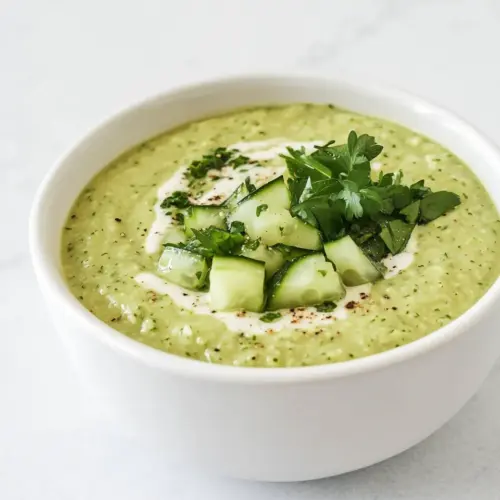
Cold Cucumber Soup
Cold Cucumber Soup is a creamy, bright, and refreshing raw soup featuring crisp cucumber, silky avocado, and zesty lemon. This easy chilled soup is perfect for hot summer lunches and simple entertaining, delivering a silky texture and lively herbal notes. Make it ahead and chill so the flavors meld, and enjoy a light, nutritious bowl that feels both elegant and effortless to prepare.
Equipment
- our Vitamix A2300
- Immersion hand blender with 20 fl oz container
- Regular blender
Ingredients
- 1 large cucumber, diced Provide cool, crisp texture and a hydrating base that lightens the soup; peel if desired and dice uniformly to blend smoothly while leaving small bits for mouthfeel. Add brightness and freshness that pairs well with citrus and herbs, helping balance richer ingredients like avocado.
- 1 avocado Contribute creamy richness and silky body that thickens the soup naturally when pureed; pit and scoop the flesh to avoid bitterness from the skin if overripe. Supply healthy fats that carry flavors and create a satisfying, velvety mouthfeel.
- 1 shallot Offer a mild, sweet oniony background that adds subtle depth without overpowering; finely minced shallot blends into the soup to provide aromatic complexity. Help bridge the flavors between garlic, citrus, and herbs while adding a delicate savory note.
- 1 clove garlic Introduce a sharp, pungent accent that brightens and enhances savory flavors; mince or press the garlic for an even distribution throughout the soup. Deliver aromatic warmth that complements the cucumber and avocado while preventing flatness.
- 1/4 cup fresh cilantro, washed, chopped, loosely packed Impart fresh herbal brightness and slightly citrusy undertones that lift the overall flavor; wash thoroughly and chop loosely to release oils without overpowering the soup. Provide visual contrast and aromatic complexity that pairs well with lemon and cucumber.
- 3 -4 tbsp lemon juice, freshly squeezed Add lively acidity and brightness to balance the richness of avocado and oil; squeeze fresh lemon juice for the best clarity of flavor and adjust between 3–4 tablespoons to taste. Help preserve color and enhance overall freshness while cutting through creamy textures.
- 2 tbsp olive oil Provide smooth, fruity fat that rounds flavors and improves mouthfeel; whisk into the soup or drizzle when blending to emulsify the mixture. Supply a subtle savory backbone that carries aromatics and adds richness without heaviness.
- 1/2 tsp sea salt Season gently to enhance and unify all flavors without masking delicate notes; start with 1/2 teaspoon and adjust after blending to taste. Help bring out natural sweetness in cucumber and balance the acidity from lemon juice.
- 1/2 tsp black pepper Add mild heat and background spice that sharpens the soup’s flavor profile; freshly ground black pepper disperses evenly and complements the garlic and lemon. Use sparingly to avoid overpowering the cooling cucumber and creamy avocado.
Instructions
- Coarsely dice the cucumber, shallot, and cilantro leaves.: Right away you will notice the crisp snap of the cucumber as you cut it, its pale green flesh gleaming with tiny beads of moisture. Coarse dicing gives the blender some good pieces to work with, helping it break down evenly rather than turning everything into an uneven puree. The scent will be fresh and vegetal, with a faint oniony lift from the shallot . A key reason for this step is to avoid overworking the blender motor by feeding it large, intact vegetables, and to prevent a watery soup from sudden cell rupture. A frequent error is leaving the ingredients whole which forces the blender to strain and can make the final texture inconsistent.
- Add to a blender, along with the avocado flesh and lightly crushed garlic clove.: When you add the creamy avocado and the lightly crushed garlic , the aroma changes, gaining a subtle richness and a hint of warmth. Crushing the garlic gently releases its oils so the flavor integrates without dominating. This step matters because the avocado will emulsify and bind the watery cucumber into a smooth body, creating the soup's characteristic creaminess. A common misstep is using the avocado with the skin on, or one that is not at the right ripeness, which can yield lumps or a flat flavor.
- Add the olive oil, 3 tbsp lemon juice, 2 tbsp water, salt, and pepper.: As you pour in the olive oil and fresh lemon juice, you should see the ingredients start to glisten and smell bright. The small amount of water helps the blades move without diluting the flavor too much. Salt and black pepper should be added judiciously because they amplify the other elements, bringing forward the citrus and calming the raw edge of the shallot . This combination creates balance, and the reason these precise amounts matter is to avoid a thin or overly acidic soup. A classic mistake is adding too much water at once, which leaves the soup lacking body.
- Blend until smooth. Add more lemon juice and water as needed.: As the blender runs, the mixture will transform from chunky bits into a glossy, homogenous puree. You will hear the blades ease, and the smell will grow more integrated, shedding sharp edges into a rounded aroma. Blending fully is important for a silky texture; the avocado must be fully incorporated for that creamy mouthfeel. If the blender struggles, stop and scrape down the sides, or add a tablespoon of water to help the process. Overblending can heat the soup slightly and mute the freshest notes, so blend just until smooth.
- Once desired consistency is reached, cover and place in the fridge for 1 hour before serving to allow the flavours to develop.: After the initial blend, taste for brightness and texture. You may prefer another splash of lemon for zip, or a touch more water if you want a thinner, more sipable consistency. This tasting moment is where you tailor the soup to your preferences. I often find that tiny adjustments here elevate the entire bowl. A pitfall is to add too much acid expecting it to fade; it will remain prominent, so increase gradually.
- Serve cold with a drizzle of olive oil, chopped cilantro, and fresh ground black pepper.: Chilling the soup calms the raw aromatics and lets the flavors marry, producing a deeper, more cohesive profile. As it cools the texture firms slightly and the taste becomes rounder and more approachable. I recommend at least an hour for a noticeable difference, though longer yields a more mellow result. Watch out for overly long storage at room temperature since the soup is raw; refrigeration preserves freshness and safety.
- Serve cold with a drizzle of olive oil, chopped cilantro, and fresh ground black pepper: The final presentation adds sensory contrast, with the glossy olive oil gleaming on top, flecks of chopped cilantro for green bursts, and the warm bite of freshly ground black pepper . The aroma on the first spoonful should be bright and inviting, while the texture remains silky. Garnishes are not just pretty they contribute a finishing flavor and textural lift. A common oversight is serving the soup too warm, which masks the crisp qualities that make it so refreshing.
Notes
- Pick the right cucumber Choose a firm, unwrinkled cucumber for the cleanest flavor and crispest texture, avoiding overly seedy or soft specimens that make the soup watery.
- Ripe avocado matters Use an avocado that yields to gentle pressure; an underripe one will remain grainy and an overripe one can be mushy and off in flavor, so aim for creamy perfection.
- Fresh lemon juice only Freshly squeezed lemon juice brightens the soup far better than bottled options, giving a lively acidity that lifts the other ingredients.
- Control raw garlic A single lightly crushed garlic clove provides depth without overpowering; if you are sensitive, rub the clove on the bowl rim or reduce to half a clove.
- Chill to deepen flavor Refrigerate the soup for at least one hour so the flavors meld; as it chills, the taste becomes more harmonious and rounded.
- Adjust consistency deliberately Add water in small amounts to reach your desired thickness, because thinness is easy to add, and hard to remove once achieved.