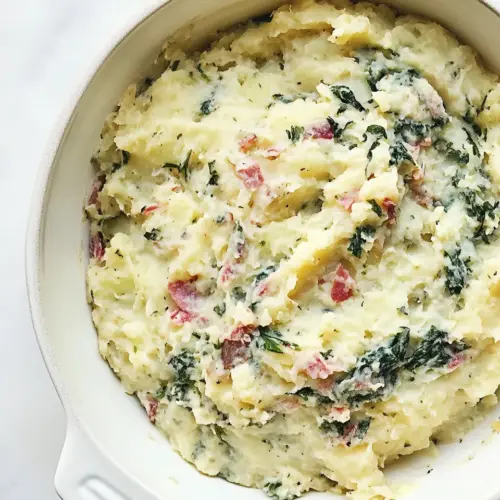
Colcannon
Colcannon is a creamy, comforting Irish potato mash with tender greens and butter, perfect as an easy weeknight dinner or a cozy fall side. Combining russet and red potatoes creates a fluffy yet textured bite, finished with aromatic garlic and scallions for brightness. Make it for family meals when you want something soulful and reliably delicious.
Equipment
- Large Pot
- Colander
- Wooden Spoon
- Masher
Ingredients
- 3 large Russet Potatoes (peeled, cut into chunks) Mashed into a creamy base, provides a starchy, fluffy texture and absorbs flavors from butter and cream; peeled and chunked for even cooking and smooth mashing. Russet potatoes contribute a light, airy body that helps bind the dish together while offering a neutral flavor canvas.
- 3 medium Red Potatoes (skins left on, cut into chunks. The red skins add texture) Left with skins for added texture, offers a firmer bite and earthy flavor contrast to the Russets; chunked similarly to ensure uniform boiling and mashing. Red potatoes add visual interest and slight creaminess, balancing the fluffiness of the peeled potatoes.
- 4 tbsp Butter (more for serving) Melted into the potatoes, enriches flavor and adds a silky mouthfeel; reserved butter can be spooned on top for finishing gloss and richness. Butter also helps carry aromatic compounds from garlic and greens, creating a cohesive, savory profile.
- 1 tsp Garlic (minced) Sautéed briefly to release aroma, imparts a gentle garlic flavor without overpowering the dish; minced form distributes evenly through the mash. Garlic elevates the overall savory notes and pairs well with the butter and cream for depth.
- 2 cups Cabbage or Kale (chopped) Wilted into the mash, provides vegetal notes and a tender, slightly sweet texture; chopped form ensures even distribution throughout the potatoes. Cabbage or kale brings color, nutrition, and a slightly bitter or sweet counterpoint that complements the creamy starches.
- 1/4 cup Green Onions Folded in raw or lightly cooked, adds a bright, oniony crunch and fresh green color; chopped into small pieces for even bites. Green onions lend a mild sharpness and lift the heaviness of the potatoes with a fresh finish.
- 1 1/4 cups Half and Half or Cream (more if needed) Stirred in to create a silky, luxurious consistency, adjusts creaminess to preferred texture; measured to balance richness without making the mash watery. Half and half or cream smooths the potatoes and helps meld butter and seasonings.
- 1 tsp Kosher Salt Sprinkled to season and enhance natural flavors, calibrated to avoid over-salting; kosher salt's larger crystals make it easy to control salting levels. Salt sharpens flavors and helps bring out the sweetness of the potatoes and greens.
- 1/2 tsp Cracked Black Pepper Cracked over the finished dish to add a bright, piquant note and subtle heat; coarser grind provides pleasant textural contrast. Black pepper rounds out the seasoning profile and balances the creaminess with mild spiciness.
Instructions
- In a large pot, add the potato chunks. Add enough cold water to completely cover the potatoes. Bring the water to a boil, and cook the potatoes for about 15-20 minutes, or until they are fork-tender. Drain in a colander and set aside.: Start by feeling the weight of the cold water as it covers the potatoes , this prevents the outsides from overcooking before the centers are done. As the water warms you will hear gentle rising bubbles, and once it reaches a full boil the sound becomes more vigorous, a good cue to watch the time. When the potatoes are fork-tender, the fork should slide in with very little resistance and the edges may fray slightly, showing they are cooked through. Draining promptly prevents waterlogged mash, and letting them steam briefly in the colander sheds surface moisture, which helps the final texture be fluffy not gummy. A common mistake is starting with hot water, which can cause uneven cooking and mealy centers, so always start cold.
- To the same pot, add the butter and melt over medium-high heat. Add the garlic and cook for an additional minute.: The residual heat in the pot is perfect for melting the butter without burning it, and you'll notice it foaming gently as it warms, releasing a nutty aroma. When you add the minced garlic , listen for a faint sizzle, and breathe in a sweet, savory fragrance as the garlic softens. The minute of cooking mellows its raw bite and integrates the flavor into the fat so it disperses evenly through the mash. Watch closely, because garlic can quickly go from fragrant to bitter if it browns too much, which is the usual slip at this stage.
- Add the kale or cabbage, and continually stir and cook for 4 minutes to help soften the greens. Add the chopped green onion and cook for an additional 2 minutes.: As the greens hit the warm butter , they will wilt and release a vegetal steam that smells bright and vegetal in contrast to the rich butter. Stirring continuously ensures even wilting and prevents any pieces from scorching, and after about 4 minutes the leaves will soften and reduce in volume considerably, turning glossy and tender. When you add the chopped green onions , they will relax in the pan and lose their raw sharpness, giving a sweet, mild onion scent. The why is simple, cooking the greens first avoids water diluting your mash later, and it builds layered flavors. A common mistake is overcrowding the pot, which causes steaming rather than gentle sautéing, leaving greens pale and limp instead of richly flavored.
- Return the boiled potatoes to the pot on top of the cooked greens. Pour in the half and half, and mash the potatoes.: When you add the warm potatoes back to the pot, you will see steam rise and the mixture begins to knit together visually, a sign that heat and moisture are combining to create a cohesive mash. Pouring in the half and half gradually lets you control the final creaminess, and as you mash the sound changes from a dull thud to a smoother, denser rhythm. The dairy dissolves starch and enriches the mouthfeel, while the mashed potatoes capture the softened greens so every spoonful has color and texture. If you add too much liquid at once you risk a soupy mash, so add a little, assess, then add more if needed; that is the frequent misstep here.
- Continue to mash and incorporate all the ingredients together. If the potatoes seem dry, add more half and half until you reach your desired creamy texture. Season with salt and pepper, and more to taste if needed.: As you continue mashing, notice how the aroma evolves, the creamy dairy rounding edges and the pepper adding a warm, slightly floral note. The texture should be cohesive but not gluey, with small green flecks throughout. Tasting at this point is essential because the mashed potatoes will absorb salt quickly; adjust in small increments until the flavors sing. If dryness persists, warm half and half incorporated slowly will restore silkiness without shocking the mash. Avoid overworking the potatoes , which can release too much starch and make the texture gummy, that tends to happen when you use a high speed mixer or mash excessively.
- Serve with additional butter if you desire!: A final knob of cold butter melting into crevices creates a glossy sheen and a rich top note, and when it melts you will see rivulets of gold that smell deeply buttery and inviting. Serving warm is important because chilled fat solidifies, altering mouthfeel, so plate immediately and let the butter pool. This finishing touch elevates each bite, offering pockets of richness against the softly textured mash. A common oversight is plating too late, which cools the dish and prevents that luxurious butter melt from happening.
Notes
- Choose your potato mix: Combining starchy russets with waxy red potatoes yields the best texture, because the russets give a fluffy base while the reds add body and visual interest with their skins.
- Keep ingredients warm: Warm half and half and warm butter incorporate more smoothly into hot potatoes, preserving a silky texture rather than creating clumps.
- Don’t over mash: Gentle mashing prevents releasing excess starch, which would make the mash gluey; aim for a cohesive, slightly rustic texture.
- Adjust seasoning at the end: Because potatoes absorb salt, it is best to season gradually and taste before final adjustments, ensuring a balanced flavor.
- Finish with butter at serving: Adding a pat of cold butter to each bowl creates a glossy finish and rich pockets of flavor that melt into the warm mash.