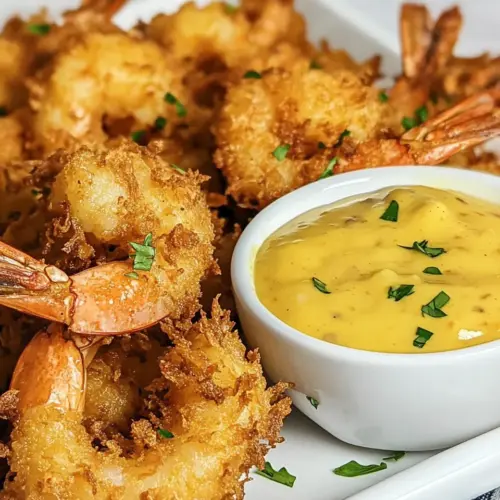
Coconut Shrimp with Spicy Mango Dipping Sauce
Coconut Shrimp with Spicy Mango Dipping Sauce is a crispy, tropical bite with sweet toasted coconut and a creamy, tangy mango sauce. This easy to make crowd pleaser delivers crunchy texture, bright fruitiness, and a touch of heat, ideal for easy weeknight dinners or summer gatherings. Make it to impress guests with minimal fuss and maximum flavor.
Equipment
- Ninja 72 oz Countertop Blender
- 6-quart Dutch Oven
Ingredients
- 1 pound jumbo shrimp (peeled, tails on) Provide peeled jumbo shrimp with tails on to deliver a meaty, succulent seafood base that crisps nicely when fried; offers the primary protein and seafood flavor for the dish. Ensure shrimp are deveined and patted dry to promote even coating and prevent splattering during frying.
- 1 cup breadcrumbs Act as a coarse dry coating to create a crunchy outer layer that helps the coconut adhere and yields a satisfying texture contrast to the tender shrimp. Use plain breadcrumbs for neutral flavor and uniform browning during shallow or deep frying.
- 2 eggs Bind coatings by whisking eggs until smooth to create an adhesive layer that helps breadcrumbs and coconut stick to the shrimp. Beat thoroughly so consistency is uniform, which promotes even coverage and prevents loss of coating while frying.
- 2 cups sweetened coconut (shredded) Provide sweet, shredded coconut to lend tropical aroma, chewy texture, and caramelized color when fried, forming the signature coconut crust for the shrimp. Use sweetened coconut for pronounced sweetness that contrasts with spicy dipping sauce and enhances overall flavor.
- salt and pepper (to taste) Season to taste with salt and freshly ground pepper to enhance natural sweetness of shrimp and balance richness from frying; adjust amounts to preference. Sprinkle lightly during breading and after frying to ensure proper seasoning throughout the dish.
- vegetable oil (for frying) Provide neutral-flavored oil with a high smoke point for shallow or deep frying to achieve an even, golden-brown crust without burning. Maintain oil temperature for consistent frying and to minimize oil absorption into the coating.
- 1/2 cup mayonnaise Create a creamy base for the dipping sauce that adds richness and smooth mouthfeel while carrying sweet and spicy components. Combine with mango and spices to form a balanced companion to the crunchy coconut shrimp.
- 1/2 mango (cubed, about 1/2 cup to 3/4 cup) Contribute ripe mango cubes offering sweet, fruity brightness and tropical flavor that complements savory shrimp and coconut; helps form the body and texture of the dipping sauce. Use ripe but firm mango for fresh flavor and manageable consistency in blended or chunky sauce.
- 1 tablespoon honey Add a touch of natural sweetness and glossy texture to the dipping sauce, helping balance heat and acidity while rounding flavors. Drizzle and adjust to personal preference for subtle layered sweetness.
- 1 tablespoon sriracha Provide spicy, tangy heat to the dipping sauce and add a bold kick that contrasts with sweet coconut coating; adjust amount to desired heat level. Mix thoroughly into the mayo-mango base to distribute heat evenly.
- 1/4 teaspoon curry powder Introduce warm, aromatic depth with a small pinch of curry powder to complement tropical mango and coconut flavors in the dipping sauce. Use sparingly to avoid overpowering other elements while contributing subtle complexity.
- 1/4 teaspoon salt Enhance overall seasoning with a measured pinch of salt to bring out sweetness of mango and balance richness of mayonnaise; ensure proper salt levels in the sauce. Taste and adjust to keep harmony between sweet, spicy, and acidic components.
- 1 tablespoon lemon juice Supply bright acidity to the dipping sauce that cuts through richness and lifts flavors, adding a subtle citrus tang that enhances mango and mayonnaise. Add gradually and taste to maintain balanced acidity.
- 1/4 cup cilantro Add fresh, herbaceous flavor and a burst of green aroma to the dipping sauce or as a garnish to the finished dish, contributing brightness and visual contrast. Chop cilantro finely to distribute flavor evenly without overpowering the sauce.
Instructions
- In a blender, combine mayonnaise, cubed mango, honey, sriracha, curry powder, salt, lemon juice, and cilantro. Blend until smooth and refrigerate.: The first aroma you should notice is the sweetness and tropical perfume of the mango as it purees, with the faint floral notes of curry powder layering in. The texture will transform from chunky to velvety, creating a glossy sauce that clings to the spoon. Refrigerating it lets the flavors marry and the temperature chill, which contrasts beautifully with hot fried bites. A common mistake at this stage is over thinning the sauce by adding too much liquid; keep it thick enough to coat. If it tastes flat, a squeeze more lemon juice will brighten it up.
- Fill a Dutch oven or deep frying pan with about 1 1/2 inches of vegetable oil. Heat the oil until it reaches a temperature between 350°F (175°C) and 375°F (190°C), ensuring it's hot enough for frying the shrimp to a perfect crisp.: Listen for a steady, lively sizzle when a test piece hits the oil, which signals the correct frying temperature. The oil should shimmer but not smoke, and you will see small bubbles around the food as it sears. Maintaining a consistent heat is crucial because too cool oil yields greasy, soggy crusts, while too hot oil will darken the coconut before the interior cooks. Use a thermometer for accuracy and adjust the burner to keep the range steady. A frequent slip is crowding the pan, which drops the oil temperature quickly, so fry in measured batches.
- Set up a breading station with three plates – one with breadcrumbs, one with beaten eggs seasoned with salt and pepper, and one with shredded coconut. Dredge each shrimp in breadcrumbs, then in egg, and finally in coconut.: The rhythm of the station should feel almost like an assembly line, with each coating layer adhering smoothly. As you dredge, you will notice the breadcrumbs forming a base, the beaten eggs creating a tacky middle, and the shredded coconut forming a textured outer crust that clings well. A good sign is an even, thorough coating that does not fall off when transferred to the pan. Avoid working with wet shrimp ; excess moisture is the main culprit behind loose breading. If pieces flop in the oil, the coating likely needs pressing on more firmly.
- Once oil is hot, fry shrimp in batches for about 2 minutes or until golden and crispy.: Frying should produce a satisfying crackle and a golden brown color on the coconut , while the aroma shifts toward toasted sweetness. You can gauge doneness by color and by the internal texture of the shrimp , which should be opaque and springy. Use a slotted spoon or tongs to flip gently so each side crisps evenly. Keep a close eye because the coconut can go from golden to burnt quickly. One common error is leaving too many pieces in the oil at once; this cools the oil and yields uneven cooking. Transfer finished pieces to a rack to preserve crispness rather than a paper towel where steam can soften the crust.
- Drain fried shrimp and serve with the chilled spicy mango dipping sauce. Enjoy your tropical feast!: As the last sizzling notes fade, place the shrimp on a wire rack so the air circulates and the coating stays crisp. The contrast of hot, crunchy shrimp with the cool, smooth mango sauce is what makes each bite pop: the tongue gets toasted coconut, tangy fruit, and a whisper of heat. Watch out for residual oil pooling if you stack pieces; spacing them preserves texture. When plating, garnish with a scattering of chopped cilantro if you like, and provide small bowls of sauce so everyone can dip. A frequent oversight is serving the shrimp too long after frying, which diminishes the crispness, so time frying to finish close to serving.
Notes
- Oil Management Keep an eye on oil temperature with a thermometer, adjusting the heat so the oil stays between 350°F and 375°F for consistent crisping.
- Drying Shrimp Thoroughly pat the shrimp dry with paper towels before breading to ensure the coating adheres and oil spatter is minimized.
- Breading Pressure Press the shredded coconut onto the shrimp with gentle force to help it form a tight crust that does not fall off in the oil.
- Batch Size Fry in small batches to avoid dropping the oil temperature and to keep each piece evenly golden.
- Resting Rack Use a wire rack over a baking sheet to drain fried shrimp, preserving crispness instead of letting them steam on paper towels.
- Sauce Balance Taste the sauce after blending and tweak sweetness or heat with extra honey or sriracha, keeping it balanced for the crowd you serve.
- Warm Holding If you must hold the shrimp for a short time, keep them in a single layer in a low oven around 200°F to maintain warmth and texture.
- Equipment Swap If you do not have a Dutch oven, a deep, heavy pan will work; just ensure you have sufficient oil depth for even frying.
- Breadcrumb Choice Swap to panko for a lighter, airier crunch if you prefer a more delicate crust under the coconut.
- Fresh Herb Finish Sprinkle a little chopped cilantro over the finished plate to add a fresh herbal note that brightens the dish.