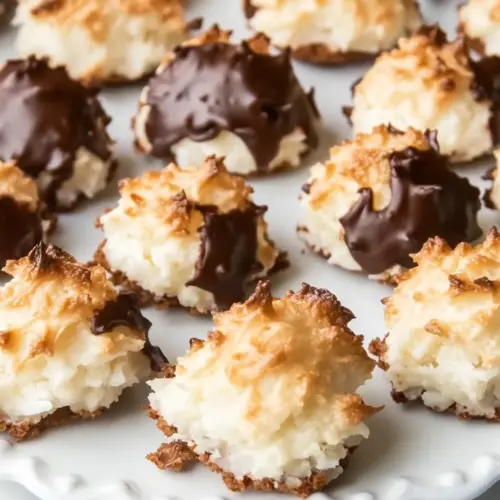
Coconut Macaroons
Coconut Macaroons are chewy, crisp edged cookies with intense coconut flavor and a glossy chocolate bottom. Simple to make and perfect for gifting, these easy treats blend whipped egg whites with shredded coconut for a timeless cookie. Make them for parties or a sweet weeknight baking session, they’re fast to assemble and satisfyingly crunchy on the outside while tender inside.
Equipment
- Standing mixer
- Baking Sheets
- Parchment Paper
- Cookie Scoop
- Double boiler or heatproof bowl and saucepan
- Cooling rack
Ingredients
- 4 large egg whites Whisk vigorously to incorporate air and provide structure and lift for the macaroons, creating a light, airy interior when beaten to soft or stiff peaks. Use at room temperature for best volume and to help bind the coconut and other ingredients together during baking.
- 1/2 cup granulated sugar Sweeten evenly to balance the coconut's flavor and stabilize the whipped egg whites, helping create a tender, slightly chewy texture in the finished macaroons. Dissolve fully into the whites to prevent graininess and ensure consistent sweetness throughout.
- 1 teaspoon vanilla extract Flavor subtly to enhance the dessert’s aroma and complement the coconut without overpowering it, adding warm, familiar vanilla notes. Stir in gently after the whites are beaten so the extract disperses evenly throughout the batter.
- 1/8 teaspoons salt Season lightly to brighten flavors and balance sweetness, helping to enhance the overall taste profile of the macaroons. Dissolve into the egg whites or batter so the salt is evenly distributed for consistent flavor.
- 14 ounces sweetened coconut (shredded) Provide the primary texture and coconut flavor, contributing chewiness and bulk to each macaroon. Ensure flakes are distributed evenly with the egg mixture so each cookie has moist, coconut-rich structure when baked.
- 2 tablespoons all-purpose flour Bind and stabilize the mixture to absorb some moisture and help the macaroons hold their shape, preventing excessive spreading while giving a slightly firmer crumb. Sift or sprinkle in evenly to avoid lumps and ensure uniform texture.
- 2 cups semi-sweet chocolate chips Coat or dip the cooled macaroons to add a rich, chocolate layer that contrasts with the chewy coconut interior, enhancing flavor and presentation. Melt and temper appropriately to achieve a smooth, glossy finish that sets well on the cookies.
- 1 teaspoon shortening Improve chocolate melting and texture by smoothing and preventing seizing, ensuring a glossy, spreadable coating for dipping or drizzling onto the macaroons. Add sparingly while melting so the chocolate remains fluid and shiny when applied.
Instructions
- Preheat the oven to 325°F. Line two baking sheets with parchment paper.: As the oven warms you will notice a faint electrical hum and gradually increasing warmth in the kitchen, which primes the baking environment for even heat. Preheating is important because it gives the macaroons the immediate hot environment they need to set the exterior quickly while retaining chew inside. A common mistake is not waiting for full preheat, which can lead to uneven color and longer bake times, so only bake when the oven has reached temperature.
- In the bowl of a standing mixer, whisk egg whites, sugar, vanilla, and salt on high speed until thick and opaque white (about 1 minute).: The sound will change from thin whisking to a fuller, higher pitched beat as air is incorporated, and you will visually see the mixture go from glossy liquid to a thick, opaque foam. This texture traps air that lifts the macaroons, so do not shortchange the whipping. Overwhipping until grainy is a mistake to avoid; stop when peaks are stable but still smooth.
- Use a spatula to fold the coconut and flour into the egg white mixture.: Folding should be slow and deliberate, with the spatula scraping the sides and bringing the mixture up through the center, preserving the trapped air. You will feel the mixture thicken as the coconut absorbs moisture, and it should come together into a cohesive, slightly sticky mass. Rushing this step or stirring vigorously will deflate the foam and yield denser cookies, so be patient and gentle.
- Use a 1 1/2 tablespoon cookie scoop or a rounded spoon to drop compact balls onto prepared baking sheets.: When scooping, the mass should cling together and hold its shape without sagging, indicating the right moisture balance. The sound of the spoon scraping against the bowl is minimal as the mixture is cohesive. If you leave the mounds too loose they will spread and lose height, so pack them slightly when forming.
- Bake for approximately 25 minutes, rotating the pans during baking, until cookies are golden brown.: During baking the kitchen will fill with toasty coconut aromas and the tops will shift from pale to a warm golden color, particularly at the edges. Rotating the pans ensures even browning since oven hotspots can make one tray darker. Pull them when the tops are lightly golden, because overbaking dries them out and makes them crumbly instead of chewy.
- After 1 to 2 minutes, transfer cookies to a cooling rack and cool completely.: The cookies continue to set as they cool, and you may hear a subtle settling sound as steam escapes. Cooling on a rack prevents moisture from accumulating underneath, which keeps the bottoms from going soggy. A common error is leaving them on the hot sheet too long, which can lead to overbrowning and loss of chew.
- In the top of a double boiler, melt chocolate chips and shortening until smooth and fully melted.: As the chocolate melts you will see it transform from a solid mound to a silky, glossy pool, with a warm chocolate scent rising. The gentle steam heat prevents scorching, and the shortening helps the texture become shiny and fluid for dipping. Avoid direct high heat which can seize the chocolate into a grainy mess, a signal that it was overheated.
- Transfer melted chocolate to a shallow bowl if needed to make it easier to dip. Dip the bottom of each cooled macaroon into the chocolate, just enough to coat the bottom and up the sides a bit. Allow the excess chocolate to drip off the bottom. Place a dipped cookie on a sheet of parchment paper on a baking sheet.: When dipping you will notice the chocolate cling to the ridged coconut surface, creating a glossy coat that contrasts the matte texture of the top. Let gravity help the excess drip away so the coating is even and not globby. If the chocolate is too thick, it will pool; if too thin, it may not cover adequately, so aim for a viscous ribbon consistency.
- Allow the chocolate to set (place the baking sheet in the fridge for a few minutes to help it set more quickly).: As the chocolate cools it will firm up with a slight snap, and the fridge can speed this process so you can serve sooner. Be careful not to leave the cookies in the fridge too long, as condensation can form when they return to room temperature, which can dull the chocolate shine. A typical mistake is rushing to stack them while the chocolate is not fully set, which can mar the finish.
Notes
- Room temperature whites: Let egg whites sit out for 15 to 20 minutes so they whip more easily, producing a silkier foam that helps the macaroons stay tender inside.
- Weigh the coconut: Using a scale for the 14 ounces of shredded coconut ensures consistent chew across batches, because different brands vary in density.
- Parchment over foil: I prefer parchment paper to line the baking sheets because it prevents sticking and helps the bottoms brown evenly without turning too dark.
- Small scoop for uniform cookies: A 1 1 2 tablespoon scoop makes consistent cookies that bake evenly, so you avoid some being overdone while others are underbaked.
- Shortening for shine: Adding 1 teaspoon of shortening to melted chocolate chips creates a smoother, glossier coat that sets nicely and resists cracking.