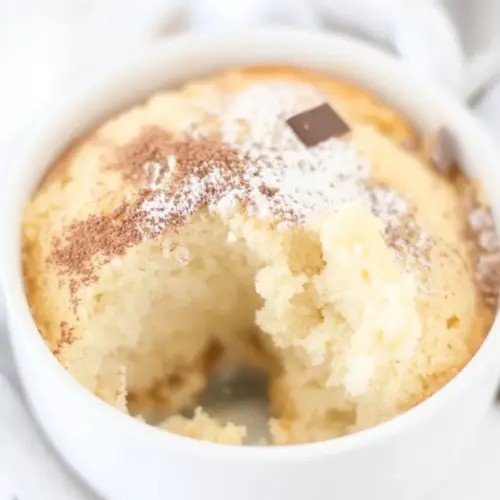
Coconut Flour Mug Cake
Coconut Flour Mug Cake is a creamy, quick single serving dessert with tender texture and warm cinnamon swirls. This easy microwave treat uses pantry staples like coconut flour and coconut cream for a low fuss, fast indulgence, perfect as an easy weeknight dessert or late night snack. Try it when you want a cozy, minimal cleanup sweet that comes together in just minutes.
Equipment
- Mug 200 ml
- Fork
- Microwave
- Small Bowl
- Spoon
Ingredients
- 2 tablespoon coconut flour Provides a light, absorbent base that thickens the batter and creates a tender crumb; use measured spoonfuls since coconut flour is highly absorbent and too much will dry the cake. Adds a subtle coconut flavor that complements the coconut cream, helping the mug cake hold structure without gluten.
- 1 tablespoon powdered sweetener Contributes sweetness without sugar and helps balance flavors; powdered form dissolves easily into the batter for uniform texture. Helps keep the cake low-carb while still providing a pleasant sweet profile that pairs well with cinnamon.
- 1/4 teaspoon baking powder Leavens the batter by releasing gas when heated, creating lift and a slightly lighter texture; use in small amount to avoid chemical aftertaste. Ensures the mug cake rises enough in the microwave to avoid a dense, flat result.
- 4 tablespoon coconut cream Adds fat and moisture, creating a rich, creamy texture and intensified coconut flavor; stir well before measuring to ensure consistency. Fat in the cream tenderizes the crumb and helps prevent the tiny cake from becoming dry during quick cooking.
- 1 egg medium Binds the ingredients together, provides structure and moisture, and contributes to lift when beaten or mixed; choose a fresh, medium egg for best results. The protein network set during cooking gives the mug cake a cake-like texture rather than a loose, custardy one.
- 1/2 teaspoon vanilla extract Enhances aromatic profile and rounds out flavors with a warm, sweet note; use measured amounts to avoid overpowering the delicate coconut and sweetener. Vanilla also helps mask any residual bitter or eggy flavors, creating a cohesive taste.
- 1 tablespoon Lakanto sugar free syrup Adds liquid sweetness and a touch of caramelized flavor while keeping the recipe sugar-free; syrup helps adjust batter consistency and adds moisture. Using a sugar-free syrup maintains low net carbs and contributes a pleasant mouthfeel.
- 1 teaspoon cinnamon Provides warm spice and depth, enhancing the overall flavor with aromatic, slightly sweet notes; a small amount is sufficient to make the cake taste cozy and well-rounded. Cinnamon pairs especially well with coconut and vanilla, elevating the mug cake's flavor profile.
Instructions
- Mix the coconut flour, powdered sweetener and baking powder in a mug (200 ml volume) with a fork. Make sure there are no lumps.: The dry blend should smell faintly sweet and nutty, and when you whisk with a fork you will hear the tiny clinks of powder settling, indicating the ingredients are combining. This step removes lumps which is important because any unmixed pockets of coconut flour will remain dry and grainy after microwaving. A common mistake is rushing this step, leaving clumps that create dry spots, so take a few extra seconds to break them up and aim for an even powdery mixture.
- Add the coconut cream, vanilla extract and egg and mix until smooth. Flatten the top.: The batter will transition from dusty to glossy, with the coconut cream creating a silky texture and the egg giving it body. Stirring thoroughly ensures the moisture is evenly distributed and the batter becomes cohesive rather than streaky. You should be able to see a homogeneous pale batter with no streaks of egg white. If the batter seems too thick, it may be from packed flour; avoid adding extra liquid unnecessarily, instead mix a little more to hydrate the flour evenly.
- In a separate bowl, combine the sugar free syrup and cinnamon. Swirl the cinnamon syrup into the mug cake batter with a spoon.: Pressing the batter into an even surface helps the cake cook uniformly, so you will notice no domed or underdone center if the top is level. A smooth top also receives the cinnamon syrup swirl in a neat pattern. A common error is leaving a high mound in the center, which can cause the middle to stay gooey while the edges overcook, so gently smooth the surface with the back of a spoon.
- Microwave for 90 - 100 seconds. (My microwave cooks at 900 W - see recommended microwave timings for other Wattages in the recipe notes below).: Mix until the cinnamon is fully suspended in the syrup and the aroma of cinnamon becomes prominent, which signals a well infused swirl. The syrup will have a glossy sheen and a syrupy sound when stirred, and spooning it into the batter will create visible veins of spice. Avoid adding too much syrup to the top, as excessive wetness can weigh down the cake and create a gummy texture; a light swirl is usually enough for flavor and visual appeal.
- Swirl the cinnamon syrup into the mug cake batter with a spoon: Dragging the syrup through the batter creates marbled pockets that caramelize slightly when microwaved, offering contrast in texture and flavor. You should see thin ribbons of darker syrup against the pale batter, and those pockets will yield sticky, spiced bites after cooking. A misstep here is over mixing the swirl away, which will mute the cinnamon pockets, so aim for a few gentle motions to keep distinct ribbons.
- Microwave for 90 to 100 seconds: As the mug warms, you will first smell the coconut and sweet aromas, then see the batter rise slightly and firm at the edges. When done, the top should spring back gently to the touch and a toothpick inserted near the center will come out with a few moist crumbs but not wet batter. Microwaves vary, so follow the timing guidance closely, because cooking too long will dry the cake and cooking too briefly will leave the center unset; if in doubt, start with the shorter time and add increments of ten seconds.
Notes
- Measure coconut flour accurately, spoon into your measuring spoon and level it, because packed coconut flour will absorb more liquid and result in a dry cake.
- Use room temperature egg and coconut cream, they incorporate more smoothly and yield a more uniform batter, which helps the cake rise and set evenly in the microwave.
- Prepare the syrup swirl first, mixing the Lakanto sugar free syrup and cinnamon early saves time and ensures the cinnamon is fully distributed when you add it to the batter.
- Start with the lower microwave time, then add short increments if needed, because microwaves vary and it is easier to add time than to rescue an overcooked cake.
- Give the cake a brief rest, letting it sit for about a minute after microwaving allows residual heat to finish setting the interior and improves texture.