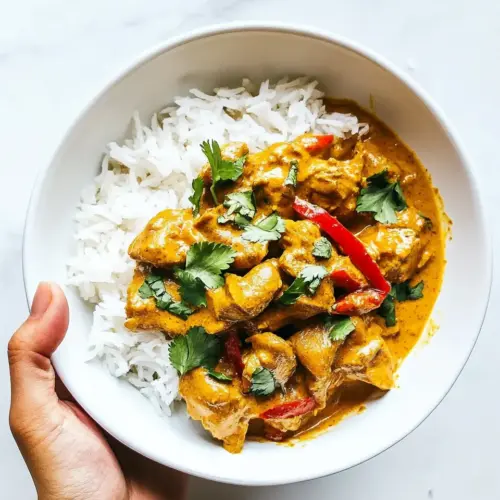
Coconut Curry Chicken
Coconut Curry Chicken brings creamy coconut milk, fragrant curry paste, and tender chicken together for an easy weeknight dinner. This dish is creamy, slightly spicy, and full of aromatic depth, perfect for serving over rice or with naan. It makes a family friendly, comforting meal that tastes like more effort than it takes, so it is worth trying tonight.
Equipment
- Large Skillet
Ingredients
- 3 tablespoons coconut oil divided Melted and aromatizing, provides a rich coconut flavor and medium for sautéing aromatics; divided usage ensures initial cooking and finishing gloss without overpowering the dish.
- 1/2 medium yellow onion diced, 1/2 cup Softening and sweetening, adds savory depth and a mild sharpness when diced; sweats down to create a flavorful base for the curry liquids and spices.
- 3 cloves minced garlic about 1 and 1/2 teaspoons Pungent and fragrant, infuses the oil with sharp garlic aroma when minced; builds savory complexity and balances sweet coconut notes throughout the sauce.
- 2 tablespoons finely minced ginger from a 1 and 1/2-inch piece Zesty and warming, contributes bright, spicy-sweet ginger heat when finely minced; lifts the curry with fresh, citrusy ginger tones and aids digestion.
- 2 teaspoons yellow curry powder Earthy and aromatic, layers warm, mild heat and turmeric-like color to the sauce; blends with curry paste to create a classic yellow curry backbone.
- 3 tablespoons red curry paste I use Thai Kitchen; reduce or increase as desired for spice levels Bold and concentrated, delivers intense Thai-style chili heat, umami, and depth; dissolves into coconut milk to form the spicy core of the curry.
- 2 teaspoons ground coriander Citrusy and floral, imparts warm, slightly sweet coriander undertones and rounds out the spice blend; pairs well with curry powder and curry paste for complexity.
- 1 large red bell pepper Sweet and crisp, adds juicy texture and bright bell pepper flavor when chopped; provides color contrast and a fresh vegetable element to the curry.
- 1 pound boneless, skinless chicken breast or thighs, cut into 1-inch pieces Tender and protein-rich, soaks up curry flavors when cut into bite-sized pieces; provides the main substance and savory heft of the finished dish.
- Salt and pepper Seasoning and balancing, enhances overall flavor by brightening and controlling taste; used to taste to prevent blandness or excessive sweetness.
- 1 (13.5-ounce) can coconut milk full-fat, not lite Creamy and rich, contributes full-bodied coconut flavor and silky texture; forms the creamy base that carries spices and binds the sauce.
- 1 lime Acidic and brightening, adds fresh citrus tang when juiced or zested; helps balance richness and lift the overall flavor profile of the curry.
- 1 to 2 tablespoons brown sugar Sweetening and balancing, tames heat and adds caramelized depth when dissolved; used sparingly to counteract acidity and round flavors.
- 2 teaspoons fish sauce optional Salty and savory, deepens umami and heightens overall complexity when added; complements fish-forward and Southeast Asian flavor components.
- 1/4 cup cilantro and/or basil, diced Herbal and fresh, provides fragrant garnish and occasional pops of herbaceous brightness; stir in near the end to preserve color and aroma.
- Chopped peanuts or cashews, optional Crunchy and nutty, offers optional texture contrast and savory richness when chopped and sprinkled; complements creamy coconut sauce with added mouthfeel.
- Serving suggestions see note 1 Serving accompaniment suggestions that enhance experience; recommend rice, noodles, or flatbreads to soak up sauce and complete the meal.
Instructions
- Start by prepping ingredients: Dice the onion, mince the garlic, and mince the ginger. I peel the ginger with a spoon or vegetable peeler, then finely mince it. Thinly slice the red bell pepper into long vertical strips and cut those strips in half horizontally.: The kitchen will fill with sharp aromatic notes as you chop, especially from the onion and minced garlic , which means you are building flavor before heat touches the pan. Finely mincing the ginger releases its bright, peppery oils, so you want small pieces that melt into the sauce rather than fibrous chunks. As you slice the red bell pepper , aim for even strips so they cook uniformly; uneven pieces lead to some strips still crisp while others go soft. A common mistake here is rushing the prep and trying to cook while still chopping, which creates timing stress and uneven results. Take the extra five minutes to mise en place and you will notice the difference in texture and aroma when everything hits the skillet.
- Heat 2 tablespoons coconut oil in a large deep skillet over medium-high heat. Add the onion and sauté for 3–5 minutes or until onions begin to turn golden. Add the garlic and ginger; stir to coat everything with the oil. Lower the heat to low and add in the curry powder, red curry paste, and coriander. Stir often for 2–3 minutes or until lightly toasted and fragrant.: You will hear a soft sizzle when the coconut oil meets the pan, and the onion will become translucent then take on a pale gold hue, releasing sweetness. Stirring the garlic and ginger into the hot oil blooms their aroma without burning, creating a fragrant base. When you lower the heat and add the spices and pastes, keep them moving so they toast evenly and develop their oils; you should smell a richer, more complex perfume within a minute or two. If the paste sticks or darkens quickly, your heat is too high and the spices may scorch, producing a bitter flavor. Take your time at this stage because properly toasted spices are the backbone of a flavorful curry.
- Return the heat to medium high. Add the remaining 1 tablespoon coconut oil and the red bell pepper. Stir for 1–2 minutes, then add the bite-size pieces of chicken. Sprinkle on salt and pepper (I add 1 teaspoon fine sea salt and 1/2 teaspoon pepper). Cook, stirring often, for about 4–5 minutes or until the chicken is browned on both sides but not cooked through.: Adding the second portion of coconut oil helps the red bell pepper and chicken brown without sticking. You want the pepper to gain a little color while still keeping slight crunch, and the chicken to sear so its exterior develops caramelized notes, which adds depth to the final sauce. Listen for a steady sizzle and watch for small golden patches on the meat. If you crowd the pan, steam will form and prevent browning, so keep pieces in a single layer and stir gently. Overcooking at this phase can make the chicken dry, so stop when browned but still slightly translucent inside; it will finish cooking in the sauce.
- Pour in coconut milk, 1 tablespoon lime juice, and brown sugar (to taste; I start with just 1 tablespoon). Stir until chicken is cooked through (juices run clear and it is cooked to 165°F) and curry is slightly thickened (see note 2). If desired, stir in the fish sauce.: As the coconut milk meets the hot pan, steam and a rich coconut aroma will rise; this is the moment flavors integrate. The tiny bubbles at the edges should swell and the sauce should gently simmer, thickening and reducing to a glossy consistency that clings to the chicken . The lime juice will brighten the palate and the brown sugar will round the spices, balancing heat and acid. Use an instant read thermometer to confirm the chicken hits 165°F, and look for clear juices as a visual cue. A common error is boiling too aggressively, which can separate the fats in the coconut milk or thin the sauce; maintain a gentle simmer to preserve creaminess. If you choose to add fish sauce , stir it in at the end and taste carefully because it can quickly dominate the seasoning.
- Serve over rice and/or with naan. Garnish individual plates with cilantro, basil, and/or crushed peanuts/cashews. Serve additional lime wedges by the side if desired.: The final aroma should be heady and layered, with coconut, toasted spices, and a citrus lift from the lime . Spoon the curry over steaming rice or alongside warm naan so each forkful captures sauce and chicken . Fresh chopped cilantro or basil brightens the top and crushed nuts add crunch that contrasts with the silky sauce. Avoid garnishing too early as herbs wilt and nuts soften; add them right before serving for maximum texture and aroma. If the sauce seems too thin on the plate, return to the pan briefly to reduce, or stir in a small cornstarch slurry to thicken evenly.
Notes
- Choose your cut: If you prefer juicier results use chicken thighs; for leaner bites use breasts and watch cook time closely to avoid dryness.
- Scale the heat: Reduce the amount of red curry paste for milder family friendly versions or increase it for a spicier kick; balance with extra brown sugar or coconut milk if it gets too hot.
- Herb finishes: Swap or mix cilantro and basil for different aromatic profiles; basil leans sweet and peppery while cilantro adds citrusy brightness.
- Nut options: Use chopped peanuts or cashews for crunch; toast them briefly in a dry pan to heighten aroma before garnishing.
- Thickening technique: If you prefer a clingier sauce mix 1 tablespoon cornstarch with a little sauce or water to make a slurry and stir it in off heat, then simmer gently until glossy.
- Make ahead: The flavors meld overnight, so cooks can prepare the curry a day ahead and reheat gently, adding a splash of coconut milk if it tightens too much.