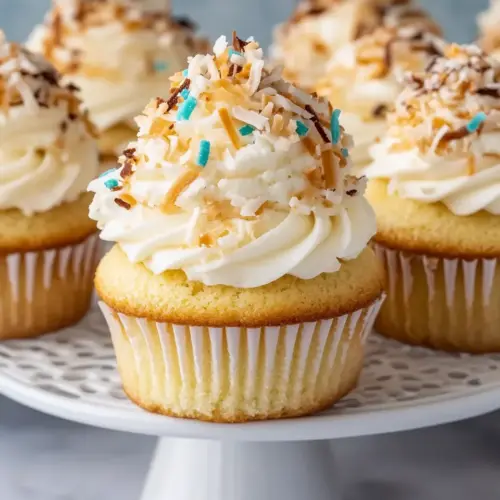
Coconut Cupcakes with Coconut Buttercream Frosting
Coconut Cupcakes with Coconut Buttercream Frosting are light, coconut forward treats with a tender crumb and silky buttercream. The combination of toasted shredded coconut and coconut extract creates a layered coconut aroma, while the buttercream keeps each bite rich and smooth. Perfect for parties or a cozy afternoon, these cupcakes are easy to make and impressive to serve, a sweet reason to bake today.
Equipment
- Electric Mixer
- Stand mixer with whisk attachment
- Food Processor
- 12-Cup Muffin Pan
- Offset Spatula
- Wire Rack
Ingredients
- 1 cup (130 g) all-purpose flour Provide structure and bulk to the cupcakes, forming the base of the crumb; sift or spoon into the bowl to avoid clumps and measure accurately for consistent texture and rise.
- 1 1/4 teaspoons baking powder Leaven gently to help the cupcakes rise evenly; whisk into the dry ingredients and ensure freshness for reliable lift and tender crumb.
- 1/4 teaspoon salt Season subtly to enhance overall flavor balance; dissolve into the dry mix so salt is evenly distributed without creating salty pockets.
- 1/3 cup (28 g) sweetened shredded coconut Impart concentrated coconut flavor and light texture while adding chew; fold into the batter to distribute coconut flecks and boost tropical character.
- 1/2 cup (113 g) unsalted butter, at room temperature Cream for richness and aeration, contributing to tender crumb and flavor; bring to room temperature for easier creaming with sugar and even mixing.
- 3/4 cup (149 g) granulated sugar Sweeten and aerate when creamed with butter, helping to create a light, tender cupcake; measure precisely for proper balance and dissolve slightly during creaming.
- 1 egg, at room temperature Bind ingredients and add moisture and richness, improving structure and emulsification; use at room temperature so it incorporates smoothly into the batter.
- 1 egg white, at room temperature Enhance lift and moisture while improving structure without extra fat; add at room temperature and beat briefly to incorporate.
- 1 teaspoon vanilla extract Contribute aromatic depth and flavor complexity, complementing the coconut profile; stir into the wet ingredients to flavor the entire batter uniformly.
- 1/2 cup (120 ml) unsweetened coconut milk, well-stirred Add coconut flavor and liquid for batter consistency; well-stirred canned coconut milk provides natural fats that enrich crumb and mouthfeel.
- 1 cup (227 g) unsalted butter, at room temperature Create a creamy, stable base for the buttercream, adding richness and body; ensure softened to room temperature for smooth whipping with powdered sugar.
- 2 1/2 cups (284 g) powdered sugar Sweeten and stabilize the frosting while providing structure for piping; sift to remove lumps and add gradually to reach desired consistency.
- 2 teaspoons vanilla extract Flavor intensely and round out the buttercream with familiar vanilla notes; add during creaming to integrate evenly and enhance sweetness.
- 1 teaspoon coconut extract Amplify coconut aroma with a concentrated tropical note; use sparingly to avoid overpowering and blend thoroughly into frosting for consistent flavor.
- 1 cup (85 g) toasted coconut Provide crunchy, toasted coconut topping and visual appeal; sprinkle or press onto frosted cupcakes to add texture and deepen coconut flavor.
- Whoppers Robin’s Eggs malted milk balls, optional Garnish optionally to add novelty, crunch, and a contrasting malted chocolate flavor; place sparingly on frosted cupcakes for decorative pops of color and texture.
Instructions
- Preheat oven to 350 degrees F. Line standard muffin tins with paper liners.: Warmth in the oven creates the environment for a controlled rise, so preheat thoroughly until the thermometer reads 350 degrees F , and the racks are in the middle. You should hear a faint hum from the oven as it maintains temperature, and the air takes on a little dry heat. If liners are used, they help with even release and neat presentation. A common mistake is not preheating long enough, which can cause uneven rise and dense centers. Give your oven time to stabilize, and ensure the tins are at room temperature before filling to avoid thermal shock.
- In a medium bowl, whisk together the flour, baking powder and salt. Pulse the shredded coconut in a food processor until finely ground and whisk into the flour mixture; set aside.: The dry mix should look even and pale when well combined, with the ground sweetened shredded coconut dispersed. Whisking aerates the flour slightly and distributes the baking powder so the lift will be consistent. The pulsed coconut will be fragrant and integrate without big flecks, adding a concentrated coconut note. If you skip pulsing, you might get uneven pockets of coconut, and that can alter texture. Be tidy here to avoid overworking the gluten once wet ingredients are added.
- With an electric mixer on medium-high speed, cream the butter and sugar together until pale and fluffy, about 3 minutes. Add the egg, egg white and vanilla extract and beat until completely combined, scraping down the sides of the bowl as needed. Reduce the mixer speed to low. Add the flour mixture in three batches, alternating with two additions of coconut milk, and beating until combined after each.: You should watch the unsalted butter and granulated sugar turn from gritty to glossy and pale; this indicates air trapped in the fat for lift. When you add the egg and egg white , the batter will glossy and smell richer. Alternating the dry mix with the unsweetened coconut milk keeps the batter emulsified and prevents curdling, resulting in a silky texture. Listen for a steady motor sound from the mixer, and scrape the bowl to avoid streaks of dry flour. A common misstep is adding all the liquid at once, which can deflate the mixture and yield dense cupcakes, so alternate carefully.
- Divide the batter evenly between the lined cups. Bake until a toothpick inserted in the center comes out clean, 18 to 20 minutes. Remove from the oven, let cool in the pan for 10 minutes, then remove to a wire rack to cool completely.: As the cupcakes bake, their tops will become faintly golden and spring back when touched lightly. You may hear gentle crackles as steam escapes. The toothpick test ensures the interior is set while remaining moist. Cooling in the pan for a short period prevents the fragile cakes from collapsing, then transferring to a wire rack stops residual heat from overcooking them. A common error is leaving them in the hot pan too long, which can oversteam the bottoms; follow the ten minute guideline to keep the texture balanced.
- Make the Frosting: Using the whisk attachment of a stand mixer, whip the butter on medium-high speed for 5 minutes, stopping to scrape the bowl once or twice. Reduce the speed to low and gradually add the powdered sugar. Once all of the powdered sugar is incorporated, increase the speed to medium-high and add the vanilla and coconut extracts, mixing until incorporated. Whip at medium-high speed until light and fluffy, about 2 minutes, scraping the bowl as needed.: Using the whisk attachment of a stand mixer, whip the butter on medium-high speed for 5 minutes, stopping to scrape the bowl once or twice. Reduce the speed to low and gradually add the powdered sugar. Once all of the powdered sugar is incorporated, increase the speed to medium-high and add the vanilla and coconut extracts, mixing until incorporated. Whip at medium-high speed until light and fluffy, about 2 minutes, scraping the bowl as needed. : The butter will transform into a cloud like texture as air is whisked in, and it should smell sweet and buttery without being greasy. Adding the powdered sugar gradually prevents a gritty or dusty frosting; you want a smooth ribbon when the beater lifts. The vanilla extract and coconut extract bloom the aroma, and whipping at higher speed yields a glossy, spreadable buttercream. If the frosting seems too soft, chill briefly; if too stiff, a splash of coconut milk softens it. Overwhipping can incorporate too much air and make the frosting unstable, so stop when it looks light and stable.
- Garnish the Cupcakes: Using an offset spatula, spread a mound of frosting on top of each cupcake and create a well in the center. Place the toasted coconut in a shallow bowl. Roll the sides of the cupcake in the toasted coconut, then top with a few Robin's Eggs malted milk balls. The cupcakes should be stored in an airtight container at room temperature for up to 3 days.: Using an offset spatula, spread a mound of frosting on top of each cupcake and create a well in the center. Place the toasted coconut in a shallow bowl. Roll the sides of the cupcake in the toasted coconut, then top with a few Robin's Eggs malted milk balls. The cupcakes should be stored in an airtight container at room temperature for up to 3 days. : When you spread the frosting, the surface should be glossy and hold the impression of the spatula. Rolling the sides in toasted coconut adds a crunchy rim that contrasts with the soft frosting and cake. The Whoppers Robin’s Eggs are optional, and they add color and a different crunch if you choose them. Store at room temperature away from heat so the buttercream stays stable. A typical mistake is refrigerating them uncovered, which can dry the cake and cause the frosting to stiffen, so use an airtight container to maintain texture.
Notes
- Equipment choice: Any standard 12 cup muffin pan works well, and using paper liners gives neat results and easier serving.
- Coconut milk selection: Purchase canned unsweetened coconut milk and stir it well before measuring to ensure consistent moisture content in the batter.
- Toasting coconut: Spread the coconut in an even layer on a baking sheet and toast at 325 degrees F for 8 to 10 minutes, watching closely so it does not burn, then cool completely before using as a garnish.
- Storing cupcakes: Keep the cupcakes in an airtight container at room temperature for up to 3 days to preserve the tender crumb and creamy frosting.
- Freezing instructions: Freeze cooled unfrosted cupcakes in a freezer safe bag for up to 3 months, then thaw at room temperature for about 2 hours before frosting and serving.
- Make ahead strategy: Bake up to 2 days in advance unfrosted, or freeze for longer storage; frost just before serving for the freshest texture and appearance.