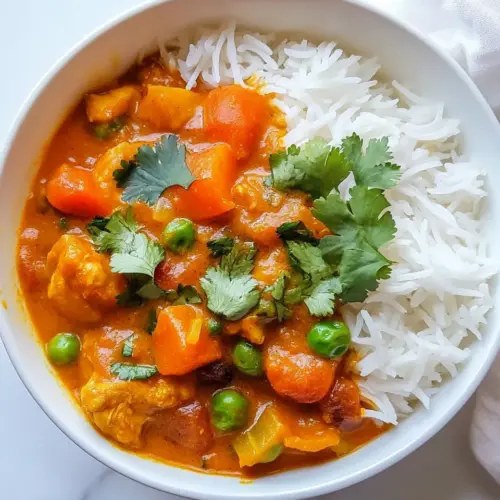
Coconut Chicken Curry
Coconut Chicken Curry is a creamy, fragrant bowl of comfort that blends rich coconut milk with warm curry spices and tender shredded chicken. This easy weeknight dinner is aromatic, slightly sweet, and brightened with lime and cilantro, perfect for feeding a family of four. It reheats beautifully and makes a satisfying, cozy meal you will want again and again.
Equipment
- Large deep skillet with lid
- Tongs
- Instant read thermometer
- Cutting Board
- Two forks
Ingredients
- 1 tablespoon olive oil Heat and coat the pan to create a cooking medium that helps sauté aromatics and brown chicken; adds a subtle fruity flavor and smooth mouthfeel to the curry. Use at medium heat to prevent burning and to release flavors from spices efficiently. Choose extra-virgin varieties for richer aroma but any light olive oil works for stovetop cooking.
- 1 small yellow onion, chopped Provide a sweet and savory base by releasing natural sugars when softened; chopped texture melds into the sauce for body and depth. Cook until translucent to mellow sharpness and build a flavorful foundation for the curry. Even small dice ensures even cooking and integration with other aromatics.
- 2 carrots, peeled and sliced 1/4-inch thin Contribute natural sweetness, texture, and visual color while becoming tender and absorbing curry flavors when sliced thin. Slice 1/4-inch to allow quick cooking and even distribution throughout the dish. Carrots also add subtle earthiness and slight crunch if not overcooked.
- 3 garlic cloves, minced Offer pungent, savory depth and aromatic complexity when minced and gently cooked to release oils; helps build a layered flavor profile. Add early enough to infuse the oil and meld with onion and ginger. Avoid burning by cooking briefly over moderate heat.
- 1 inch fresh ginger, minced Bring bright, spicy warmth and fragrant citrusy notes when minced; complements curry powder and lifts heavier coconut flavors. Mince finely to disperse evenly and release essential oils for maximum aroma. Add with garlic to create a balanced aromatic base for the sauce.
- 4 teaspoons curry powder Provide central warm, earthy, and slightly sweet curry character that defines the dish; dissolves into the sauce to coat the chicken and vegetables. Bloom in hot oil to amplify flavor and aroma before adding liquids. Adjust quantity to taste for heat and intensity.
- 1 teaspoon ground cumin Lend smoky, nutty undertones and enhance savory complexity while supporting the curry powder blend; ground cumin deepens the overall spice profile. Toast briefly in oil with curry powder to release its aroma. Use sparingly to avoid overpowering other spices.
- 15 ounce can crushed tomatoes Contribute bright acidity, body, and a slightly sweet tomato flavor that balances the richness of coconut and spices while forming the sauce base. Stir into the sautéed aromatics and spices to build saucy texture and depth. Crushed form creates a rustic, slightly chunky consistency.
- 15 ounce can full-fat coconut milk Provide rich, creamy coconut body and tropical sweetness that softens spices and yields a luscious, silky sauce. Shake or stir before adding to ensure even consistency and pour in to simmer until flavors meld. Full-fat content gives the curry a luxurious mouthfeel.
- fine sea salt Enhance and balance flavors by seasoning to taste, amplifying overall savory and sweet elements without overpowering aromatics. Add gradually while simmering, tasting to achieve the preferred salt level. Fine texture dissolves readily into the sauce for even seasoning.
- 1 1/4 pounds boneless skinless chicken thighs (see notes) Supply tender protein and absorbent texture that soaks up curry flavors; boneless skinless thighs remain juicy and forgiving during simmering. Cut into even pieces for uniform cooking and simmer until fully cooked through. Use thighs for richer flavor compared to leaner cuts.
- 1 tablespoon fresh lime juice Add bright, tangy acidity to brighten and lift the finished curry, cutting through richness for a more balanced flavor profile. Stir in at the end of cooking to preserve fresh citrus notes. Freshly squeezed juice delivers the best vibrant flavor.
- 1 tablespoon maple syrup Bring subtle sweetness and a rounded finish that balances acidity and spice while enhancing caramelized notes in the sauce. Stir in sparingly and adjust to taste to avoid cloying sweetness. Use real maple syrup for complementary complexity.
- 1/2 cup fresh cilantro, roughly chopped & large stems removed Provide fresh herbal brightness and a leafy contrast when roughly chopped and stirred in at the end; stems removed for a smoother texture. Scatter over the finished dish for color, aroma, and a lively finishing note. Large leaves contribute bursts of cilantro flavor without fibrous stems.
Instructions
- Preheat a large, deep skillet with a lid over medium-high heat on the stovetop. Once the surface is hot, add the olive oil and cook the onion and carrots until they start to soften, about 5 minutes. Then add the garlic, ginger, curry powder, and cumin and stir for one more minute, just until they smell fragrant.: The moment the pan heats, you should hear a faint sizzle when you add the olive oil , which signals it is ready to quickly soften the onion and carrots . The hot pan encourages gentle caramelization, producing sweet, nutty notes that form the foundation of the sauce. If the pan is too cold the vegetables will sweat and become floppy rather than developing flavor, and if it is too hot they will brown too fast and risk burning, so look for a light shimmer in the oil before adding ingredients. A common mistake is overcrowding the pan, which causes steaming instead of browning, so keep space for the vegetables to move. When the vegetables begin to soften and edges turn translucent, you will smell a warm, savory scent which tells you it is time for the next aromatics.
- Pour the can of crushed tomatoes with the juices and the can of coconut milk into the pan. Season with one teaspoon of salt, then stir until the coconut solids have melted. Place the chicken thighs in the liquid, sprinkle another teaspoon of salt over the tops, and bring the mixture to a boil.: You will notice a gentle sizzling and a shift from raw sharper scents to sweeter, mellow aromas as the onion becomes translucent and the carrots slightly tender. That softening step is important because it allows the aromatic base to release sugars that deepen the sauce. Stir occasionally to prevent sticking, and watch for small golden flecks forming on the pan which add complexity. Avoid rushing this step by turning the heat too high, because then the outsides can char before the centers soften. When you can press a carrot slice easily with a spoon it is a good cue to proceed.
- Once the liquid is bubbling, lower the heat to a gentle simmer and cover the pot with a lid. Cook for 15 to 20 minutes, or until each chicken thigh reaches 165ºF in the thickest part according to an instant-read thermometer.: At this stage the pan will exude an intoxicating perfume as the garlic and ginger release volatile oils and the spices bloom in the hot oil. You should hear a soft pop and smell warm, bright spice notes, signaling that the flavors are waking up. Blooming spices in oil unlocks deeper, more rounded flavors in the finished curry, which is why this short step matters. The danger is burning the spices, which turns them bitter, so keep them moving and remove from high heat if you detect any acrid smell. That fragrant minute makes a noticeable difference in the final complexity.
- Use tongs to carefully transfer the chicken to a cutting board. Use two forks to shred the chicken, then return it to the pot. Season the sauce with lime juice, maple syrup, cilantro, and additional salt if needed. (I usually start with another 1/2 teaspoon, but this will vary based on the type of salt you use and your taste buds.): When the crushed tomatoes and full fat coconut milk hit the hot pan there will be a gentle bubbling and a burst of steam as they combine, and you will see the coconut solids melt into the tomato liquid forming a creamy orange hue. Stir until the sauce looks cohesive and smooth, this emulsification is important for a unified texture. Season with one teaspoon of fine sea salt to start, which helps develop flavor during the simmer. A common pitfall is adding too much salt too soon, which can be hard to correct later, so season conservatively and adjust after the sauce reduces slightly.
- Serve this coconut chicken curry over a bed of cooked rice and garnish with extra cilantro, if you like.: As the chicken settles into the sauce you will see the liquid return to a simmer with small rolling bubbles. The brief bring to a boil helps incorporate flavors quickly, and you will hear a steady, gentle bubbling that signals even heat distribution. Salting the tops of the chicken helps the meat season from the outside in as it cooks. Watch carefully at this stage because an aggressive boil can toughen proteins, so aim for a lively but controlled boil that transitions to a lower simmer when ready. Overboiling is the most common mistake here, so be ready to reduce the heat when you see the desired activity.
- Once the liquid is bubbling lower the heat to a gentle simmer and cover the pot with a lid: A gentle simmer will produce small, slow bubbles and a soft simmering sound, keeping the chicken tender while allowing flavors to meld. The covered environment prevents excessive evaporation, which preserves the silky sauce. Simmer for 15 to 20 minutes until the thickest part of each thigh reaches 165ºF on an instant read thermometer, which is the reliable cue for doneness. A too high heat will tighten meat fibers, making the chicken dry, so patience here ensures succulence. If your thighs vary in thickness, check the thickest pieces to avoid undercooking.
- Use tongs to carefully transfer the chicken to a cutting board: When you lift the cooked chicken you will notice juices running clear and meat that yields easily to gentle pressure, both positive signs it is done. Letting the meat rest briefly prevents moisture loss when shredding. Use two forks to shred the chicken, which creates variable strands that soak up sauce beautifully and provide the ideal texture in each bite. A common error is shredding while the meat is piping hot and overly fragile, which can lead to mushy fragments, so allow a moment for the meat to settle. Return the shredded chicken to the pot so it can absorb the sauce and finish marrying flavors.
- Season the sauce with lime juice maple syrup cilantro and additional salt if needed: After the shredded chicken rejoins the sauce, the final seasoning round balances sweet, salty, and bright notes. When you add lime juice the mixture will lift with a clean citrus scent, while maple syrup will whisper sweetness that smooths acidity from the tomatoes. Fold in the roughly chopped cilantro for fresh herbaceous fragrance, and taste to determine if more fine sea salt is needed. Over seasoning with salt is the usual mistake, so add gradually until the flavors sing together. The finished sauce should taste layered, not one dimensional.
- Serve this coconut chicken curry over a bed of cooked rice and garnish with extra cilantro if you like: The final presentation should show the creamy orange curry nestled over steaming rice , with flecks of green cilantro on top. You will notice a warm coconut aroma paired with citrus brightness as you lift a spoonful. Serving over a neutral starch lets the sauce shine and gives each bite contrast in texture. A common serving mistake is adding hot curry to cold rice, which causes temperature drop, so warm your rice briefly if needed to keep the bowl comforting and balanced.
Notes
- Oil temperature matters, heat the pan until the oil shimmers before adding the onion and carrots to promote gentle caramelization and richer flavor.
- Control the simmer, after bringing to a boil lower the heat to a gentle simmer to keep the chicken tender and avoid breaking the sauce's texture.
- Salt incrementally, start with small amounts and taste after reduction because canned crushed tomatoes and coconut milk can alter perceived saltiness.
- Use full fat coconut milk, it provides the creamiest mouthfeel and carries the spices better than light versions.
- Finish with citrus and herbs, the lime juice and cilantro at the end bring necessary brightness that balances the rich sauce.