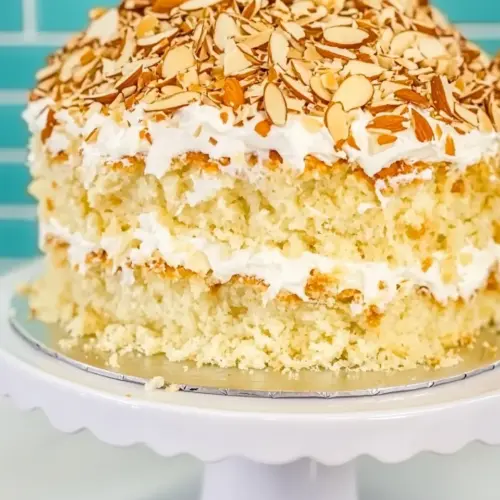
Coconut Almond Cream Cake
Coconut Almond Cream Cake is a creamy, textured layer cake with toasted coconut and almond notes, offering a tender crumb and rich filling. This easy to slice party cake blends sweetened shredded coconut, creamy frosting, and crunchy toasted almonds for a memorable dessert, perfect for special occasions or an easy weeknight celebration that still feels indulgent.
Equipment
- Parchment Paper
- Baking spray with flour
- Electric Stand Mixer
- 39-inch cake pans
- Offset Spatula
Ingredients
- 31/2 cups all-purpose flour Measure and sift to provide structure and body to the cake batter; all-purpose flour creates the crumb and absorbs liquids for proper texture. Ensure it is leveled in the cup to maintain accurate ratios for tender results.
- 1 tablespoon baking powder Leaven and tenderize the batter by releasing carbon dioxide when heated; baking powder helps the cake rise evenly. Use the appointed amount to avoid metallic or bitter flavors from overuse.
- 1/2 teaspoons salt Season and balance flavors while slightly strengthening gluten; salt enhances sweetness and rounds out the overall taste. Dissolve or mix thoroughly to ensure even seasoning throughout the cake.
- 11/2 cups unsalted butter, softened Cream and add fat for richness, moisture, and a smooth mouthfeel; softened unsalted butter incorporates with sugar to create an aerated batter. Keep at proper softness to achieve a light, tender crumb during creaming.
- 11/4 cups granulated sugar Sweeten and assist in aeration when creamed with butter; granulated sugar contributes to tenderness and caramelization in the crust. Measure precisely to maintain the intended sweetness and texture.
- 1 cup packed light brown sugar Provide deep, molasses-like sweetness and moistness; packed light brown sugar also contributes subtle caramel notes that enhance flavor complexity. Pack firmly to ensure consistent sweetness throughout the recipe.
- 5 large eggs Bind ingredients, add moisture, and aid in leavening and structure as eggs coagulate during baking; large eggs also contribute richness and emulsification. Bring to room temperature for better incorporation and a more stable emulsion.
- 1 cup heavy cream Add richness, contribute to tenderness, and hydrate dry ingredients; heavy cream increases fat content for a moist, luxurious crumb. Whisk gently into batter to avoid overworking gluten while maintaining an even texture.
- 1/3 cup coconut milk Introduce a delicate coconut flavor and additional fat for a subtle tropical note; coconut milk complements other dairy components without thinning the batter excessively. Shake or stir well before measuring to incorporate solids.
- 2 teaspoons vanilla extract Enhance and deepen overall flavor with a familiar sweet vanilla aroma; vanilla extract accentuates the cake’s other flavors and rounds out the profile. Use pure extract for the best aromatic result.
- 2 teaspoons almond extract Impart concentrated almond flavor that brightens and complements the coconut elements; almond extract should be used sparingly to avoid overpowering. Add at the end of mixing to preserve its aromatic intensity.
- 2 tablespoons cornstarch Stiffen and stabilize mixtures by absorbing moisture and preventing weeping; cornstarch helps thicken fillings or custards for a cleaner slice. Dissolve first if combining with liquids to prevent lumps.
- 1 teaspoon almond extract Boost almond aroma in layered components or frostings with a focused nutty note; an additional teaspoon of almond extract intensifies flavor without adding texture. Use carefully to maintain balance with vanilla and coconut.
- 11/4 cups heavy cream Whip and enrich fillings or cream layers, adding volume and a silky texture; heavy cream creates lightness when whipped or folded into batters. Chill before whipping to achieve maximum volume and stability.
- 1/2 cup packed brown sugar Sweeten and add a deeper molasses nuance to creams or toppings; packed brown sugar provides moisture and a caramel-like depth. Pack consistently to control sweetness and texture in the finished product.
- 1/2 cup unsalted butter Contribute creaminess and body to frostings or fillings; unsalted butter balances sweetness and aids in smooth spreads. Soften to room temperature for easy incorporation and a lump-free finish.
- 21/2 cups loosely packed sweetened shredded coconut Supply chewy texture and prominent coconut flavor throughout the cake; loosely packed sweetened shredded coconut adds both moisture and tropical character. Lightly fold in to maintain tender crumb and even distribution.
- 1/4 cup sour cream Add tanginess and slight acidity to balance sweetness and enrich moisture; sour cream also contributes to a tender crumb and fine texture. Stir gently to incorporate and prevent curdling in warm mixtures.
- 16 ounces cream cheese, softened Provide a smooth, tangy base for frostings or fillings while adding richness; softened cream cheese creates a creamy, slightly acidic counterpoint to sweet components. Beat until smooth to eliminate lumps for a velvety finish.
- 1/2 cup unsalted butter, softened Enrich frostings and stabilize texture while adding buttery flavor; softened unsalted butter helps achieve a smooth, spreadable consistency. Ensure it is fully softened to avoid grainy or uneven frosting.
- 3 cups powdered sugar Sweeten and add body to frostings with a fine, silky texture; powdered sugar dissolves easily and controls sweetness level. Sift if necessary to prevent lumps and achieve smoothness in the final icing.
- 1 teaspoon coconut extract Introduce a concentrated coconut aroma to enhance tropical notes without adding moisture; coconut extract punches up flavor in icings and fillings. Use sparingly due to its potency to preserve balanced flavors.
- 1 tablespoon milk Thin and adjust consistency of icings or glazes while adding a touch of dairy richness; milk helps bring frosting to spreadable texture. Add gradually to reach the desired viscosity without making it too runny.
- pinch of salt Enhance and balance sweetness by amplifying flavors and cutting richness; a pinch of salt accentuates other ingredients and rounds the palate. Distribute evenly to avoid isolated salty spots in the finished dessert.
- 2 cups sweetened shredded coconut, toasted Top and add toasted coconut crunch and pronounced coconut flavor for garnish; sweetened shredded coconut toasted brings color and texture contrast. Monitor closely while toasting to achieve even golden browning without burning.
- 1/2 cup sliced almonds, toasted Provide nutty crunch and visual finish as a garnish; sliced almonds toasted add a crisp, aromatic contrast to creamy elements. Toast lightly to release oils and enhance flavor without overpowering the cake.
Instructions
- Preheat oven to 325 degrees. Cut 3 circles of parchment paper to fit in the bottom of 3 9-inch cake pans. With the parchment paper in the pans, spray each pan well with baking spray with flour.: The room fills with warmth as the oven climbs to 325 degrees , a steady, even heat that promotes a fine crumb and gentle rise. Lining the cake pans with parchment and coating them prevents sticking and makes layer removal simple, which helps the cakes remain intact and smooth edged. You should hear nothing from the pans, but you will notice the batter gliding easily into the prepared pans, which is the sign of correct prep. One common mistake is skipping the parchment or under spraying the pans, which can cause the bottom to tear when you invert the layers. Take a moment to smooth the parchment so the batter spreads evenly and bakes uniformly.
- Sift together flour, baking powder, and salt into a large bowl. Set aside.: As you sift, the dry mixture lightens and gains air, which contributes to a tender crumb once baked. The scent is faintly wheaty and clean, and the small clumps are removed so the batter mixes smoothly later. Sifting also evenly distributes the baking powder and salt , ensuring consistent rise. Avoid the error of dumping flour in without sifting or whisking, as that can leave pockets of leavening that produce uneven texture.
- Beat butter with a stand mixer with a paddle attachment until creamy. Gradually beat in the granulated sugar and the brown sugar. Beat until very fluffy, about 7 to 8 minutes. Stop to scrape down the sides of the bowl a few times.: The creaming step is tactile and rewarding, as the pale butter transforms into a billowy cream and the sugars dissolve into it. The sound changes to a low hum and the mixture becomes pale and voluminous, which traps air that expands in the oven for lift. Scraping is crucial to ensure even aeration and prevent pockets of uneven texture. A common mistake is rushing this step, which leads to dense layers, so be patient and watch for that light, fluffy texture.
- Beat in eggs one at a time.: Adding the eggs slowly helps maintain the emulsion, keeping the batter stable and preventing separation. Each addition should be fully incorporated and you may notice the batter become glossier and silkier; those visual cues tell you the mixture is bonding correctly. If you add eggs too quickly, the batter can break and look curdled, which weakens the structure. If that happens, stop adding eggs and mix gently until texture smooths before continuing.
- With mixer on LOW, beat in heavy cream, coconut milk, vanilla extract, and almond extract.: These liquids enrich the batter and add the essential coconut and almond aromatics that define the cake. On low speed they incorporate smoothly without deflating the air you've created, and the batter should smell fragrant and slightly sweet. Mixing too fast at this point can deflate your mixture, so keep it gentle. If you see separation or a curdled look, pause and scrape, then continue slowly.
- Add butter mixture to flour mixture in three batches, gently folding each batch in.: Folding preserves the air you whipped into the butter and eggs, so do this carefully. The batter should look cohesive and slightly thick, with no visible streaks of dry flour. Folding too aggressively will knock out the air and result in a dense cake, while insufficient mixing leaves pockets of flour. Aim for a few smooth turns per batch until just combined, and stop when the batter looks uniform.
- Pour batter into prepared cake pans. Bake for 30 to 32 minutes. Let cool 10 minutes in pans and then remove to wire rack to cool completely.: As the cakes bake, they should rise evenly and the top will develop a pale golden hue. Use a toothpick in the center to check for doneness, it should come out with a few moist crumbs. Letting them rest for 10 minutes in the pans stabilizes the crumb so the layers come out cleanly. A common error is leaving them in the pans too long, which can trap steam and soften the crust; transfer to a wire rack to cool fully and avoid a soggy exterior.
- To make filling, stir together cornstarch and almond extract with 2 tablespoons of water in a small bowl. Set aside.: This slurry prevents lumps when added to hot cream and helps the filling thicken smoothly. The tiny almond aroma is already noticeable, promising the nutty layer to come. If you skip this step the cornstarch can clump, producing a grainy filling, so mix until silky before moving on.
- In a saucepan, bring heavy cream, brown sugar, and butter to a boil over medium heat. Remove from heat and stir in cornstarch mixture. Stir in shredded coconut and sour cream. Cover with plastic wrap and refrigerate for at least 8 hours.: Heating the mixture extracts flavor from the coconut and dissolves the brown sugar , yielding a rich, caramel scented base. When you add the cornstarch slurry off heat, it thickens without forming lumps, and the shredded coconut plumps as it absorbs moisture. Covering and chilling allows flavors to meld and the filling to set into a spreadable, creamy texture. A mistake here is skimping on chilling time, which results in a runny filling that makes assembly messy.
- To make frosting, beat cream cheese and butter with electric mixer until blended and creamy.: The texture becomes luxuriously smooth and the tang from the cream cheese shines through, softening the sweetness that follows. Beat until no lumps remain and the mixture looks silky. If the ingredients are not at room temperature you will get a lumpy frosting, so ensure the cream cheese and butter are softened to avoid over mixing to compensate.
- Gradually beat in powdered sugar. Beat in coconut extract, milk and salt.: Adding the powdered sugar slowly prevents a powdery cloud and gives you control over frosting consistency. The coconut extract nudges the aroma into a cohesive profile with the filling, and the small pinch of salt brightens the overall taste. If the frosting becomes too stiff, add the tablespoon of milk a little at a time until spreadable. Over beating can incorporate too much air and make the frosting soft for piping, so stop once smooth.
- Place one cake layer on a cake stand. Spread half the filling on top. Place second cake layer on top of filling. Spread remaining filling on top. Top with third cake layer.: The assembled layers should feel balanced; as you spread the filling it should be thick and slightly textured from the shredded coconut . The visual of stacked layers is gratifying and the scent of coconut and almond will bloom. A common misstep is overfilling so the cake becomes unstable, so keep the filling even and wipe off excess from the edges for a tidy stack.
- Spread frosting on top and sides of cake.: Use an offset spatula for smooth strokes and take your time to get an even coat. The frosting should feel creamy under the spatula and will set slightly as it cools. If crumbs appear, do a thin crumb coat first, chill briefly, then apply the final layer for the cleanest finish. Rushing this step often leads to a messy exterior.
- Sprinkle almonds on top and press toasted coconut on sides of cake.: The toasted almonds and golden coconut give texture and a beautiful contrast. Pressing the coconut into the sides helps it adhere and creates a professional look. Take care not to press too hard or you might compress the frosting and create uneven spots. Toast until golden brown and cool before applying to avoid melting the frosting.
Notes
- Boost the almond note by slightly increasing the almond extract in either the batter or filling, which amplifies the nutty aroma while keeping the texture unchanged.
- Use unsweetened shredded coconut if you prefer a less sugary finish, this reduces overall sweetness and lets the almond flavors shine more clearly.
- Make mini cakes by using smaller pans for individual servings, they are perfect for gatherings and reduce slicing issues with large layers.
- Swap part of the heavy cream with buttermilk in the batter for a tangier crumb, it gives the cake extra tenderness and depth.
- Double toast the coconut for a deeper caramelized flavor, but watch closely to prevent burning which can add bitterness.